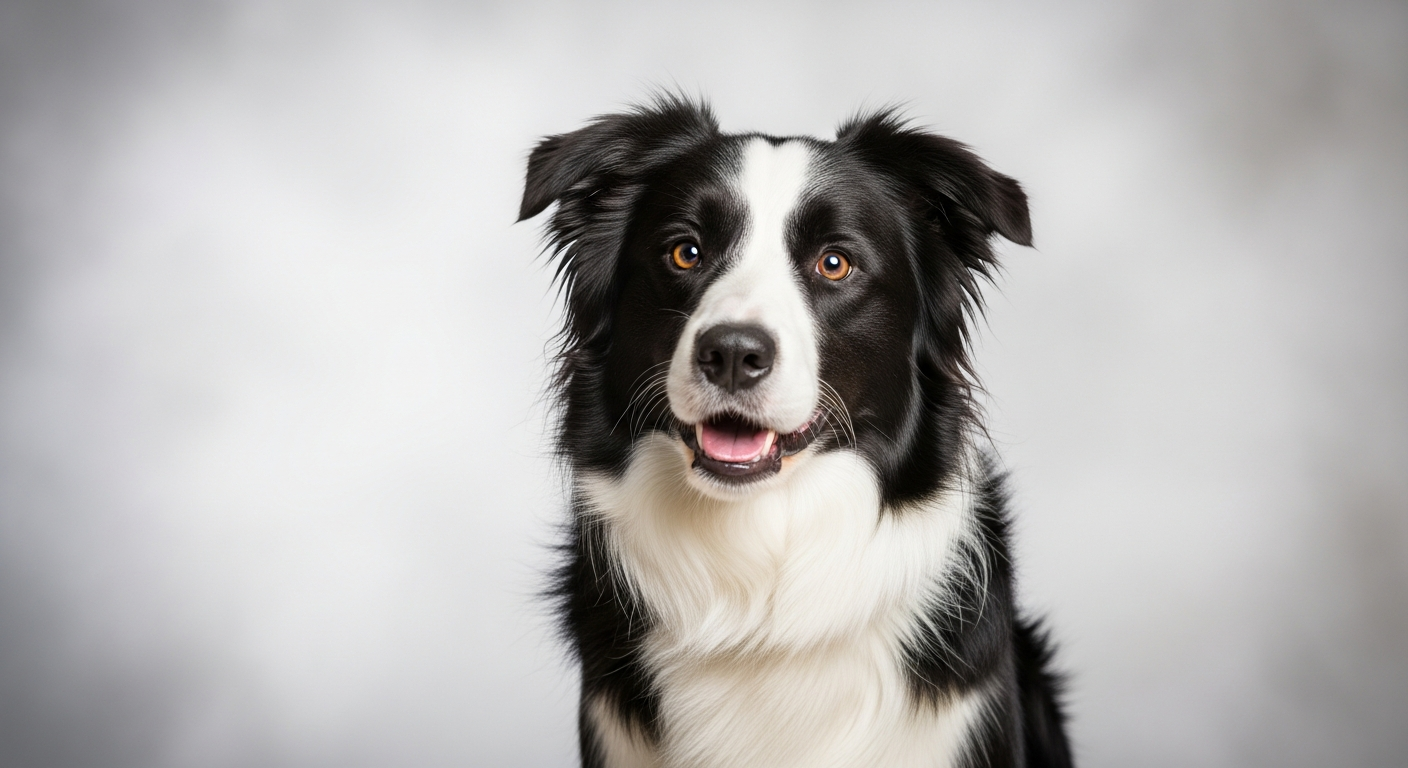
History & origins
The Border Collie was developed in the border country between Scotland and England as the premier sheep-herding dog, bred for an intense, focused working style — the famous crouching "eye," lightning responsiveness, and an extraordinary capacity to read and control livestock at a distance. Above all, the breed was selected for intelligence, stamina, and an almost obsessive drive to work.
That herding heritage produces what is widely regarded as one of the most intelligent and energetic of all dogs — and a dog that genuinely needs a job. Border Collies bond closely with their handler and learn at remarkable speed, which makes them superb partners for positive, reward-based training. The flip side is that without enough physical exercise and, crucially, mental work, that herding drive can turn into chasing, fixating, or restless behaviour. Channel it: teach tricks, play structured games, try scent work or canine sports, and reward the thinking, not just the motion. Meet a Border Collie's mind and you have a dazzlingly capable, devoted companion.
Quick answers
Short, focused guides for the questions owners actually search for.
- The Best No-Pull Harness for a Border Collie: A Fit-First Buyer Guide
- Best Puzzle Toys for a Border Collie That Gets Bored Fast (Durability + Difficulty Guide)
- How to Stop a Border Collie Puppy From Nipping Ankles and Heels (LIMA Guide)
- How to Stop a Border Collie Chasing Shadows and Light Reflections (LIMA Guide)
- Dog Heat Safety by Breed: What Actually Changes the Risk
Pro Principles
Congratulations on your Border Collie. You are raising the most intelligent, biddable, work-driven dog on the planet — and you can train every bit of it with kindness. This guide uses only reward-based, LIMA (Least Intrusive, Minimally Aversive) methods, the standard endorsed by the AVSAB, the AVMA, and CCPDT/APDT. There are no choke, prong, slip, or shock collars here, no bark or citronella collars, no alpha rolls, and no "dominance." Those tools are inhumane, and for a soft, sensitive working breed they are actively counterproductive: a pressured Border Collie shuts down, slows down, grows anxious, and can develop or worsen reactivity and compulsive behaviors.
Two truths shape everything that follows. First, this is a herding brain bred for hours of problem-solving and motion control. Mental work is the primary workload, not a bonus — and an under-stimulated Border Collie does not simply relax, it invents work, usually by chasing, fixating, or spinning. Second, this breed is exquisitely sensitive to handler tension and mistakes precisely because its biddability is so high. The same wiring that makes it learn in three reps makes it wilt under frustration. Keep every session short, upbeat, low-arousal, and ending on a win.
0/8
Capitalize on extreme biddability and trainability with marker training. A Border Collie learns fast, generalizes quickly, and thrives when you raise the 3 Ds — Duration, Distance, and Distraction — one at a time with a high success rate. The marker (a clicker or a crisp "Yes") is a promise: it always means a reward is coming, it marks the instant the behavior happens, and it ends the behavior. Fade any food lure after only a few reps and add the verbal cue last, or you teach a dog to work only when food is visible.
Before You Start
This phase sits above all training: a baseline vet exam, the vaccination/socialization plan, your gear, a heat-and-exertion safety system tuned to a dog that won't self-limit, and the medical-rule-out-first mindset. Do not skip it — it is what keeps a hard-driving working dog safe and stops you from accidentally "training through" a medical problem.
Baseline Vet Exam & Origin Check›
Step by step
- Book a new-puppy/new-dog veterinary exam before any group socialization. Confirm the dog is healthy, has had at least its first core vaccine set plus a first deworming, and shows no signs of illness.
- Discuss breed-relevant screening with your vet: hip and elbow status, eyes (Collie eye anomaly and progressive retinal atrophy are breed concerns), and the MDR1 (multidrug-sensitivity) gene — an MDR1 mutation changes safe dosing of several common drugs, so ask whether genetic testing is appropriate before any medication is given.
- Learn to do a Body Condition Score (9-point scale; aim 4-5/9): you should easily feel ribs without pressing, see a waist from above, and see a tucked-up belly from the side. Lean condition protects joints and supports the athletic work this breed loves.
- Note your dog's origin. Working-line and show-line Border Collies, and dogs from high-volume breeders with poor early-neurological foundations, can start from very different baselines for sound sensitivity and confidence. If early handling was poor, expect to build confidence work more gently and from a lower baseline.
- Program your nearest 24-hour emergency vet and the ASPCA Animal Poison Control number (888-426-4435) into your phone today.
Y-Front Harness Fitting & Gear Setup›
Step by step
- Choose a Y-front (Y-shaped chest) harness. Never attach a leash to a neck collar, choke, slip, prong, or head halter — the flat collar is for ID tags only.
- Measure while the dog stands: chest/girth at the widest point just behind the front legs, and base-of-neck girth where the neck meets the shoulders.
- Fit so the front strap forms a clear 'Y' over the breastbone — not a horizontal bar across the throat — and the belly strap sits a couple of finger-widths behind the armpits, never in them.
- Apply the two-finger rule: two flat fingers slide snugly under every strap. Confirm no gaping, twisting, rotating, or armpit rub, and full shoulder freedom when the dog walks and shakes off.
- Use a fixed 4-6 ft leash for walks (no retractable) and a 15-30 ft long line, clipped to the harness, for recall work on this high-prey-drive breed.
- Re-measure and re-fit during growth spurts and any weight change.
0/6
You must socialize during the critical window while still managing real infectious-disease risk — neither waiting too long nor exposing the dog unsafely. For a motion- and noise-sensitive breed, how you socialize matters even more than for most dogs: the goal is calm, positive, sub-threshold exposure, not volume.
Socialize Safely Within the Window›
Step by step
- Understand the core puppy vaccine series is a SERIES, not one shot: boosters every ~2-4 weeks from roughly 6-8 weeks until ~16+ weeks (commonly ~8, 12, and 16 weeks). A single early vaccine does not confer full protection because maternal antibodies can neutralize it.
- You may begin socialization after the first vaccine set + first deworming + about 7 days, provided the dog is healthy — but keep up the full booster schedule and do not assume full immunity until the series completes around 16+ weeks.
- Until the series completes, socialize on clean/controlled surfaces and with known healthy, vaccinated dogs. Avoid dog parks, pet-store floors, and rest stops.
- Remember the AVSAB position: behavior problems from missed socialization re-home and euthanize far more young dogs than infectious disease does. Under-socializing is usually the bigger risk — but you manage infection sensibly, you don't ignore it.
- Front-load your most important exposures into the early weeks of the window, when receptivity is highest.
Every threshold-based protocol — socialization, cooperative care, reactivity prevention, settle work — depends on reading your dog. Compared with a flat-faced breed, the Border Collie is relatively legible: an expressive face, mobile ears, and a real tail give you clear channels. Learn this individual dog's calm baseline first, then watch for change.
Build Body-Language Literacy›
Step by step
- Learn the early/displacement signals: lip-licking, yawning when not tired, sudden out-of-context sniffing, looking away, a paw lift, a shake-off, a brief freeze.
- Learn the clearer distance-increasing signals: whale eye (whites showing as the head turns away but the eyes stay locked), ears pinned back, low or stiff body, weight shifting, and — critically — refusing food the dog would normally take.
- Learn the loud signals: growl, snarl, snap, bite. A growl is valuable communication; NEVER punish it — punishing the warning removes the warning and increases bite risk.
- Watch for the breed-specific tell: a hard, fixed, motionless STARE at a moving stimulus. In a herding dog this 'eye' is normal working behavior, but a stare that the dog cannot break from is over-arousal tipping toward fixation — interrupt it and add distance.
- Adopt the universal rule: the moment you see escalating stress, you are over threshold — calmly create distance, lower difficulty, and reset. Food refusal in a normally food-motivated dog is your single best 'too much' alarm.
The Border Collie is not brachycephalic and breathes efficiently, so it does not carry the airway-collapse risk of a flat-faced breed. But it carries a different, equally real hazard: it will run itself into heatstroke because it will not stop working or playing on its own. The drive that makes it a great working dog is itself the danger. In hot conditions — and Arizona especially, where asphalt can hit 160-180°F — you must impose the limit the dog never will.
Build Your Hot-Weather Go/No-Go System›
Step by step
- Check temperature AND humidity together; humidity reduces a dog's ability to cool by panting. On hot days, schedule real exertion for the cool parts of the day — early morning before the sun is up, or well after sundown when surfaces have cooled.
- Do the 7-second pavement test: press the back of your hand flat on the sunlit surface. If you cannot hold it comfortably for 7 seconds, it is too hot for paws — and too hot to be running a high-drive dog.
- CAP exertion yourself, on the clock — do not let the dog's willingness set the limit. A Border Collie will keep retrieving, herding, or running long past the point of safety, so end the session early and on your terms.
- Always provide shade and water, and offer water freely; never restrict water from a warm, panting, or recovering dog.
- On dangerous-heat days, pivot entirely to indoor mental work — scentwork, shaping, puzzles, and trick chains tire this brain far more than a hot run and carry zero heat risk.
- Post a written heatstroke first-aid/emergency card at home so anyone can act fast (see Health & Heat Safety).
New Puppy (8–12 wks)
The first weeks home fall in the most receptive part of the socialization window. For a Border Collie the priorities are gentle, positive, sub-threshold exposures (especially to motion and sound), fiercely protected sleep, bite-inhibition, marker foundations, the name, cooperative-care handling, the very first off-switch and independence work, and house-training. Keep everything tiny, positive, calm, and puppy-chosen — and resist the urge to "exercise" a tired puppy into compliance.
0/5
Charge the Marker (Clicker or 'Yes')›
Step by step
- Choose ONE marker: a clicker (more precise) or a short, crisp 'Yes' (always available, frees your hands). Be consistent across the whole household.
- Load a pouch with small, soft, pea-sized treats (count them against the daily food ration). Sit with a calm puppy in a quiet room.
- Mark FIRST, then feed: click or 'Yes' → half-second pause → deliver one treat. The order matters — the marker must precede the food.
- Repeat for a couple of dozen reps. The puppy needn't do anything yet; you are only building marker = food.
- Test it: when the puppy looks away, mark once. If the head snaps toward you, it's charged.
- Keep it sacred: every single mark is always followed by a reward, even a mistaken one.
The Name Game›
Step by step
- Pairing: say the name once happily, then mark and feed, regardless of what the puppy is doing. Repeat eight to ten times.
- Orienting: say the name once and WAIT. The instant the puppy looks at you, mark and feed generously. No response in about two seconds? Don't repeat — make a kissy noise, mark the look, and make the next rep easier.
- Add mild distance and distraction one variable at a time, then generalize to new rooms and the yard, always rewarding heavily.
- Protect the cue: say the name only once per rep, and never pair it with anything unpleasant.
Over-tiredness causes most puppy biting, zoomies, and hyper-arousal — and in a Border Collie an over-tired, over-aroused puppy is the seedbed for the spinning, chasing, and fixation you most want to avoid. Enforcing rest is your FIRST intervention before treating any of these as a behavior problem.
Protect Sleep›
Step by step
- Young puppies need a great deal of sleep — far more than owners expect. Treat sleep as a need you actively manage, not something the puppy will self-regulate, because this breed will choose stimulation over rest every time.
- After roughly every one to two hours of wake time, guide the puppy to a calm rest space (a covered pen or open crate with a stuffed chew) for a nap, even if it protests briefly out of FOMO.
- Recognize over-tired signs: frantic zoomies, escalating mouthing, ignoring known cues, getting 'wired,' or starting to chase its own tail or shadows. Read these as 'needs a nap,' NOT 'needs more exercise.'
- Keep the rest space quiet, dim, and cool; use white noise if the home is busy or for a sound-sensitive puppy.
- Before any consequence for biting or hyper behavior, ask first: is this puppy over-tired or over-aroused? If so, nap first.
- Build the day so enrichment and training are followed by enforced downtime.
Border Collie puppies are mouthy, and the breed's wiring adds a twist: herding nipping. A puppy that grabs at ankles, trouser legs, or the heels of moving people or running children is rehearsing a heeling/herding pattern, not being "bad." The plan is to develop a soft mouth AND redirect the chase-and-grab impulse onto legitimate targets — never to punish it.
Build a Soft Mouth & Redirect Herding Nips›
Step by step
- FIRST, rule out over-tiredness and over-arousal: mouthing and nipping spike when this breed is tired or wound up. Enforce a nap before treating biting as a behavior to address.
- Stop the hardest bites first: if a bite hurts, react with calm, brief withdrawal of attention — become still and boring, or briefly disengage, then redirect to a chew. The hard bite ends the fun.
- If a sharp 'Ouch!' or yelp ESCALATES the puppy (common — it can act like a prey/squeak cue and ramp up arousal), drop the yelp entirely and use calm, silent disengagement instead.
- For a brief pause, prefer stepping back a few feet or using a tether/pen for a handful of seconds rather than leaving the room — leaving can trigger isolation distress in this handler-focused breed.
- For herding nips at moving feet: STOP MOVING (motion is the trigger), then redirect onto a tug toy or a thrown food scatter. Teach household members and children to freeze rather than run and squeal, which only rewards the chase.
- Reduce all pressure over time: once hard bites stop, react to progressively softer bites so the puppy learns human skin is delicate.
- Channel oral and chase needs proactively: ample appropriate chews, food puzzles, a flirt pole or tug with rules, and short structured play.
Condition the Puppy to Enjoy Handling & Grooming›
Step by step
- Pair brief, pleasant touch with treats: stroke shoulders and back, touch → treat, keeping the puppy relaxed.
- Add body parts in short sessions: ears, muzzle and lips (lift to view teeth), paws and individual toes/nails, tail and rear, belly, and the coat. As a double-coated breed this dog needs regular brushing for life, so make brushing a paired, positive ritual from the start.
- Teach a consent/start-button behavior: a chin rest in your palm (or a settle on a mat) that means 'I'm ready.' If the puppy lifts its chin or leaves, you STOP immediately. Giving a sensitive dog control reduces struggling and builds trust.
- Introduce mock tools positively: show a nail clipper or grinder, touch it to a nail with no cut, mark and treat; let the puppy hear a running grinder at a distance; do the same with a brush and ear/eye wipe.
- Counter-condition gentle restraint: a one-second hold → treat → release; build to a few seconds and practice the vet 'hug'/lateral hold.
- Do one nail 'touch' (or tip) per day with jackpot rewards, progressing slowly to actual clips.
The aim is broad, positive, controlled associations with people, dogs, surfaces, sounds, and environments — built at the puppy's pace and kept calm. For a Border Collie, two categories of exposure carry outsized weight and outsized risk: moving stimuli (cars, bikes, joggers, skateboards, livestock, running children) and sounds (thunder, traffic, appliances, fireworks). Done well, these inoculate against the breed's signature reactivity. Done as flooding, they create it.
Socialize at Low Arousal›
Step by step
- Confirm safety first (see Phase 0): first vaccine set + 7 days + deworming, healthy puppy, controlled/clean surfaces, known vaccinated dogs; keep up the booster schedule.
- Work the bucketed socialization checklist (see the Socialization Checklist section), front-loading the most important exposures into the early weeks of the window.
- Pair each new thing with food or play at LOW intensity FIRST: reward the puppy for noticing it from a distance or at low volume, then decrease distance or raise volume only while the puppy stays relaxed and eating (desensitization + counterconditioning).
- For motion specifically: start far enough back that the puppy can watch a bike or jogger calmly, mark and feed for calm watching, and never let the puppy fixate, lunge, or chase. Distance is your dial — increase it the instant arousal rises.
- For sound specifically: play recordings (thunder, traffic, fireworks, household noises) at very low volume during meals and play, raising volume only while the puppy stays relaxed.
- Let the puppy CHOOSE to approach; reward investigation, and never drag, lure into, or force contact with a worried puppy.
- Aim for several brief, positive exposures rather than one overwhelming outing, and enroll in a force-free, vaccine-screened puppy class.
House-Training (Schedule + Reinforcement)›
Step by step
- Take the puppy out on leash to ONE spot on every trigger: on waking from every nap, within about 10-15 minutes after meals, after play or training, after excitement, and on any sniffing or circling. Default to a short interval for a young puppy — do not stretch it.
- Stand still at the same spot; say a calm cue ('go potty') as elimination begins.
- The instant they finish, mark and treat WITHIN about two seconds, OUTSIDE, on the spot — never wait until back indoors.
- If they don't go, return to the pen/crate for 10-15 minutes and try again — no free roam on an empty attempt.
- Supervise 100% when loose (tether the puppy to you) or confine when you can't watch.
- Clean every accident with an enzymatic cleaner, puppy out of the room. Never punish or rub the nose in it — that teaches the dog to hide and to fear you.
Positive Crate or Pen Conditioning›
Step by step
- Decide the tool: a correctly sized crate (just big enough to stand, turn, and lie; use a divider that grows) OR an ex-pen/gated dog-proofed room.
- Build value: door tied open, soft bedding and a chew inside; casually drop treats inside so the puppy keeps 'discovering' good things, and feed meals inside.
- Close the door in inches: only once the puppy enters eagerly, close the door an inch or two, reopen, reward; build to a full quiet close and immediate reopen.
- Build closed-door duration with a stuffed or frozen chew, starting at seconds and rebuilding upward; release calmly and low-key so 'getting out' isn't the best part.
- Add distance (stepping away and returning) only AFTER duration is solid — change one variable at a time.
- Never use the crate or pen as punishment.
Two prevention projects start now and matter more in this breed than almost any other: independence (this is a velcro, handler-focused dog prone to separation distress) and the off-switch (a tired-but-wired Border Collie that never learns to switch off becomes a chronic problem). Both are far easier to build proactively than to fix later.
Build Independence & Capture Calm›
Step by step
- Feed some meals or give chews in an 'alone zone' a short distance from you, so being slightly apart predicts good things.
- Make departures and arrivals boring — no dramatic goodbyes or hellos.
- Do tiny, frequent absences well within the puppy's comfort: step out of sight for a few seconds and return BEFORE any distress, then build gradually. Never let the puppy rehearse panic.
- Capture calm: whenever the puppy lies down quietly on its own, calmly drop a treat between its paws without exciting it — you are paying for the off-switch.
- Reinforce settling independently while you're home so the dog doesn't need constant contact or constant action.
- If you ever see genuine distress when alone, stop building absences and treat it as separation distress — seek a credentialed professional.
Foundations (12–16 wks)
With the marker and handling foundations in place, build the core obedience and life skills: harness love, sit/down/stand, settle and mat relaxation with a real off-switch, engagement and focus, a hand target, leave-it/drop-it, foundation recall games on a long line, the start of loose-leash mechanics, and a daily mental-enrichment habit. This breed will absorb all of it quickly — your job is to keep arousal low, success high, and rest protected, and to keep finishing the socialization checklist before the window closes.
0/6
Teach the Puppy to Love the Harness›
Step by step
- Confirm fit first (Phase 0): Y over the sternum, chest strap below the throat, two-finger rule, shoulders free.
- Day 1: lay the harness on the floor; mark and reward any sniff or investigation.
- Day 2: hold it up and feed THROUGH the neck opening so the puppy pushes its own head in voluntarily.
- Day 3: pass it over the head briefly, reward, and remove; build the puppy offering its head into the opening.
- Day 4: fasten the buckles, deliver continuous treats, and remove after about 30 seconds; build duration gradually.
- Feed meals or play favorite games while it's on, so wearing it predicts good things; build to several minutes of relaxed wear indoors before attaching a leash.
Sit (Lure → Hand Signal → Verbal Cue)›
Step by step
- With the puppy standing, hold a treat at its nose and slowly raise it up and back over the head; as the nose follows up, the rear lowers.
- The instant it sits, mark and reward at chest level so the puppy stays put.
- After three to five reps, do the identical motion with an EMPTY hand and reward from the other hand; then shrink the gesture to a small palm-up signal.
- Add 'Sit' just before the hand signal once the signal is reliable; the word becomes the cue.
- Generalize to new rooms and the yard, lowering criteria in each new place, and capture spontaneous sits to build a default sit.
Down (Lure from Sit or Stand)›
Step by step
- From a sit or stand, hold a treat at the nose and lower it straight to the floor between the front paws; slide it slightly toward you if needed so the puppy follows into a down.
- Mark when the elbows touch and reward on the floor between the paws to reinforce staying down.
- Fade to an empty-hand downward point after a few reps; add 'Down' before the signal once reliable.
- Build a brief duration before adding distance.
Stand (Lure Forward) — Vet & Grooming Skill›
Step by step
- From a sit or down, draw a treat straight FORWARD and slightly up, away from the dog.
- As the dog steps forward to follow, all four feet plant; mark the stand and reward by feeding forward so it doesn't re-sit.
- Fade the lure to a flat hand drawn forward; add 'Stand' once reliable.
- Build a brief hold so the dog can be examined, brushed, or towel-dried — useful for a coated breed and for vet visits.
This is the most important behavior in the whole program for a Border Collie. You are not teaching a position — you are teaching an emotional state. The goal is a dog that can lie on a mat and genuinely down-regulate (soft eyes, slow breathing, a sigh) amid normal household activity, on cue. A dog that can truly switch off is protected against the chronic over-arousal that drives this breed's worst problems.
Capture Calm & Build Mat Relaxation›
Step by step
- Capture calm: whenever the puppy lies down quietly on its own, calmly drop a treat between its paws without exciting it.
- Introduce a mat: reward any interaction (a look, a step on, lying on it), shaping toward lying down.
- Build the down on the mat, feeding low-value treats slowly to reward staying.
- Mark RELAXATION, not just position: a hip-roll to one side, head lowering, slower tail, soft eyes, a sigh. Deliver treats calmly and low, and skip the clicker here so you don't re-arouse the dog.
- Build duration by gradually increasing the time between treats; then fade food to quiet praise.
- Add a cue ('settle' or 'relax') once relaxation is reliable; generalize to new rooms and mildly busy contexts.
- Pair the mat with a stuffed chew or lick mat so it reliably predicts calm.
Build Engagement & Teach 'Touch'›
Step by step
- Capture offered attention: say nothing; the instant the puppy looks at you, mark and treat.
- Teach 'touch': present a flat palm; when the puppy's nose bumps it, mark and treat, then move the target around. This is your low-stress way to move, redirect, and recall the dog.
- Play engagement games: two-treat reorientation (toss a treat, mark the look back to you), find-it scatter games, and short rules-based tug (mouth the toy, not hands).
- Reward voluntary check-ins during walks and socialization so focus generalizes — and reward the dog for DISENGAGING from a distraction and reorienting to you, which is the basis of leash manners and reactivity prevention.
- Keep sessions a few minutes and end on a win before fatigue or over-arousal.
Teach Leave-It and Drop-It Without Conflict›
Step by step
- LEAVE IT level 1: closed fist with a treat; let the puppy sniff and paw. The instant it backs off or looks away, mark and reward from the OTHER hand.
- LEAVE IT level 2: treat on the floor under your hand; reward backing off. Add 'Leave it' as the puppy reliably disengages; progress to uncovered food, then to dropped food while walking — always pay from your hand.
- DROP IT: play with a low-value toy; offer an equal-or-better item or treat and say 'Drop it' as the mouth opens; reward, then OFTEN give the toy back so dropping doesn't end the fun.
- Build cue value by rewarding 'drop it' every time with something equal or better, and keep two identical toys handy for frictionless reps.
- Generalize 'leave it' to real life (food on the ground, dropped items); proof with higher-value temptations at a safe distance first.
Recall is non-negotiable insurance for a high-prey-drive breed that will chase. Build it now, build it joyful, and never let off-leash freedom outpace the trained recall. A long line clipped to the harness gives the dog freedom to learn while keeping a chase-prone puppy safe.
Build a Fast, Happy Recall›
Step by step
- Indoors, charge the recall word: say 'Come!' once, run backward a few steps, mark when the puppy commits, and JACKPOT at your legs.
- Calm ping-pong: two people about 10-15 ft apart take turns calling, marking the commitment and paying at the legs.
- Move to a long line (15-30 ft, clipped to the harness, kept with a 'J' of slack) in a low-distraction outdoor space; reward every recall richly.
- Premack recall: call the puppy away from something mildly fun, reward, then RELEASE it back to the fun as a bonus — this teaches that coming when called doesn't end good things.
- Reserve a separate emergency-recall word paired with about ten rapid treats; use it rarely so it never loses value.
- Protect the cue: NEVER call the puppy for anything it dislikes, and never call when you can't reward or gently reel in on the line.
- Add distraction and distance only one at a time; get several perfect, prompt recalls before raising difficulty.
Begin Slack-Leash Walking›
Step by step
- Gear: Y-front harness (never collar) and a fixed 4-6 ft leash, with treats on your walking side.
- Indoors, take ONE step; mark and feed at your side before the dog forges ahead. Repeat for many single steps at a very high rate of reinforcement.
- Build to two, then three steps per mark, then randomize (1, 5, 2, 4) to keep engagement.
- If the leash tightens, STOP — forward progress is the reward that pulling must never earn. Encourage the dog back to your side, then take a couple of steps before feeding.
- Add a 'go sniff' release as a functional reward — sniffing is calming, mentally satisfying, and keeps arousal low.
- Master mechanics indoors before taking it outside to a quiet, low-distraction area in cool conditions.
For a Border Collie, mental work is not a supplement to exercise — it IS the primary workload. Daily problem-solving (scentwork, foraging, trick chains, shaped behaviors, structured tasks) satisfies this brain in a way that mileage never will. Make enrichment a structured daily habit now and you prevent the under-stimulation that drives anxiety, reactivity, and repetitive behaviors.
Make Enrichment the Job›
Step by step
- Replace some or all of the food bowl with foraging: scatter-feed kibble, use a snuffle mat, and stuff food puzzles and slow-feeders.
- Run one or two short 'find it' / nosework games daily (hide treats around a room, then progress to searching for a scented item) — scentwork is calming and deeply satisfying for this breed.
- Teach a new trick or shape a new behavior in short daily sessions; trick chains and shaping give the problem-solving brain a legitimate outlet.
- Offer a lick mat or appropriate chew daily for calming, down-regulating enrichment.
- Channel the herding/motion drive into rules-based outlets — fetch WITH rules (sit, wait, retrieve, settle between throws), tug with start/stop cues, a flirt pole with impulse-control breaks.
- Rotate puzzles and games to keep novelty high.
- ALWAYS follow enrichment and play with protected rest so the dog down-regulates instead of tipping into over-arousal.
Adolescence (4–12+ months)
Adolescence (roughly 4 to 12+ months, with social maturity closer to 12 to 18 months) is when most Border Collies hit their hardest stretch. Cues you thought were rock-solid get flaky, recall weakens, and the dog seems to "forget" training overnight. This is normal neurological development, not defiance or spite. The added challenge in this breed is that an adolescent Border Collie is now physically capable of serious chasing, herding, and fixating, while its impulse control is temporarily offline. Your job is to maintain, manage, and re-proof with patience, never to crank up pressure on a dog that shuts down or over-arouses when pushed.
Hold your training together through the teenage regression›
Step by step
- Expect it: around 5 to 12+ months, known cues will get unreliable and recall will weaken. Read this as a developmental stage that passes, not a behavior problem to correct.
- When a cue falls apart, DROP CRITERIA instead of escalating: lower the difficulty (the 3 Ds), return to easier, quieter contexts, and raise the value of your reward to rebuild success.
- Keep short daily maintenance reps on every important cue (recall, settle/off-switch, leave-it, loose-leash) so they do not decay during the regression.
- Re-run long-line recall as if it were brand new; never trust off-leash reliability during adolescence, especially around moving triggers this breed is wired to chase.
- Manage the environment heavily with gates, leashes, and long lines so the dog cannot rehearse chasing cars, bikes, joggers, or livestock while its self-control is developing.
- Protect rest and keep sessions short, upbeat, and low-arousal; an adolescent Border Collie that gets frustrated or over-tired learns nothing and may slide toward anxiety.
- Write down your success criteria so you can see real progress through a frustrating, non-linear stage and stay patient.
By adolescence the motion-chasing brain is fully online and looking for a job. Left unmanaged, a Border Collie will channel it onto cars, bikes, joggers, skateboards, livestock, children, and even shadows and lights. You cannot suppress this drive out of the dog, and trying to do so with aversives backfires badly in this sensitive breed. Instead you give the drive legitimate outlets and you prevent the dog from rehearsing chasing the wrong things, because every rehearsal makes the pattern stronger.
Give the chase drive a legal job›
Step by step
- Pick structured outlets that scratch the herding/motion itch with rules built in: fetch with a clear start and stop, flyball, agility foundations on safe footing, treibball (pushing large balls), tug with rules (mouth the toy, not hands), and scent games.
- Teach every chase-style game an explicit "off switch": cue the toy out of the mouth, ask for a brief settle, then release back to the game as the reward. The dog learns arousal goes up AND comes back down on cue.
- Look into beginner herding instinct lessons or a herding-style ball/disc class with a force-free instructor if you want the most authentic outlet; never let it become a frantic, unregulated free-for-all.
- Manage the trigger environment: use long lines, scan ahead on walks, and add distance from moving stimuli so the dog physically cannot launch into a car or jogger chase.
- When your dog notices a moving trigger and chooses to look back at you instead of fixating, mark and reward generously; you are building a 'check in with my person' default around motion.
- Channel the same energy into daily problem-solving (scent searches, foraging, shaped trick chains) so the dog is mentally satisfied, not just physically tired.
A tired-but-wired Border Collie that never learns to switch off is one of the most common and most preventable problems in the breed. Adolescence is when an untrained off-switch turns into pacing, demand behaviors, fixated staring, and the early repetitive patterns this breed is prone to. Calmness is a trained skill here, not something the dog will work out on its own; this breed will keep going until it falls over, so you have to teach and enforce rest.
Install settle and capture calm on a mat›
Step by step
- Capture calm: whenever your dog lies down quietly on its own, calmly drop a treat between its paws without exciting it. You are rewarding the off-state, not a trick.
- Introduce a dedicated mat as the relaxation anchor; reward any interaction (look, step on, lie on), shaping toward lying down on it.
- Mark RELAXATION, not just position: a hip-roll to one side, the head lowering, slower breathing, soft eyes, a sigh. Deliver treats slowly, low, and calm; skip the clicker here so you do not re-arouse the dog.
- Build duration by gradually increasing the time between calm treats, then fade food to quiet praise; add a cue ('settle' or 'relax') once relaxation is reliable.
- Enforce rest as a managed need, not an option: after enrichment or training, guide the dog to its mat or a pen with a chew or lick mat and protect that downtime, even if it protests out of FOMO.
- Practice settle during normal household activity so the dog learns to be calm while life happens around it, not just in a quiet room.
Border Collies are prone to noise sensitivity and to over-arousal at moving stimuli, and either one can generalize into reactivity if it is allowed to build. Adolescence, with its heightened fear sensitivity, is exactly when a startle can harden into a lasting fear if you flood the dog. The goal is to keep exposures calm, add distance, and pair triggers with good things, so your dog learns that noises and motion predict safety and reward rather than panic or a chase.
Countercondition sounds and motion under threshold›
Step by step
- Find threshold distance/volume: the level at which your dog can notice the trigger (a recording of thunder or traffic, a bike rolling past at a distance) but still take food and stay loose.
- Use open-bar/closed-bar pairing: the instant the trigger appears, high-value food rains; when the trigger stops, the food stops. The trigger reliably predicts good things.
- Add engage-disengage: mark your dog's calm look at the trigger, then reward as it turns back to you, building a voluntary check-in pattern instead of a stare-and-fixate pattern.
- Progress only when the dog is loose, eating, and offering check-ins. If it will not eat, fixates, or reacts, you are over threshold: calmly add distance and reset at an easier level.
- For sounds, play recordings at very low volume during meals or calm chews, raising volume only while the dog stays relaxed.
- Protect the dog from rehearsing panic or chase: never force a frightened dog closer 'to get over it,' and manage the environment so it cannot fixate and launch.
Recall is the single most important safety behavior for a chase-driven dog, and adolescence is when it gets least reliable. Build it on a long line clipped to a Y-front harness, keep arousal manageable, and re-proof constantly. The Border Collie is not brachycephalic and breathes efficiently, but it is a high-drive dog that will not self-limit and can run itself into heatstroke, so your outdoor sessions still need heat and exertion caps, especially in hot climates like Arizona.
Re-proof recall on a long line›
Step by step
- Clip a 15 to 30 ft biothane long line to the HARNESS, never a collar. Keep a 'J' of slack and step on the line to stop a bolt rather than yanking the dog.
- Practice calm recall games in quiet areas first: call once, reward heavily at your legs, and rotate the reward (food, a tug release, permission to go sniff) so the payoff stays exciting and unpredictable.
- Use Premack recalls around mild motion: call the dog away from something mildly interesting, reward, then release it back as a bonus, so coming to you is never the end of the fun.
- Progress criterion: get 5 perfect, prompt, calm recalls at a given level before you add distraction or distance.
- Reward disengaging from a moving trigger and reorienting to you; this is the recall that actually matters for this breed.
- Never call when you cannot reward or follow through, and never call your dog for something it dislikes; protect the cue. Keep a separate emergency word paired with a jackpot of rapid treats, used rarely.
- Re-proof frequently through adolescence and assume reliability will wobble; do not go off-leash around real-world chase triggers until recall is genuinely proven.
Adult & Advanced (12+ months)
For an adult Border Collie, daily problem-solving is the primary workload, not a bonus. This brain needs to think every day, and scentwork plus free-shaping deliver more genuine satisfaction than miles of running ever will. Both are low-arousal, build confidence, and tire the dog mentally in a way that prevents the boredom-driven anxiety and repetitive behaviors this breed is prone to.
Run nosework and shaping sessions›
Step by step
- Priming (boxes): with the dog watching, drop favorite treats or a toy into one open box, then release the dog to find and self-reward. Keep it easy and let the dog WIN.
- Add boxes and spread out: many boxes, only one or two baited; reward AT the source so the find pays off at the exact spot, and let the dog work independently without you pointing.
- Expand the search from a box lineup to a whole room, then to exterior areas and objects, varying hide height and difficulty gradually.
- For free-shaping, put a plain box or prop on the floor, stay quiet, and mark/treat any interaction (glance, step toward, paw, nose-in), tossing the treat away to reset so the dog re-offers.
- Raise criteria gradually toward a fun final behavior; if the dog stalls, you raised criteria too fast, so drop back to the last easy win.
- Keep sessions short and end while the dog is still keen; shaping is mentally tiring and creativity collapses when a dog is over-tired or frustrated.
- Follow every session with protected rest so the dog down-regulates instead of tipping into over-arousal.
Reactivity in adult Border Collies is very often motion-driven: the same wiring that makes them brilliant herders makes bikes, cars, joggers, scooters, and other dogs intensely triggering on leash. Unmanaged over-arousal at moving stimuli is the classic path into reactivity in this breed. The work is to keep the dog under threshold, change the underlying emotion, and never punish the reaction, because aversives make a sensitive Border Collie more anxious and more reactive, not less.
Work reactivity under threshold›
Step by step
- Rule out pain first; new or worsening irritability and reactivity can be pain-driven and deserve a veterinary work-up before a training plan.
- Equipment: a Y-front harness only, never neck pressure or any aversive tool, which would add pain and fear to an already over-aroused dog.
- Manage and prevent: plan low-traffic routes, scan ahead, create space by crossing the street or changing direction, and use visual barriers to break the line of sight to moving triggers.
- Find threshold distance: how far from the trigger your dog can notice it but still eat and stay loose.
- Open-bar/closed-bar counterconditioning: the moment the dog sees the trigger, feed high-value treats continuously; when the trigger leaves, stop. Trigger appears = food rains; gone = food stops.
- Engage-disengage / Look At That: mark the calm look at the trigger, then feed as the dog turns back, building a look-then-check-in pattern that beats fixating and lunging.
- Progress (decrease distance, increase intensity) only when the dog is loose, eating, and checking in. If it will not eat or it fixates or lunges, you are over threshold: calmly create distance and reset.
- Never tighten or jerk the leash and never correct the reaction; you are changing the emotion, not suppressing the bark.
The Border Collie's intense focus on its handler is a gift in training and a liability for alone-time. This is a breed prone to separation distress, so building genuine independence and treating any real distress with the correct evidence-based protocol matters. The method is graduated, sub-threshold absences, never 'crying it out,' which only deepens panic in a distressed dog.
Build alone-time tolerance the right way›
Step by step
- MEDICAL FIRST: rule out pain or illness with your vet before treating clinginess or distress as purely behavioral.
- Never use extinction or 'wait for quiet' for suspected separation or confinement distress; that approach is only for ordinary settling-fussing in a confident, already-conditioned dog. For true distress, waiting it out makes it worse.
- Suspend real over-threshold absences during treatment (use sitters, daycare, family, or take the dog along). Real panic episodes undo your progress.
- If confinement is the trigger, do not closed-crate the dog; use an open pen or a dog-proofed room and make absence-tolerance itself the goal.
- Baseline with a camera: find the exact duration your dog stays genuinely relaxed (no pacing, panting, whining, scratching, drooling).
- Run graduated departures sub-threshold: pick up keys and sit back down, walk to the door and return, step out for 1 to 3 seconds and return, always coming back BEFORE any stress sign. Vary your pre-departure cues so they stop predicting absence.
- Progress in small, often non-linear increments based on the camera, mixing easy reps with slightly harder ones; keep arrivals and departures low-key and never punish anxious behavior.
- Escalate moderate or severe cases to a CSAT or veterinary behaviorist; a DACVB can add anti-anxiety medication to lower the panic baseline so the dog can actually learn.
Border Collies are among the breeds most prone to repetitive and compulsive behaviors: shadow- and light-chasing, spinning, tail-chasing, flank-sucking, fixated staring, and obsessive fetch demands. These are not cute quirks; they are stress and under-stimulation signals, and once rehearsed they can entrench into hard-to-break compulsions. The response is always enrichment, structure, decompression, and professional help, and never punishment, which raises stress and makes compulsions worse in this sensitive breed.
0/7
Border Collies are not a notably guard-prone breed, but resource guarding and demand barking can still surface in any individual, and both are addressed with positive, reinforcer-based protocols. A growl is information; never punish the warning, or you risk a dog that escalates without notice.
Address resource guarding with trade-up counterconditioning›
Step by step
- Safety and medical first: rule out pain, manage access to prevent rehearsal, never start during or right after an incident, and respect any growl by backing off without punishing it.
- Start with a LOW-value item in a calm setting. Approach to a distance where the dog stays relaxed, toss a higher-value treat toward it, and walk away, so your approach predicts good things.
- Object trade: present a higher-value treat; as the dog releases the item, mark and feed, then OFTEN give the item back so giving up is never a loss.
- Raise difficulty gradually up the value hierarchy and across people and locations, only after lower-value items are reliably non-confrontational.
- Supervise children and other dogs: teach that no one approaches a dog with food, toys, or in its bed, and feed dogs separately.
Reduce demand barking with an incompatible behavior›
Step by step
- Confirm it is ordinary demand barking, not distress; do not apply this to a dog with separation or confinement distress.
- Identify the reinforcer maintaining the barking (your attention, food, play, a door opening) so you can control it.
- Pre-train an incompatible alternative to fluency away from the demand context, such as go-to-mat or a four-on-the-floor sit.
- In the demand context, immediately mark and reinforce when the dog offers quiet or goes to its mat; proactively reward quiet BEFORE barking starts.
- Withhold the maintaining reinforcer for barking so barking no longer works, and expect a temporary extinction burst (louder before better); stay consistent across the whole household.
- Meet the underlying need: a Border Collie that is under-worked will bark from frustration, so ensure daily mental work and a predictable schedule.
Body Language
Your Border Collie is communicating constantly, and unlike a flat-faced breed it has every channel available: an expressive face, mobile ears, a full tail, and an upright, eloquent body. The reading challenge here is the opposite of a brachycephalic dog's — the signals are plentiful and fast, and a Border Collie's intensity can make ordinary arousal look like calm focus right up until it tips over. Read every cue as a whole-body cluster in context, always against your dog's own baseline, never one twitch in isolation. Two rules sit above everything: a growl is information, never punish it; and any sudden change in behavior gets a veterinary exam before you call it a training problem.
This is an exquisitely sensitive, soft breed. Because biddability is so high, a Border Collie reads handler tension, frustration, and pressure with uncanny accuracy — and responds by slowing, shutting down, or growing anxious. That sensitivity makes force-free, low-pressure handling not just kinder but functionally necessary: pressure does not produce compliance in this breed, it produces conflict and avoidance. Modern behavior science (AVSAB, APDT) is clear that tension, reactivity, guarding, and so-called stubbornness are fear, conflict, over-arousal, pain, or learned association — not a dog seeking status. There is no place for dominance or alpha framing here.
[GREEN] Relaxed / safe to engage: soft eyes with a normal blink rate and smooth brow; loose open mouth and easy pant; ears in their neutral set, swiveling casually; a loose, curved body; a relaxed, sweeping tail at or below the topline; a full-body or rump wiggle; an easy shake-off after mild excitement. Action: enjoy it, reinforce the calm, and learn this state cold — it is the baseline you compare everything against.
[YELLOW] Early stress / dial it down: quick lip-lick or tongue flick with no food, a yawn when not tired, head turn or whole-body turn away, sudden out-of-context sniffing or scratching, a paw lift, ears pulled back or flattened, blinking, walking away. Action: pause, soften, lean back, add distance, reduce or remove the trigger. Never punish. Note what just happened and let the dog self-soothe or leave.
[YELLOW turning RED] Over threshold / stop and make space: the stalking crouch with a hard locked stare on a target; stiffening or freezing; weight shifted forward; a tight or suddenly closed mouth; refusing food it normally loves; tail clamped or held high and rigid; obsessive fixation you cannot interrupt with a known cue. Action: stop immediately, create distance, give an exit, remove the trigger. A Border Collie that has locked on is no longer in a learning state.
[RED] Warning / back off now: growl, snarl or lip-lift, air snap, muzzle-punch, a freeze that will not release, or a guarding sequence (freezing or curling over an item). Action: stop instantly, back away, end the interaction, ensure safety. NEVER punish — these are the warnings. Note the antecedents, rule out pain with your vet, then consult a credentialed force-free professional.
Play, over-arousal, and conflict share the same motor patterns — chasing, mouthing, growling, raised hackles. What marks healthy play is a loose, bouncy, inefficient body, play bows, self-handicapping, role reversal, natural micro-pauses, and both dogs voluntarily re-engaging. A Border Collie's hazard is that its drive and intensity make over-arousal arrive fast and look like enthusiasm: relentless chasing with no pauses, a stiff body, a fixed stare, frantic circling or herding of the other dog, nipping at heels and flanks, and rising frustration whining. This breed will herd playmates rather than play with them, and a dog that is always the chaser and never the chased is not having a mutual experience.
Run a consent test when play looks one-sided›
Step by step
- Watch for the warning pattern: pauses vanish, one dog is always the target, the chaser is stiff and fixated, or heel/flank nipping starts.
- Calmly interrupt and briefly hold or recall both dogs — call your Border Collie out of the chase before it rehearses the fixation further.
- Release the dog that was being chased and watch it, not your Border Collie.
- If the chased dog re-engages, bounces back, or play-bows, you may resume with continued supervision.
- If it moves away, sniffs the ground, shakes off, or hides, end the bout and give both dogs space and a real break.
- Build mandatory rest breaks into play BEFORE you see distress; a tired-but-wired Border Collie cannot self-regulate.
Shadow- and light-chasing, spinning, tail-chasing, flank-sucking, fixated staring at nothing, and obsessive, won't-quit fetch are not breed quirks or party tricks — in a Border Collie they are among the clearest signals of stress, under-stimulation, and unmet mental needs. They tend to start as a stress-relief outlet and can groove into entrenched, hard-to-treat compulsive patterns if they are allowed to rehearse. Read the early version (occasional, interruptible, context-linked to boredom or arousal) as an alarm telling you the dog needs more legitimate mental work, more decompression, and more structure — not less.
0/6
Eyes: soft, almond, normal blink = relaxed; a hard, fixed, unblinking stare — especially paired with a crouch and lowered head — is the working "eye" turned into fixation, a high-arousal warning the dog may commit to a chase. A new, persistent, or one-sided squint is eye pain, not a mood — see the vet.
Ears: highly mobile and one of this breed's most reliable channels. Learn your dog's neutral set (semi-erect, tipped, or fully pricked vary by individual). Read direction-of-change: pinned or flattened back = stress, appeasement, or fear; pricked hard toward a target with a still body = building arousal.
Mouth: a loose open pant at rest is relaxed; a tight or suddenly closed mouth is an early stop sign. Tail: a full tail makes this easy to read — a low, loose, sweeping tail or a whole-rear wiggle is friendly; a clamped tail is fear or appeasement; a high, stiff, rigidly vibrating tail on a tense body is arousal and is NOT friendly. Body: loose and curved = relaxed; stiff with weight forward = high arousal; crouched and low with weight back = fear or the herding stalk — read it in context. A roached, arched topline with a low head is pain, not a mood.
The escalation ladder, low to high: 1) subtle appeasement (blink, lip-lick, yawn) → 2) head turn / look away → 3) body turn or paw lift → 4) walk away → 5) creep low, ears back → 6) crouch, tail-base clamp → 7) belly-up under social pressure (an appeasement plea, NOT an invitation to touch) → 8) freeze / hard stare (the critical pivot — appeasement has failed) → 9) growl → 10) snarl / muzzle-punch / tooth-snap → 11) air snap → 12) bite. Every rung is a request for space. Punishing any rung — especially the growl — deletes the warning and produces a dog that bites without notice.
Health & Husbandry
For most breeds, enrichment is a bonus. For a Border Collie it is the core requirement, on par with food and sleep. This is a working dog bred for all-day problem-solving, and physical exercise alone does not satisfy that brain — miles of running just build a fitter, more frustrated dog with even more stamina to misbehave. A Border Collie that does not get to think every day channels its drive into anxiety, reactivity, motion-chasing, and the repetitive/compulsive behaviors covered in the Body Language section. Plan the day around mental work and treat physical exercise as the supplement, not the reverse.
0/6
Feed a complete-and-balanced diet appropriate to life stage, chosen by the WSAVA "ask the manufacturer" questions: does the company employ a full-time qualified nutritionist (board-certified ACVN/ECVCN diplomate or a PhD in animal nutrition), who formulates the food, are diets substantiated by AAFCO feeding trials, does the maker own its plants, and will they share a full nutrient analysis and calorie content? Read the AAFCO adequacy statement on the bag for the matching life stage rather than trusting front-of-bag marketing. Apply the same scrutiny to fresh, "human-grade," and direct-to-consumer brands.
Estimate calories from Resting Energy Requirement — RER = 70 × (body weight in kg)^0.75 — then apply a maintenance factor. An active, high-drive working Border Collie typically needs a higher factor than a sedentary dog, but a couch-potato pet does not; let body condition govern the amount, not the package chart. Titrate to a Body Condition Score of 4–5/9 (ribs easily felt, a visible waist from above, a belly tuck from the side), reassessing every 2–4 weeks and adjusting by 5–10% per change. Count treats and chews as ≤10% of daily calories and subtract them from meals. A lean dog protects joints, stamina, and heat tolerance.
Core canine vaccines are distemper + adenovirus-2 + parvovirus ("DAP") plus rabies; leptospirosis is now recommended as core for dogs that go outdoors. The puppy DAP series runs from 6–8 weeks, repeating every 2–4 weeks until at least 16 weeks (commonly ~8, 12, 16 weeks), because maternal antibodies create a "window of susceptibility" no single early dose can close — the dose at or after 16 weeks is the critical closer. Rabies is given from 12 weeks per label and local law. Leptospirosis is two doses 2–4 weeks apart from 12 weeks, then annual. Bordetella and canine influenza are non-core, lifestyle-driven (boarding, daycare, classes, herding facilities).
Run year-round parasite prevention: monthly heartworm prevention for life (first antigen test around 6–7 months/age 1, then annually), year-round flea and tick control, and fecal exams at least 4 times in the first year then twice yearly thereafter — note that routine heartworm/intestinal combos do not cover Giardia or coccidia, which fecal exams catch. In hot, dry regions parasites have no winter off-season.
The Border Collie's double coat (rough or smooth variety) needs regular brushing — a few times a week, more during the seasonal shed — to remove loose undercoat, prevent mats behind the ears, on the trousers, and around the tail, and to let you check skin while you groom. Do not shave a double coat for the heat; the coat insulates against heat as well as cold and protects against sunburn, and shaving can damage regrowth. Manage heat with shade, water, timing, and limiting exertion instead. Bathe only as needed with a dog shampoo, keep ears dry and check them for redness or odor, and keep nails short enough that they don't click or splay the toes.
Build cooperative-care grooming with LIMA desensitization›
Step by step
- Pair the sight of the brush, clipper, or ear-wipe with food before it ever touches the dog — the tool predicts good things.
- Touch a low-sensitivity area (shoulder) briefly, mark, reward, and release; build up to paws, ears, and tail over days, never forcing.
- Teach a chin-rest or a consent position so the dog can opt in and opt out; stop the moment the dog withdraws.
- Keep grooming sessions short and upbeat — a sensitive Border Collie that is rushed or restrained will start to dread the tools.
- For nails, introduce the grinder or clipper sound first, then one nail per session, building a long success history before doing a full set.
Dental care: brush daily (3–4×/week minimum) with a dog-specific enzymatic toothpaste — never human toothpaste, which can contain xylitol that is acutely toxic to dogs. Build brushing with the same cooperative-care desensitization. Look for the VOHC seal on dental chews and additives as adjuncts, and avoid tooth-fracturing hard chews (bones, antlers, hooves, hard nylon) — if you can't dent it with a fingernail, it's too hard. Plan an annual veterinary oral exam and a professional cleaning (COHAT) under anesthesia with full-mouth radiographs as advised.
Border Collies are athletic and built for sustained, agile work, but the same drive that makes them tireless also means they will work or play through injury and fatigue. Protect growing joints: until growth plates close (roughly 10–14 months) avoid repetitive forced running, big jumps, and repeated hard landings, and build agility/flyball impact gradually with a knowledgeable instructor. Keep the dog lean lifelong, use non-slip footing for fast turns, and warm up and cool down before and after demanding activity. Sudden new lameness, a reluctance to move, a roached back, or new irritability when touched warrants a veterinary exam before you treat it as a training or attitude problem — pain commonly masquerades as behavior.
This breed is over-represented for certain inherited conditions worth knowing about and discussing with a veterinarian or a responsible breeder: hip and elbow dysplasia, Collie Eye Anomaly and other eye disorders, epilepsy, and the MDR1 (ABCB1) gene mutation that causes sensitivity to several common drugs — a simple cheek-swab MDR1 test lets your vet avoid problem medications and doses. Ask the breeder about health testing of the parents (hips, eyes, MDR1) rather than assuming.
Troubleshooting
Likely cause: Under-stimulation of the working brain, an untrained off-switch, and/or over-tiredness. Physical exercise alone has made a fitter, more frustrated dog rather than a calmer one.
Solution: Make daily problem-solving (scentwork, foraging, shaped trick chains, puzzle feeders) the primary workload, not extra mileage. Actively train a real off-switch: capture calm, settle on a mat, and enforce rest with a chew or lick mat after every stimulating session. A tired-but-wired Border Collie that never learns to switch off is common and preventable; calmness is a trained skill in this breed.
Likely cause: The breed's herding and motion-chase drive has latched onto an inappropriate moving target, and every successful chase rehearses and strengthens the pattern.
Solution: Manage first so the dog cannot rehearse: long line on a Y-front harness, distance from triggers, and barriers to break line of sight. Then countercondition under threshold (trigger appears = food rains; gone = food stops) and reward disengaging and checking in. Give the drive a legal job (fetch with rules, flyball, agility, treibball, herding lessons) so it has a constructive outlet. Never punish the chase; aversives raise arousal and anxiety in this sensitive breed and do not resolve the drive.
Likely cause: Repetitive/compulsive behavior, which in this breed is a stress and under-stimulation signal, sometimes with a medical driver. It is not a harmless quirk.
Solution: See your vet first to rule out pain or a medical cause. Then audit enrichment and rest, manage the trigger so the dog cannot rehearse, redirect early to an incompatible calm activity, and reward calm heavily. Bring in a credentialed force-free professional (a veterinary behaviorist for entrenched cases) early, because compulsions are hard to reverse once established. Never punish the behavior; it increases stress and worsens compulsion.
Likely cause: Adolescent regression (roughly 5 to 12+ months) with impulse control temporarily offline, or a fear-sensitivity period, or a medical/pain issue masquerading as 'stubbornness.'
Solution: Rule out medical and pain causes first, especially for a sudden change. If cleared, treat it as normal regression: drop criteria (lower the 3 Ds), return to easier contexts, raise reward value, re-proof recall on a long line, and manage the environment so the dog cannot rehearse unwanted behavior. Keep sessions short and upbeat and never punish regression, which only damages trust and shuts down a sensitive Border Collie.
Likely cause: Leash reactivity, frequently motion- or arousal-driven in this breed, and sometimes pain-driven.
Solution: Rule out pain; use a Y-front harness, never neck pressure or any aversive tool. Manage routes and distance, then work under threshold with open-bar/closed-bar counterconditioning and engage-disengage. Food refusal means you are too close, so back up. Never correct the reaction; change the underlying emotion. This is months of work; if you cannot keep the dog sub-threshold, escalate to a force-free professional.
Likely cause: Separation or confinement distress, which this handler-focused breed is prone to. It is distinct from ordinary settling-fussing.
Solution: Do NOT 'wait it out' or use extinction. Stop closed-crating and switch to an open pen or dog-proofed room. Rule out medical causes, then run sub-threshold graduated-departure desensitization with a camera and suspend real absences during treatment. Keep departures and arrivals low-key. Escalate moderate or severe cases to a CSAT or veterinary behaviorist (a DACVB can add medication to lower the panic baseline so the dog can learn).
Likely cause: Handler pressure, frustration, or session length. Because biddability is so high, a Border Collie is exquisitely sensitive to your tension and to its own mistakes, and it will slow down, shut down, or grow anxious when pressured.
Solution: Lower the difficulty so the dog succeeds, raise your reinforcement rate, and keep your own demeanor calm and upbeat (the dog mirrors handler tension). Use error-free, success-heavy formats like shaping and scentwork where the dog 'cannot be wrong.' Keep sessions short and always end on a win. Never add pressure or corrections to a sensitive dog that is already struggling.
Likely cause: High drive plus an inability to self-limit. The Border Collie is not brachycephalic and breathes efficiently, but it will run itself into heatstroke because it will not stop working or playing when it is dangerously hot. The willingness to keep going is itself the hazard.
Solution: YOU set the limit, because the dog will not. Run a heat go/no-go check before outdoor activity, work in the cool parts of the day, use the 7-second pavement test for paws, provide shade and water, and cap exertion regardless of how much fetch the dog still wants. On dangerous-heat days, pivot entirely to indoor mental work, which fully satisfies this breed.
Likely cause: Herding-driven heeling/gripping behavior aimed at movement, often spiking when the dog is over-aroused or under-stimulated. This breed is somewhat mouthy and is wired to control motion.
Solution: Manage so the dog cannot rehearse nipping at running children or moving people (gates, leashes, supervision). Give the drive a legal outlet (fetch with rules, tug with rules, treibball) and a strong redirect cue such as a hand target or recall to a toy. Reward calm around movement and capture an off-switch. Never punish; aversives worsen arousal and anxiety. If the nipping targets children or breaks skin, manage strictly and bring in a credentialed force-free professional right away.
Health & Heat Safety
The Border Collie is not brachycephalic and breathes and pants efficiently, so it does not carry the airway handicap of a flat-faced breed. Its heat hazard comes from somewhere else entirely: this dog will run itself into heatstroke because it will not self-limit. A working Border Collie chasing a ball, herding, or running an agility course is so driven that it ignores its own rising temperature and keeps going long past the point a sensible dog would stop. In hot weather the dog's enthusiasm is the danger — you, not the dog, have to call the stop. Add a thick double coat and the radiant load of hot climates, and a high-drive session at the wrong time of day becomes a genuine emergency.
0/7
Heatstroke is the most important preventable emergency for a working breed in a hot climate. Normal body temperature is about 100.5–102.5°F. Heatstroke progresses from heavy, distressed panting and bright-red gums (the body compensating) to drooling, weakness, wobbliness, vomiting or bloody diarrhea, confusion, collapse, and seizures as organs begin to fail. Pale, grey, or blue gums are a late, life-threatening sign. Do not wait to "see if it passes" — act immediately.
Gastric dilatation-volvulus (bloat) is a sudden, life-threatening emergency in which the stomach fills with gas and may twist. It can strike any deep-chested or active dog and is rapidly fatal without surgery. Reduce risk by feeding measured meals (splitting the daily ration into two rather than one large meal), using a slow-feeder bowl for fast eaters, and keeping the dog calm and at rest for a period around mealtimes rather than feeding right before or after hard exercise — relevant for a dog that wants to go full-tilt the moment it's fed.
0/5
Gear
Paid affiliate links. The product links below are Amazon affiliate links — if you buy through them we may earn a commission, at no extra cost to you. As an Amazon Associate we earn from qualifying purchases. We only suggest gear that fits this breed's documented needs.
Well-fitted Y-front harness
Safety & Walking
A Border Collie is a powerful, athletic worker who will throw real weight into a leash when a bird, bike, or jogger triggers the herding drive, so every bit of that force must sit on the chest and sternum, never the throat. A true Y-front harness keeps pressure off the windpipe, gives you a front clip to redirect a fixated dog without choking, and fits a deep but lean medium chest (roughly 30 to 55 lb) better than a flat collar ever could. A flat collar on this breed is for ID tags only.
Balance Harness (Buckle-Neck) — Blue-9
Six independent adjustment points let you dial in a precise fit on a lean, deep-chested Border Collie so the harness cannot ride up into the armpits during a hard lateral lunge after movement. The true Y-front shape and front clip keep all pulling pressure off the trachea, which matters for a dog that may hit the end of the line at a sprint when the herding instinct fires.
Balance Harness (Buckle-Neck) — Blue-9Browse options on AmazonFreedom No-Pull Harness with front and back clip — 2 Hounds Design
A trainer-favorite Y-style harness whose front martingale clip gently redirects a pulling, motion-driven dog across the chest instead of letting it tow you toward a trigger. The velvet-lined chest strap resists chafing on an active dog that logs long daily mileage, and the dual front-and-back clips let you switch between loose-leash work and relaxed walks.
Freedom No-Pull Harness with front and back clip — 2 Hounds DesignBrowse options on AmazonFront Range Harness — Ruffwear
A padded, durable Y-front everyday harness built for genuinely active dogs, with both a chest and a back attachment point and four points of adjustment for an athletic medium frame. The load-spreading chest panel keeps force off the neck during recall and long-line work, and the rugged build holds up to a Border Collie's high weekly activity load.
Front Range Harness — RuffwearView this productFlat collar with ID tags
Safety & Walking
For a Border Collie the flat collar is strictly an ID carrier, never a point to apply leash force; all pulling and redirection belong on the Y-front harness. You want a lightweight, comfortable collar that holds tags securely on a busy, athletic dog without adding bulk or catching on brush during off-leash sniffing.
Personalized Dog Collar (Custom Embroidered with Name and Phone Number) — GoTags
The dog's name and your phone number are stitched directly into the nylon webbing, giving permanent, silent ID with no jingling tags to annoy a sound-sensitive Border Collie. Adjustable medium sizing fits the typical 14 to 20 inch neck, and the flat profile stays out of the way of the working harness.
Personalized Dog Collar (Custom Embroidered with Name and Phone Number) — GoTagsView this productSoft & Safe 3M Reflective Neoprene Padded Adjustable Dog Collar — Blueberry Pet
Neoprene padding keeps it comfortable on a dog that wears its collar through long days of activity, and the 3M reflective stitching adds visibility for early-morning or dusk outings when many herding dogs get their exercise. Medium sizing carries tags without weight, leaving leash duty to the harness.
Soft & Safe 3M Reflective Neoprene Padded Adjustable Dog Collar — Blueberry PetView this productFixed 4-6 ft leash
Safety & Walking
A fixed 4 to 6 ft leash gives a Border Collie consistent, predictable contact for loose-leash walking and impulse-control work; retractable leashes teach constant tension and give zero control the instant a herding-drive dog locks onto a jogger or cyclist. Clip it to the harness, never the collar.
Dog Leash with Comfortable Padded Handle (1/2 in rope, 5 ft) — BAAPET
The 1/2-inch climbing-rope build and heavy-duty swivel clip give you a secure, no-burn grip when an athletic Border Collie throws a sudden burst of speed toward a trigger. The padded handle protects your hand during longer walks, and the reflective weave adds visibility on early or late outings.
Dog Leash with Comfortable Padded Handle (1/2 in rope, 5 ft) — BAAPETView this productReflective Nylon Dog Leash (6 ft) — Max and Neo
A lightweight 6 ft nylon leash with a neoprene-padded handle and full-length reflective stitching, giving you a bit more working length for loose-leash drills while staying easy to manage. It pairs cleanly with a Y-front harness so all force stays off the neck during a sudden redirect.
Reflective Nylon Dog Leash (6 ft) — Max and NeoBrowse options on AmazonHands-Free Convertible Dog Leash — Mighty Paw
A convertible leash that goes from a standard fixed lead to a waist-worn hands-free configuration with a shock-absorbing bungee section, useful for the brisk daily walks and jogs a high-energy Border Collie needs. The bungee softens the jolt of a sudden lunge, sparing both your back and the dog's chest, while still clipping to the harness.
Hands-Free Convertible Dog Leash — Mighty PawView this product15-30 ft long line
Safety & Walking
The long line is arguably the most important piece of gear for a Border Collie: it lets you build rock-solid recall and give a high-drive worker safe freedom to run, sniff, and decompress without the risk of a dog that bolts after sheep, deer, or a passing car. Choose a 20 to 30 ft biothane or coated line, always clipped to the harness so a hard hit at distance never lands on the neck, and keep a 'J' of slack.
Biothane Working Tracking Long Line (3/8 in or 1/2 in, 20-30 ft) — Viper (Dogline)
Genuine waterproof biothane wipes clean of mud and dew and won't soak up water or hold burrs, ideal for a Border Collie working recall in fields and trails. A solid brass snap clips to the harness, and the 3/8 to 1/2 inch width is strong enough to safely catch a fast, athletic dog without being so heavy it drags.
Biothane Working Tracking Long Line (3/8 in or 1/2 in, 20-30 ft) — Viper (Dogline)View this productWaterproof Recall Training Long Leash (1/2 in, 30 ft) — NIMBLE
A hugely popular PVC-coated long line that rinses clean and dries fast, giving you a full 30 ft of working distance to practice the long-line recall progression a herding dog needs before any off-leash freedom. It stays light and tangle-resistant in grass and water and clips safely to the Y-front harness.
Waterproof Recall Training Long Leash (1/2 in, 30 ft) — NIMBLEView this productLong Line / Check Cord, BioThane (3/8 in, 20 ft) — Mendota Pets
Soft yet durable biothane that resists snagging in weeds and brush during decompression sniffaris, with a narrow 3/8 inch width that handles easily for an active medium dog. It snaps onto a Y-front harness with zero throat involvement, making it a clean tool for distance recall and freedom-with-safety work.
Long Line / Check Cord, BioThane (3/8 in, 20 ft) — Mendota PetsView this productBasket muzzle for cooperative care
Safety & Walking
A basket muzzle is a management and cooperative-care tool, never a punishment, and it is worth conditioning early on a sensitive Border Collie so it is a non-event before you ever need it. Muzzle training makes vet exams, nail trims, grooming, and first-aid in an emergency far safer and less stressful, and a well-fitted basket lets the dog pant, drink, and take treats freely. Always introduce it slowly with positive reinforcement; a growl or avoidance is information to slow down, never something to override.
Baskerville Ultra Muzzle (Size 4-5, heat-moldable) — Baskerville (Company of Animals)
The most widely vet-recommended basket muzzle, with a front panel that softens in warm water so you can fine-tune the fit to a Border Collie's medium-length muzzle. It allows full panting, drinking, and treat-taking through the front, which is exactly what makes positive muzzle conditioning possible. Size to the dog's snout length and circumference, not just body weight.
Baskerville Ultra Muzzle (Size 4-5, heat-moldable) — Baskerville (Company of Animals)View this productWire Basket Dog Muzzle (medium, breathable) — JYHY
A breathable wire basket with generous open space and adjustable padded straps, giving an active medium dog plenty of airflow and full nostril clearance for cooperative-care work like vet visits and grooming. Frame it strictly as a safety and handling aid introduced with treats, never as a correction for vocalizing or reactivity.
Wire Basket Dog Muzzle (medium, breathable) — JYHYView this productClicker or chosen verbal marker
Training Essentials
Border Collies are among the most trainable dogs alive and thrive on the precision a clicker provides; the crisp, consistent marker tells a fast-thinking dog the exact instant it earned the reward, which accelerates the shaping and trick work this breed loves. A clear marker also channels that intense focus into structured tasks instead of self-rewarding behaviors like chasing movement.
Pro-Training Clicker (Deluxe) — StarMark
An ergonomic clicker with a large, easy-press button and a crisp, consistent click that a focused Border Collie picks out cleanly, even in a stimulating outdoor environment. Its reliable mechanism suits the high rep counts of shaping complex behaviors and tricks with a quick learner.
Pro-Training Clicker (Deluxe) — StarMarkView this productClik-R Training Tool — PetSafe
A compact clicker with an elastic finger band so you can mark and treat one-handed without fumbling during fast-paced shaping sessions. The low profile keeps your hands free for luring and food delivery, ideal for the rapid feedback loops a Border Collie excels at.
Clik-R Training Tool — PetSafeView this productDog Training Clicker with Wrist Strap (4-Pack) — EcoCity
A best-value multipack with a big easy-press button and consistent click, so you can stage clickers in multiple rooms and bags for a dog you'll be training many times a day. Wrist straps keep one ready whenever a teachable moment appears with an eager-to-work breed.
Training Clicker with Wrist Strap (4-Pack) — EcoCityView this productTreat pouch + tiny soft high-value treats
Training Essentials
A hands-free treat pouch loaded with tiny, soft, high-value treats is essential for the high rate of reinforcement a Border Collie's quick mind demands, especially when you're competing with the powerful pull of movement and prey-like triggers. Keep pieces pea-sized and soft so you can deliver many reps without overfeeding an athletic dog.
Treat Pouch Sport (spring-hinge, belt clip + carabiner) — PetSafe
A spring-hinged mouth snaps open for instant one-handed access and shut to keep treats secure during fast-moving recall and impulse-control drills. The belt clip and carabiner keep your hands free to manage a long line or redirect a focused dog, supporting the high reinforcement rate this breed needs.
Treat Pouch Sport (spring-hinge, belt clip) — PetSafeView this productMini Naturals Training Treats (Chicken) — Zuke's
Tiny, soft, roughly pea-sized morsels at only a couple of calories each let you reinforce at the high rate a Border Collie's brain rewards without tipping an active dog over its calorie budget. They break smaller still for marathon shaping sessions and keep a working dog lean.
Mini Naturals Training Treats (Chicken) — Zuke'sView this productTraining Bits Soft Dog Treats — Wellness
Very soft, moist, low-calorie morsels that are quick to chew and swallow, so the flow of a high-rep session never stalls. The high palatability gives you the value needed to out-compete the strong environmental distractions a herding dog fixates on.
Training Bits Soft Dog Treats — WellnessView this productRelaxation mat / bed
Training Essentials
Teaching a Border Collie to switch off is as important as teaching it to work; this is a breed that can spiral into restlessness and self-stimulating behaviors if it never learns settle. A dedicated relaxation mat gives you a portable 'off switch' station for capturing calm, place training, and decompression after mentally demanding sessions.
Loft Wander Dog Bed (Travel Bed Roll, Large) — Kurgo
Rolls into a handle-carry bundle with a water-resistant ripstop top and non-slip bottom, making it a consistent portable 'place' target you can take to training class, the cabin, or a friend's house. Portability helps an active, often-traveling Border Collie generalize a calm settle to new environments.
Loft Wander Dog Bed (Travel Bed Roll, Large) — KurgoView this productOrthopedic Dog Bed Mat (Medium/Large) — Furhaven
A low-profile egg-crate orthopedic mat with a non-skid backing and a machine-washable cover, sized for a 30 to 55 lb dog. The flat, defined surface makes a clear visual target for place and settle training while giving an athletic dog joint-supporting cushioning to fully relax on hard floors.
Orthopedic Dog Bed Mat (Medium/Large) — FurhavenView this productCalming Donut Cuddler Bed (Large) — Best Friends by Sheri
A plush bolstered bed whose raised rim gives a head rest and a sense of security that helps a busy-minded Border Collie wind down at the end of the day. The washable, self-warming faux fur suits a dog that benefits from a clearly defined, comfortable spot to truly switch off.
Calming Donut Cuddler Bed (Large) — Best Friends by SheriView this productCorrectly sized crate (with divider) and/or ex-pen
Crate & Enrichment
A correctly sized crate gives a Border Collie a safe den for enforced rest, which a tightly wound, easily over-aroused breed genuinely needs between bursts of activity. Choose a 36 to 42 inch crate for an adult (use the divider while a pup grows), and pair it with an ex-pen for safe contained downtime; the goal is calm rest, never long-term confinement of a high-energy dog.
iCrate 42-Inch Single Door Folding Dog Crate with Divider Panel — MidWest Homes for Pets
The 42-inch size suits a full-grown Border Collie's medium frame with room to stand, turn, and lie fully stretched, and the included divider lets you grow the space with a puppy to keep house-training tight. Open wire sides keep airflow ample for a double-coated, active dog that runs warm.
iCrate 42-Inch Single Door Folding Dog Crate with Divider Panel — MidWest Homes for PetsView this productNew World 42-Inch Double Door Folding Metal Dog Crate with Divider — New World Pet Products
A popular double-door wire crate that fits an adult Border Collie and includes a leak-proof pan plus a divider to expand the area as a pup matures. The two doors give flexible placement for a household where the crate doubles as a calm-rest station, with airy mesh sides for a thick-coated dog.
New World 42-Inch Double Door Folding Metal Dog Crate with Divider — New World Pet ProductsView this productFoldable Metal Exercise Pen / Playpen (36-Inch, 8 Panels) — MidWest Homes for Pets
An 8-panel pen creates a roomy, ventilated contained area for managed downtime and enrichment, and the taller 36-inch height respects an athletic Border Collie's jumping ability. It's ideal for staging snuffle and puzzle activities in a safe, defined space without giving a high-drive dog free run of the house.
Foldable Metal Exercise Pen / Playpen (36-Inch, 8 Panels) — MidWest Homes for PetsView this productSnuffle mat, food puzzles, slow-feeder & lick mat
Crate & Enrichment
Mental work tires a Border Collie far more efficiently than physical exercise alone, and this is the category that prevents the boredom-driven fixation, pacing, and shadow- or light-chasing that plague under-stimulated herding dogs. Lean heavily into foraging, sniffing, and problem-solving: it satisfies the brain, lowers arousal, and gives that relentless drive a productive, safe outlet. Build difficulty over time to keep a clever dog challenged.
Snuffle Mat (large, interactive feeding mat) — AWOOF
A dense foraging mat that hides kibble in fabric strips for sustained nose work, channeling a Border Collie's intense focus into calm, satisfying searching instead of self-rewarding chase behaviors. Feeding a portion of daily meals this way burns mental energy and lowers baseline arousal in a high-drive dog.
Snuffle Mat Large Interactive Feeding Mat — AWOOFView this productDog Tornado / Dog Twister Interactive Puzzle (Level 2-3) — Outward Hound / Nina Ottosson
A multi-step rotating puzzle that genuinely challenges a problem-solving breed; Border Collies blow through beginner toys quickly, so start at an intermediate level. The sliding and lifting mechanics give the kind of escalating cognitive task this breed craves, and you can ramp difficulty as the dog masters each stage.
Dog Tornado / Dog Twister Interactive Puzzle (Level 2-3) — Outward Hound / Nina OttossonView this productLickiMat Classic Buddy Slow Feeder Lick Mat — LickiMat
The textured licking surface delivers low-arousal, calming enrichment with wet food or peanut butter, which is exactly the kind of self-soothing activity that helps a wired Border Collie decompress. It's a useful tool for crate downtime and for teaching an intense dog how to relax.
Classic Buddy Slow Feeder Lick Mat — LickiMatView this productScentwork / snuffle kit
Crate & Enrichment
Scentwork deserves its own line for a Border Collie because nose games are the single best way to satisfy a working dog's need for a job while keeping arousal low; sniffing is inherently calming and self-rewarding in a healthy way, unlike laser or flashlight chasing, which can trigger obsessive, never-resolving fixation and should be avoided entirely. A simple scentwork kit lets you build a real hide-and-find hobby that tires the mind and gives that drive a purposeful outlet.
Nosework Starter Kit (scent tins + birch/anise oils) — Tug-E-Nuff / generic nosework kit
A starter kit of scent tins and target odors lets you build formal nosework, giving a Border Collie a structured, escalating searching job that satisfies the brain like nothing else. Because the dog works at its own pace with its nose down, arousal stays low while engagement stays high, the opposite of the frantic, unhealthy state a laser pointer induces.
Nosework Starter Kit (scent tins + birch/anise oils) — Tug-E-Nuff / generic nosework kitView this productTreat-Dispensing Snuffle / Foraging Ball — PAW5 / Wooly
A rolling foraging ball that releases kibble as the dog noses and nudges it, turning a meal into a moving search-and-find game. It adds a gentle physical element to scent foraging without the over-arousal of chase toys, making it a safe, brain-engaging substitute for any light- or laser-based play.
Treat-Dispensing Snuffle / Foraging Ball — PAW5 / WoolyView this productOutdoor Long-Lasting Foraging Snuffle Mat / Ball Combo — AWOOF
A durable foraging toy you can scatter-feed with outdoors or in the ex-pen, extending sniff-based enrichment beyond the house. Rotating several scent and foraging items keeps a clever Border Collie's nose busy and gives you a deep bench of calm, drive-appropriate activities to replace motion-chasing games.
Outdoor Long-Lasting Foraging Snuffle Mat / Ball Combo — AWOOFView this productFrozen stuffable rubber toys
Crate & Enrichment
Frozen stuffable toys turn a meal into a long, calming licking and chewing project, which is a perfect crate-time and decompression tool for a Border Collie that struggles to switch off. The extended effort drains mental energy and builds a positive association with settling, and a tough rubber toy stands up to a focused, persistent chewer.
KONG Extreme Dog Toy (Large) — KONG
KONG's toughest black natural-rubber formula handles a determined Border Collie's chewing, and it's freezer-safe so you can stuff and freeze it for a long-lasting enrichment session. The large size suits a 30 to 55 lb dog's jaw and extends crate-time licking into genuine mental fatigue.
KONG Extreme Dog Toy (Large) — KONGView this productWest Paw Zogoflex Toppl Treat Toy (Large) — West Paw
A freezable, dishwasher-safe natural-rubber toy with a wide opening you can pack with wet food and freeze for a slow, calming lick session. Connect two Toppls to ramp up the challenge for a clever dog, turning a simple stuffer into a longer problem to solve.
Zogoflex Toppl Treat Toy (Large) — West PawView this productKONG Classic Dog Toy (Large) — KONG
The original freezer-safe stuffable in pliable red rubber, an affordable, widely recommended way to deliver frozen enrichment for calm crate and settle time. Sized large for an adult Border Collie, it's a reliable everyday tool for draining mental energy and reinforcing relaxation.
KONG Classic Dog Toy (Large) — KONGView this productEnzymatic cleaner
Grooming & Cleanup
An enzymatic cleaner is house-training and accident insurance for any dog, fully breaking down the scent cues that would otherwise invite a puppy back to the same spot. It's also handy for a muddy, outdoorsy Border Collie that tracks in messes after field and trail sessions.
Stain & Odor Eliminator Enzyme Cleaner (Professional Strength) — Rocco & Roxie Supply Co.
A popular enzymatic formula whose enzymes consume the ammonia crystals in urine, fully erasing the scent markers that trigger re-soiling during house-training. It works on the carpets and floors an active dog inevitably tracks across.
Stain & Odor Eliminator Enzyme Cleaner — Rocco & Roxie Supply Co.Browse options on AmazonAdvanced Stain and Odor Eliminator (Severe Mess Enzymatic Formula, 32 oz) — Nature's Miracle
A long-standing vet-shop staple whose enzymes keep activating until urine, feces, and vomit odors are fully gone, removing the residual smell that undermines potty-training. A reliable workhorse for accidents and the occasional outdoorsy mess.
Advanced Stain and Odor Eliminator (Severe Mess Enzymatic Formula, 32 oz) — Nature's MiracleView this productPet Odor Eliminator & Enzyme-Based Stain Remover (Citrus) — Angry Orange
An enzyme-based formula that breaks down odor at the source and leaves a strong citrus finish, neutralizing the lingering scent that would draw a dog back to an old accident spot. Useful across the floors and bedding of an active household.
Pet Odor Eliminator & Enzyme Stain Remover (Citrus) — Angry OrangeView this productGrooming kit (brush, undercoat rake, nail grinder, ear care)
Grooming & Cleanup
The Border Collie's medium-to-long double coat sheds heavily and seasonally 'blows,' so regular brushing and an undercoat rake are essential to prevent matting behind the ears, on the legs, and around the trousers. Make grooming a positive, cooperative-care routine; a sensitive breed does best when handling and tools are introduced gradually with treats rather than forced.
Undercoat Rake / Deshedding Tool for Double Coats — Maxpower Planet / FURminator
An undercoat rake reaches the dense, shedding underlayer of a double coat to pull loose fur before it mats, which is critical during a Border Collie's seasonal coat blows. Regular use keeps the coat healthy and the trousers and feathering free of tangles without shaving a coat that also provides insulation.
Undercoat Rake / Deshedding Tool for Double Coats — Maxpower Planet / FURminatorView this productSlicker Brush (self-cleaning, medium/large) — Hertzko
A self-cleaning slicker brush works the topcoat and feathering, smoothing the coat and lifting loose hair between rake sessions. The retractable bristles make cleanup easy for the frequent brushing a heavy-shedding double coat demands.
Slicker Brush (self-cleaning, medium/large) — HertzkoView this product6-Speed Dog Nail Grinder (whisper-quiet, rechargeable) — Casfuy
A low-noise, low-vibration grinder is gentler on a sound- and motion-sensitive Border Collie than clippers, letting you shape nails gradually as cooperative-care husbandry. The quiet operation reduces the startle that can sour a sensitive dog on handling.
6-Speed Dog Nail Grinder (whisper-quiet, rechargeable) — CasfuyView this productRamps and non-slip mats/runners
Spine & Mobility
Border Collies are athletic jumpers but their hard-driving, high-impact lifestyle still stresses joints over a lifetime, and slick floors are a real hazard for a dog that explodes into motion the instant something triggers its drive. Non-slip runners give reliable traction on hardwood and tile so a fast-starting dog doesn't blow out a stifle, and ramps spare growing pups and aging joints the repeated impact of jumping in and out of vehicles.
Non-Slip Rubberback Runner Rug (2 ft x 6+ ft) — Ottomanson
A machine-washable low-pile runner with full rubber backing that grips hardwood, giving a Border Collie traction in the hallways and turns where a dog that bolts at a sound could otherwise slip and injure a joint. Laying runners on high-traffic slick floors protects an athletic dog over the long term.
Non-Slip Rubberback Runner Rug (2 ft x 6+ ft) — OttomansonBrowse options on AmazonFolding Aluminum Dog Car Ramp (non-slip surface) — PetSafe / Pet Gear
A lightweight folding ramp with a high-traction surface lets a Border Collie walk into an SUV or hatchback instead of leaping down onto hard ground, sparing growing joints in a young dog and aging ones later. It's especially worthwhile for a dog that rides to trails, classes, and dog sports frequently.
Folding Aluminum Dog Car Ramp (non-slip surface) — PetSafe / Pet GearView this productCozyUp Bed Ramp (furniture-grade, high-traction carpet) — PetSafe
A sturdy ramp with a gentle slope and grippy carpet surface that lets a dog reach a bed or couch without repeated jarring jumps. Useful for protecting joints during growth and into the senior years for a dog whose whole life is built around high-impact movement.
CozyUp Bed Ramp (furniture-grade, high-traction carpet) — PetSafeView this productCooling kit: cooling mat/vest, portable water, shade
Heat & Health Safety
A double-coated, high-drive Border Collie will run itself into trouble in the heat because the work ethic overrides self-preservation, so the handler must manage temperature actively. Shift exercise to the cool of early morning or after sundown, carry water on every outing, and use cooling gear plus shade to let a hard-working dog dump heat; in hot climates, a dog this driven needs you to call the stop it won't call for itself.
Swamp Cooler Evaporative Cooling Vest — Ruffwear
An evaporative cooling vest you soak, wring, and fit over the back and chest to pull heat off an active Border Collie during warm-weather outings. The breathable design helps a driven dog regulate temperature without restricting movement, useful when a dog's work ethic outruns its sense of self-preservation.
Swamp Cooler Evaporative Cooling Vest — RuffwearView this productCool Pet Pad (Self-Cooling Pressure-Activated Gel Mat, Large) — The Green Pet Shop
A pressure-activated gel mat that recharges itself with no water or power, giving a warm, double-coated dog a cool surface to lie on after exertion. The large size fits a 30 to 55 lb Border Collie and offers a passive way to keep an active dog comfortable indoors or in a crate.
Cool Pet Pad (Self-Cooling Pressure-Activated Gel Mat, Large) — The Green Pet ShopView this productPortable Dog Water Bottle Dispenser with Bowl — MalsiPree
A leak-proof, one-handed water bottle and bowl combo keeps a hard-working dog hydrated on long trail and field outings, with the ability to flow unused water back into the bottle. Carrying water on every outing is non-negotiable for a high-drive dog that won't pace itself.
Portable Dog Water Bottle Dispenser with Bowl — MalsiPreeView this productPet thermometer + posted emergency card
Heat & Health Safety
A driven Border Collie can push into heat stress before showing obvious distress, so a fast pet thermometer lets you confirm a real problem and act on facts during overheating or post-exertion monitoring. Pair it with a posted emergency card listing your vet, the nearest ER, and the ASPCA Animal Poison Control line (888-426-4435) so anyone in the household can respond fast. This is educational guidance, not veterinary advice; any sudden change or suspected heat emergency means cool first and call the vet.
Dog & Cat Thermometer (flexible-tip, waterproof, fast read) — iProven
A pet-calibrated digital thermometer with a soft flexible tip and a fast read, letting you quickly check core temperature when monitoring a hard-working Border Collie for heat stress. Knowing a real number turns guesswork into a clear decision about whether to start active cooling and head to the vet.
Dog & Cat Thermometer (flexible-tip, fast read) — iProvenView this productUltra-Fast Read Rectal Thermometer for Pets — Good Harbor Pet
An ultra-fast predictive read with a built-in insertion stopper gives an accurate core temperature in seconds, which matters when an over-driven dog has overheated and minutes count. A reliable backup for the home and travel first-aid kit.
Ultra-Fast Read Rectal Thermometer for Pets — Good Harbor PetView this productCrash-tested travel restraint
Travel & Monitoring
Border Collies are constant travel companions to classes, trials, hikes, and farms, so a crash-tested restraint protects the dog in a collision and stops a movement-fixated dog from lunging at the driver when it spots livestock or a passing cyclist out the window. Choose a Center for Pet Safety certified harness sized for a medium dog, and clip it to a crash-tested system rather than a walking harness.
Clickit Sport Crash-Tested Car Safety Dog Harness (Medium/Large) — Sleepypod
A Center for Pet Safety certified harness with a broad padded vest that spreads crash forces across the chest and shoulders rather than the neck, sized to fit a 30 to 55 lb Border Collie. It both protects in a collision and tethers a motion-reactive dog so it can't fixate on triggers from the back seat.
Clickit Sport Crash-Tested Car Safety Dog Harness (Medium/Large) — SleepypodView this productDrive Dog Car Harness - Crash Tested FMVSS 213 Certified (Medium/Large) — EzyDog
A crash-tested step-in car harness with a load-spreading chest plate, giving an athletic medium dog secure restraint that keeps force off the windpipe. It doubles as a walking harness at the trailhead, simplifying the gear an on-the-go Border Collie household carries.
Drive Dog Car Harness - Crash Tested FMVSS 213 Certified (Medium/Large) — EzyDogView this productImpact Crash-Tested Travel Dog Crate (Intermediate) — Gunner
For owners who prefer a crate, a crash-tested travel kennel gives a Border Collie a secure, enclosed ride that also blocks the visual triggers that set off a motion-driven dog in the car. The intermediate size suits a medium herding dog and is built for the heavy travel schedule of a dog-sports lifestyle.
Impact Crash-Tested Travel Dog Crate (Intermediate) — GunnerView this productCamera (motion alerts)
Travel & Monitoring
A home camera lets you baseline how a high-drive Border Collie copes when left alone, catching the pacing, barking, or shadow- and light-chasing that signal under-stimulation or budding separation distress before they entrench. Watching the footage tells you whether your enrichment and exercise plan is actually meeting this demanding breed's needs.
2K QHD Pan/Tilt Pet Camera — TP-Link (Tapo C220)
A sharp 2K pan/tilt camera with motion alerts and two-way audio that lets you see whether a Border Collie is settling or pacing and fixating when alone. The wide coverage helps you spot self-stimulating behaviors like shadow-chasing so you can adjust enrichment before they become compulsive.
Tapo C220 2K Pan/Tilt Pet Camera — TP-LinkView this productCam Pan v3 (360 Pan/Tilt, Motion Tracking, 2-Way Audio) — Wyze
A budget pan/tilt camera that auto-tracks movement, so it follows a restless, pacing Border Collie around the room and lets you check in via the app. Color night vision and two-way audio help you monitor a high-energy dog's alone-time behavior and intervene early if distress appears.
Cam Pan v3 (360 Pan/Tilt) — WyzeView this product360 Dog Camera (Treat-Tossing, Barking Alerts, 2-Way Audio) — Furbo
A pet-specific camera with rotating 360 view, real-time barking and motion alerts, and two-way audio, useful for baselining separation behaviors in a sensitive, easily-bored herding dog. Treat-tossing can reward calm during graduated departures, though it should support, not replace, a real enrichment and exercise routine.
360 Dog Camera with Treat-Tossing and 2-Way Audio — FurboView this productGlossary
LIMA›
Least Intrusive, Minimally Aversive. The ethical and practical standard for this guide: solve behavior with the least intrusive, least aversive effective method — managing the environment, meeting needs, and reinforcing the behavior you want — before ever considering anything unpleasant. For a sensitive, soft breed like the Border Collie, force-free is not just kinder, it works better: pressure and punishment make this dog shut down, grow anxious, and worsen reactivity and compulsive behavior.
"The eye" / strong eye›
The intense, crouched, low-headed stalking stare a Border Collie uses to move and control livestock. It is a hardwired working trait, not aggression — but out of context, aimed at cars, bikes, joggers, children, livestock, or shadows, it is the opening move of a chase or fixation sequence. Read it as a cue to add distance and interrupt early, judged by the whole body (stiff and frozen = over threshold; loose = fine).
Off-switch›
A trained ability to disengage, settle, and rest on cue rather than staying perpetually "on." Critical for this breed: a tired-but-wired Border Collie that never learns to switch off is a common, preventable problem. Built by capturing calm, rewarding settling on a mat, and enforcing rest — calmness here is a learned skill, not something the dog grows into on its own.
Threshold›
The point at which a dog tips from coping and able to learn into reacting and unable to learn. A Border Collie over threshold typically locks onto a target, freezes or fixates, stops taking food it normally loves, and can no longer respond to known cues. The whole training program works at sub-threshold distances and intensities, raising difficulty only when the dog stays relaxed and successful (~80% success before leveling up).
The 3 Ds (Duration, Distance, Distraction)›
The three variables that make a behavior harder. Raise only ONE at a time while keeping the other two easy, and aim for about 80% success before increasing difficulty. A highly biddable Border Collie learns fast and generalizes quickly, so the limiting factor is usually keeping arousal and frustration low — not the dog's ability to learn.
Counterconditioning & desensitization (DS/CC)›
The evidence-based pair for changing how a dog feels about a trigger: expose the dog to the trigger at an intensity low enough that it stays under threshold (desensitization) while pairing it with something wonderful like food (counterconditioning), so the trigger comes to predict good things. The core tool for the motion- and noise-sensitivity, reactivity, and chase drive this breed is prone to. It changes the underlying emotion; suppression and punishment do not.
Compulsive / repetitive behavior›
Repeated, often hard-to-interrupt behaviors such as shadow- or light-chasing, spinning, tail-chasing, flank-sucking, fixated staring, or obsessive fetch. In a Border Collie these are stress and under-stimulation signals — not quirks — and can groove into entrenched patterns if allowed to rehearse. The response is enrichment, structure, decompression, management, a medical rule-out, and a behavior professional — never punishment.
Marker / clicker training›
Using a precise signal — a clicker or a consistent word like "yes" — to mark the exact instant the dog does the right thing, followed by a reward. It gives the fast-learning, biddable Border Collie crystal-clear information and makes training a problem-solving game the dog loves. Keep sessions short, upbeat, and low-arousal, and end on a win.
Decompression walk›
A long, loose, sniffy walk — typically on a long line in a low-traffic area — where the dog sets the pace and is free to investigate the environment with its nose. Sniffing is genuinely calming and self-regulating; decompression walks lower arousal and are a key counterbalance to a high-drive dog's tendency toward over-arousal.
Y-front harness›
A harness with a Y-shaped chest piece that sits clear of the throat and shoulders, used for all leash work. A flat collar is for ID tags only — never for leash force. Essential for a chase-prone breed worked on a long line, where a sudden lunge at a moving target could otherwise put damaging pressure on the neck.
MDR1 (ABCB1) mutation›
An inherited gene mutation common in Border Collies and related breeds that causes sensitivity to several widely used drugs, which can build to dangerous levels in affected dogs. A simple cheek-swab test reveals status; share the result with every veterinarian so problem medications and doses are avoided.
Consent test (3-second test)›
A quick check of whether play is mutual: briefly hold or recall both dogs, release the one that was being chased, and watch it. If it re-engages, play is consensual; if it moves away, sniffs, shakes off, or hides, the bout should end. Especially useful for a Border Collie, which tends to herd and relentlessly chase playmates rather than play with them.
Guides & Answers
Focused, force-free answers to common Border Collie questions — each tied to this breed's documented needs.
- The Best No-Pull Harness for a Border Collie: A Fit-First Buyer Guide
- Best Puzzle Toys for a Border Collie That Gets Bored Fast (Durability + Difficulty Guide)
- How to Stop a Border Collie Puppy From Nipping Ankles and Heels (LIMA Guide)
- How to Stop a Border Collie Chasing Shadows and Light Reflections (LIMA Guide)
Similar breeds
Comparing breeds, or planning the next dog? Each guide below is composed the same force-free way, from that breed's own traits.
Socialization Checklist
Front-load the most important exposures into weeks 8–12, when receptivity is highest, and keep going (more gently) through adolescence. Pair every item with food or play at low intensity first, let the puppy choose to approach, and reward investigation and recovery. Keep the pup under threshold — still eating, loose body — and stop and add distance at any stress signal. Quality beats quantity; never flood. Observe controlled-surface and known-healthy-dog precautions until the vaccine series completes (~16+ weeks).
0/8
Movement is what fires a Border Collie's herding and chase brain. Introduce every moving stimulus at a distance the pup can stay calm and keep eating at, reward calm watching and voluntary disengagement, and never let the pup fixate, stalk, or chase — each rehearsal makes the next harder. Close the distance only as the dog stays relaxed.
0/9
Border Collies are prone to sound sensitivity that can generalize into noise phobia and reactivity. Start every sound at a very low volume — recordings at low level during meals work well — and raise it only while the dog stays loose and eating. Back off at any startle and rebuild from quieter.
0/7
0/6
0/5