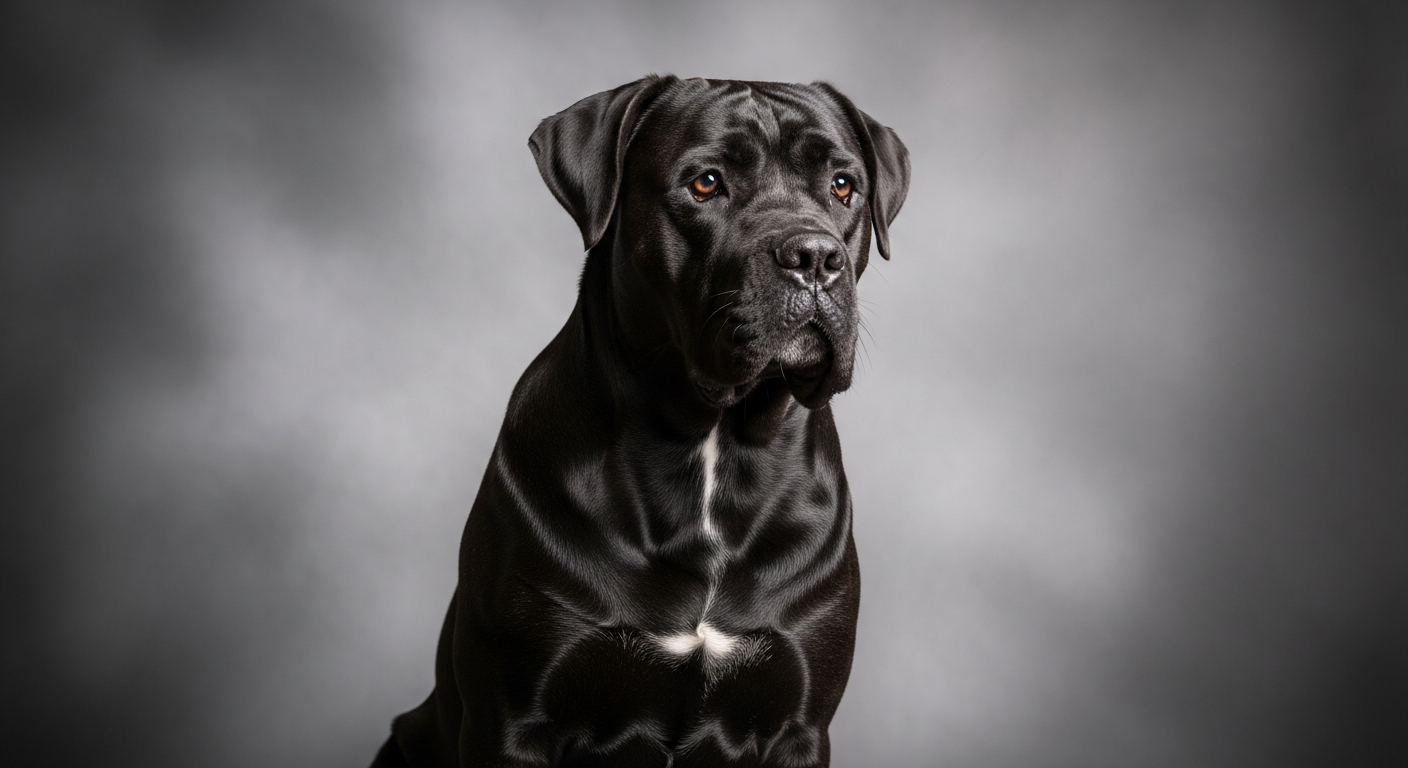
History & origins
The Cane Corso is an Italian mastiff-type breed with deep roots as a guardian and general-purpose working dog, used historically to protect property and livestock and to assist on rural estates. This is a large, powerful dog bred for confidence, territorial awareness, and a strong bond with its own family.
That guardian heritage shapes a Corso that is naturally watchful, discerning with strangers, and deeply devoted to its people. Such a capable dog needs thoughtful, force-free guidance from the very start: early, positive socialization to a wide range of people, places, and experiences so the protective instinct stays balanced and confident rather than fearful. Because of the breed's size and strength, reliable cooperation matters — and the most durable cooperation comes from a trusting relationship, reward-based teaching, and clear, consistent communication, never intimidation. Aversive handling of a guardian breed risks fear and defensiveness; positive methods build the calm, confident, well-socialized companion this breed can be. Channel the working drive with structure, jobs, and engagement.
Quick answers
Short, focused guides for the questions owners actually search for.
- Best No-Pull Harness for a Cane Corso: Fit Before Brand
- Best Enrichment Toys for a Cane Corso Power Chewer (Force-Free Guide)
- How to Stop a Cane Corso From Pulling on the Leash (Force-Free Guide)
- How to Muzzle Train a Cane Corso the Cooperative-Care Way
- Dog Heat Safety by Breed: What Actually Changes the Risk
Pro Principles
Congratulations on your Cane Corso. You are raising one of the most intelligent, handler-focused, and capable dogs in the world: an Italian molosser bred for centuries to guard property and livestock. That working history is a gift and a responsibility. A well-raised Corso is confident, discerning, deeply bonded, and steady. Every protocol in this guide is built with reward-based, LIMA (Least Intrusive, Minimally Aversive) methods only — the standard endorsed by the American Veterinary Society of Animal Behavior, the AVMA, and the major certifying bodies. There are no choke, prong, slip, or shock collars here, no alpha rolls, and no “dominance” or “pack-leader” framing. For a guardian breed, reward-based training is both the humane choice and the effective one.
Two truths shape everything that follows. First, size and bite force raise the stakes. An ordinary management mistake that is trivial in a small dog can have serious consequences in a powerful guardian breed. Your safety net is not confrontation — it is prevention, secure containment, generous early socialization, and leadership-by-management. Second, many things that look like “attitude” are actually medical. Pain is one of the most common hidden drivers of behavior change in dogs. Before you treat any sudden irritability, reluctance to move, new aggression, or change in behavior as a training problem, see your veterinarian first. A trainer is not a veterinarian.
These principles sit above every individual exercise in this guide. They are non-negotiable for a powerful, intelligent guardian breed.
LIMA / positive reinforcement only. Reward the behavior you want and manage the environment to prevent the behavior you don’t. Aversives and harsh corrections damage trust, worsen fear and defensive aggression, and teach a confident guardian breed to either shut down or escalate. This is both the ethical and the effective choice — not a soft one.
Harness, never collar pressure. Attach the leash to a well-fitted Y-front harness that keeps all force off the throat. A flat collar is for ID tags only. On a powerful dog, neck-collar pressure both risks injury and actually invites pulling.
Front-load socialization, then keep it going. Pour broad, positive, carefully managed exposure to people, dogs, handling, novel places, surfaces, and sounds into the puppy critical window (through roughly 16 weeks) — and do not stop there. Guarding and territorial behavior can resurface at social maturity (about 12–24 months), so socialization is a multi-year project, not a puppy task you tick off.
Short, calm, low-arousal sessions that end on a win. Two to four micro-sessions of a few minutes each beat one long drill. This breed is smart and biddable, so brief, reward-rich reps are plenty. Managing arousal is a safety issue: high arousal lowers the threshold for guarding and reactive responses, so keep the energy down and stop while your dog still wants more.
Feed the working brain. A guardian breed needs a job. Channel that intelligence into scentwork, foraging, food puzzles, and structured training rather than just physical drilling. Mental enrichment tires a thinking dog and reduces the restlessness that fuels nuisance and guarding behavior.
Read body language as whole-body clusters in context. Interpret eyes, ears, mouth tension, weight shift, stillness, and tail together, against this dog’s own baseline — never one twitch in isolation. A stiff body with a slow tail is not friendly. A freeze means “stop now.” Learn your individual dog’s normal so you can spot the change.
Train rock-solid foundations and proof them slowly. Prioritize name response, a marker, recall, settle/relaxation, loose-leash walking, cooperative-care handling, and a reliable “leave it”/trade. Proof each with the 3 Ds — Duration, Distance, Distraction — raising only one at a time and aiming for about 80% success before you level up. Dogs do not generalize automatically; re-teach in new places.
Advocate for your dog, and know when to get help. Guardian breeds are discerning, not indiscriminately social — do not flood them with forced greetings. Escalate early to credentialed force-free help (CPDT-KA/KPA-CTP, then IAABC/CTC, then a board-certified veterinary behaviorist / DACVB) for any guarding that generalizes or escalates, reactivity you cannot keep sub-threshold, or any bite that breaks skin. Getting help early is a sign of good ownership.
This guide is educational content built on established, breed-appropriate, force-free practice. It is not a substitute for individualized veterinary or behavior-professional guidance. When in doubt, rule out pain and disease first, and loop in a qualified professional early.
Before You Start
Before any group socialization or training plan, establish a veterinary partnership and a baseline picture of your dog’s health. For a giant-breed guardian, this is the foundation that everything else sits on: it protects the joints, catches pain that would otherwise be mislabeled as “stubbornness,” and sets up a lifetime of low-stress care.
Set up the veterinary foundation›
Step by step
- Book a new-puppy/new-dog exam before any group exposure. Confirm the dog is healthy, has had at least its first core vaccine set and a first deworming, and shows no signs of illness.
- Choose a Fear Free / low-stress-handling practice if you can. A large dog who is calm and cooperative at the vet is a lifelong safety asset; a fearful one is a serious handling problem.
- Discuss large- and giant-breed health priorities with your vet: orthopedic development and growth-plate protection, joint health, cardiac screening, and an appropriate large/giant-breed growth diet (do not overfeed for fast growth).
- Learn to do a Body Condition Score (9-point scale; aim for 4-5/9): you should easily feel the ribs without pressing, see a waist from above, and see a belly tuck from the side. A lean dog protects its joints and heart.
- Program your nearest 24-hour emergency vet and the ASPCA Animal Poison Control number (888-426-4435) into your phone today.
- Adopt the rule for life: any sudden behavior change, new irritability, reluctance to move, or worsening breathing gets a vet exam BEFORE it is treated as a training issue.
For a guardian breed, early socialization is the most protective thing you will ever do — and the window is short. You must socialize during the critical period while still managing real infectious-disease risk. The goal is neither waiting too long nor exposing the puppy unsafely.
Socialize safely during the vaccine series›
Step by step
- Understand that the core puppy vaccine series is a SERIES, not one shot: boosters roughly every 2-4 weeks from about 6-8 weeks until around 16+ weeks. A single early vaccine does not confer full protection.
- You may begin socialization after the first vaccine set plus first deworming plus about 7 days, if the puppy is healthy — but keep up the full booster schedule and do not assume full immunity until the series completes.
- Until the series is complete, socialize on clean/controlled surfaces and with known healthy, vaccinated dogs only. Avoid dog parks, pet-store floors, and rest stops with unknown-dog traffic or feces.
- Front-load your most important exposures into the early weeks of the window, when receptivity is highest, using these precautions.
- Remember the trade-off: behavior problems from missed socialization re-home and euthanize far more young dogs than infectious disease does — and in a large guardian breed, under-socialization is an especially costly mistake. Manage infection sensibly; do not let fear of it cause you to under-expose.
On a strong dog, gear is a safety system. A well-fitted Y-front harness loads the chest and keeps all force off the throat — protecting the airway and neck and reducing the pulling battles that neck pressure provokes.
Fit the harness and assemble gear›
Step by step
- Choose a sturdy Y-front (Y-shaped chest) harness rated for a large dog. Never attach a leash to a neck collar, choke, slip, prong, or head halter.
- Measure while the dog stands: chest/girth at the widest point just behind the front legs, and the base-of-neck girth where the neck meets the shoulders.
- Fit so the front strap forms a clear Y over the breastbone — not a horizontal bar across the throat — and the belly strap sits a couple of finger-widths behind the armpits, never in them.
- Apply the two-finger rule: two flat fingers slide snugly under every strap. Confirm no gaping, twisting, rotating, or armpit rub, and full shoulder freedom when the dog walks and shakes off.
- Use a fixed 4-6 ft leash for walks (no retractable, which teaches pulling and fails under a big dog’s force) and a long line for recall work, both clipped to the harness.
- Re-measure and re-fit frequently during the fast growth of a large-breed puppy, and after any weight change.
In a large guardian breed, prevention does the heavy lifting that confrontation never should. “Leadership” here means controlling the environment so your dog rarely gets to rehearse the behaviors you don’t want — not winning a battle of wills. Secure containment and proactive management are what keep a powerful, territorial dog, your household, and your community safe.
Build a management-first home›
Step by step
- Secure the perimeter: a fence the dog cannot jump, dig under, or push through, with gates that latch reliably. A territorial guardian must not be able to self-deploy to the property line or beyond.
- Use management tools generously: baby gates, an exercise pen, a dog-proofed room, tethers, and crates (conditioned positively) to prevent rehearsal of guarding, door-dashing, or unwanted greetings.
- Manage the front door deliberately: have a routine for visitors (dog behind a gate or on a mat) so arrivals never become a chaotic, high-arousal guarding event.
- Feed separately and never reach into the bowl or take items by force — set up trades instead (see Foundations). Proactive resource-guarding prevention is far easier than treatment.
- Supervise all interactions with children, and never allow anyone to hug, loom over, corner, or disturb a resting or eating dog.
- Advocate actively in greetings: a discerning guardian breed should never be flooded with forced introductions. It is your job to create space and say no on your dog’s behalf.
The Cane Corso is not brachycephalic, so its airway cools better than a flat-faced breed’s — but a large, muscular, often dark-coated dog still carries a lot of body mass and overheats faster than people expect, especially in a hot climate. Build a quick decision habit before every outdoor session.
Run the 30-second go/no-go check›
Step by step
- Check temperature AND humidity together; humidity limits a dog’s ability to cool by panting. Be conservative on hot, humid, or full-sun days. As a rough rule of thumb, when outdoor air temperature (°F) plus relative humidity (%) climbs toward the danger zone — a conservative starting line is around 150 — call off sustained outdoor activity and default to indoor enrichment. The Cane Corso is not flat-faced, so it tolerates somewhat more than a brachycephalic breed, but treat any number near this as a stop — when in doubt, default to NO.
- Do the 7-second pavement test: press the back of your hand flat on the sunlit walking surface. If you cannot hold it comfortably for 7 seconds, it is too hot for paws — and a warning that conditions are dangerous overall.
- Time it right: in hot climates, exercise in the cool parts of the day — early morning or well after sundown. Skip midday exertion.
- Pre-load: offer fresh water, fit the harness, pick a shaded route with bail-out points, and have a cool-down option (water, shade, fan/AC) ready.
- Watch the dog, not the plan: stop at the first sign of labored breathing, heavy drool, weakness, or distress, and head for shade and water.
- Never leave the dog in a parked car, even briefly, even with windows cracked. Default to NO in doubt — a skipped walk costs nothing.
A Cane Corso’s growth plates stay open for a long time — commonly into the 12-18+ month range. Until they close, repetitive high-impact loading can injure developing joints. Free movement and play at the puppy’s own pace are good; forced, repetitive, high-impact activity is not.
0/6
Every threshold-based protocol — socialization, cooperative care, reactivity work, greetings — depends on reading your dog accurately. A Cane Corso is often quiet and stoic, so the early, polite signals can be subtle. Learn them now, before you need them under pressure.
Build body-language literacy›
Step by step
- Learn the early/displacement signals: lip-licking, yawning when not tired, suddenly sniffing the ground, looking away, a shake-off, a brief freeze.
- Learn the clearer distance-increasing signals: a hard fixed stare, stiffening, weight shifting forward, ears pinned, closed/tense mouth, and — critically — refusing food the dog normally takes.
- Treat a freeze as a critical red flag: a freeze means STOP NOW and often immediately precedes a snap. A stiff body with a slow tail is not friendly.
- Read whole-body clusters in context, against THIS dog’s baseline — never one signal alone. A wag on a stiff body is not an invitation.
- Adopt the universal rule: the moment you see escalating stress, you are over threshold — calmly create distance and lower difficulty. Refusing food is your best single 'too much' alarm.
- Treat every growl as valuable information. Never punish it; back off, note the trigger, and rule out pain.
New Puppy (8–12 wks)
The marker is a promise: it always means a reward is coming, every time, even if you marked by mistake. It lets you pinpoint the exact instant your dog does something right. Charge it first — everything else builds on it.
Load the marker›
Step by step
- Choose ONE marker: a clicker (precise) OR a short, crisp 'Yes' (always available, hands-free). Be consistent across the whole household.
- Load a pouch with a handful of small, soft, pea-sized treats, counted against the daily food ration to keep your big puppy lean.
- Mark FIRST, then feed: click or 'Yes', a half-second pause, then deliver one treat. The order matters — the marker must come before the food.
- Repeat 15-30 reps in a calm, quiet room. The puppy does not need to do anything yet; you are only building marker = food.
- Test it: when the puppy looks away, mark once. If its head snaps toward you expecting a treat, the marker is charged.
- Then start marking tiny good behaviors — eye contact, four paws on the floor, a calm sit — and feeding.
- Keep it sacred: every mark is always followed by a reward, even a mistaken one.
Hearing its name should mean “orient to and check in with my person” — a happy reflex, never a reprimand. For a future large dog, a rock-solid name response is a foundation for attention, redirection, and safety.
Teach the name›
Step by step
- Pairing: say the name once, happily, then mark and feed — regardless of what the puppy is doing. Repeat 8-10 times.
- Orienting: say the name once and WAIT. The instant the puppy looks at you, mark and feed generously. No response in about 2 seconds? Don't repeat the name — make a kissy noise, mark the look, and make the next rep easier.
- Distance and distraction: step a foot away, say the name, mark the look, treat. Gradually add mild distractions and new rooms.
- Proofing: practice in the yard and quiet outdoor spots, always rewarding well.
- Protect the cue: say the name only once per rep, and never pair it with anything the dog dislikes.
An over-tired, over-aroused puppy mouths harder, ignores cues, and escalates — and in a large mouthy breed those behaviors carry more force. Enforced rest is your FIRST intervention before treating mouthing or wildness as a behavior problem.
Protect rest›
Step by step
- Treat sleep as a need you actively manage. A young puppy sleeps the large majority of the day; do not expect it to self-regulate.
- After roughly every 1-2 hours of wake time, guide the puppy to a calm rest space (a covered pen or open crate with a stuffed chew) for a nap, even if it protests briefly.
- Recognize over-tired signs: frantic zoomies, escalating mouthing, ignoring known cues, getting 'wired.' Read these as 'needs a nap,' not 'needs more exercise.'
- Keep the rest space quiet, cool, and dim; use white noise if the home is busy.
- Before any consequence for biting or wildness, ask first: is this puppy over-tired or over-aroused? If so, nap first.
- Build the day so enrichment and training are followed by enforced downtime.
All puppies mouth, and large-breed puppies mouth hard. The goal now is a soft mouth: first eliminate painful pressure, then reduce frequency — calmly, so that a dog who will one day be powerful learns human skin is delicate. This is done with redirection and disengagement, never with intimidation.
Teach a soft mouth›
Step by step
- FIRST rule out over-tiredness and over-arousal: mouthing spikes when a puppy is tired or wound up. Enforce a nap and lower the energy before treating biting as a behavior to address.
- Stop the hardest bites: when a bite hurts, calmly become still and boring, or briefly disengage by stepping back. The hard bite ends the fun. Then redirect to an appropriate chew.
- If a sharp 'Ouch!' or yelp escalates your puppy (common — it can act like a play cue), drop the yelp entirely and use calm, silent disengagement instead.
- For a brief pause, prefer stepping back a few feet or using a tether or pen for several seconds rather than leaving the room.
- Reduce all pressure: once hard bites stop, react to progressively softer mouthing so the puppy learns even gentle teeth on skin ends the game.
- Teach 'Off': hold a treat in a closed fist; when the puppy stops mouthing for a second, mark and let it 'take it.' Build duration.
- Channel the oral needs: keep approved chews, food puzzles, and impulse-control games ready, and reinforce calm, four-on-the-floor behavior with attention.
A Cane Corso will grow far too large to restrain by force at the vet or groomer. Conditioning calm, consenting handling now — while the puppy is small — is one of the highest-value investments you can make in lifelong, low-stress care and safety.
Condition handling and care›
Step by step
- Pair brief, pleasant touch with treats: stroke the shoulders and back, touch then treat, keeping the puppy relaxed.
- Add body parts in short sessions: ears, muzzle and lips (lift to view teeth), paws and individual toes/nails, tail and rear, and belly. Touch briefly, mark, treat, and build duration slowly.
- Teach a consent/start-button behavior, such as a chin rest in your palm, that means 'I'm ready.' If the puppy lifts its chin or moves away, STOP immediately. Choice reduces struggling.
- Introduce tools positively: show a nail clipper or grinder, touch it to a nail without cutting, mark and treat; let the puppy hear a running grinder at a distance; do the same with a brush and a capped syringe.
- Counter-condition gentle restraint: a one-second hold, treat, release; build slowly toward the brief holds a vet exam requires.
- Do one nail 'touch' or tiny tip per day with jackpot rewards, progressing slowly to real clips.
- Generalize to other handlers and, via happy visits, to vet staff.
For a guardian breed, broad, positive, carefully managed socialization is the single biggest protective investment you will make. The aim is an optimistic, resilient adult who is neutral about the everyday world — not a dog flooded into fear. Quality and the puppy’s sense of choice matter far more than quantity.
Socialize with quality and consent›
Step by step
- Confirm safety first (see Phase 0): first vaccine set plus deworming, a healthy puppy, controlled/clean surfaces, and known vaccinated dogs.
- Pair each new person, dog, surface, sound, and place with food or play at LOW intensity first: reward the puppy for noticing it from a comfortable distance, then decrease distance only while the puppy stays relaxed.
- Let the puppy CHOOSE to approach. Reward investigation; never drag, lure, or force a worried puppy into contact — for a guardian breed, a bad scare can have lasting consequences.
- Aim for several brief, positive exposures rather than one overwhelming outing, and end each on a success the puppy can handle.
- Advocate hard: do not let strangers or other dogs mob or loom over your puppy. A discerning breed should never be flooded with forced greetings — keep dog-dog greetings short and then move apart.
- Enroll in a force-free, vaccine-screened puppy class for safe, supervised exposure to other dogs and handlers.
- Practice startle-and-recover: stay calm, give space to investigate, reward the recovery, and resume.
Track exposures so you can find and fill gaps before the window closes. Every item should be paired with food/play, kept positive and at the puppy’s pace, and stopped the moment the puppy shows stress. Tick each only when the puppy was relaxed and happy — a fearful exposure is worse than none.
0/12
House-training is management plus reinforcement — never correction. You prevent indoor rehearsal with supervision and confinement, and you reward heavily for getting it right outside.
Build reliable potty habits›
Step by step
- Take the puppy out on leash to ONE spot on every trigger: on waking from every nap, within about 10-15 minutes after meals, after play or training, after excitement, and on any sniffing or circling.
- For a young puppy, default to a short interval (roughly every 1-2 hours) rather than stretching it; very young puppies cannot hold it long.
- Stand still at the same spot and say a calm cue ('go potty') as elimination begins.
- The instant they finish, mark and treat within about 2 seconds, OUTSIDE, on the spot — never wait until back indoors.
- If they don't go, return to the pen or crate for 10-15 minutes and try again — no free roam on an empty attempt.
- Supervise 100% when loose (tether the puppy to you) or confine when you cannot watch.
- Clean every accident with an enzymatic cleaner. Never punish or rub the nose in it — that only teaches the puppy to hide and eliminate out of sight.
The Cane Corso bonds deeply to its people. That devotion is wonderful, but a dog who cannot tolerate being alone is at risk of distress. Teach early, proactively, that being alone and not the center of attention is safe and ordinary — prevention is far easier than treating separation distress later.
Build alone-time as a skill›
Step by step
- Feed some meals or give chews in an 'alone zone' a short distance from you, so being slightly apart predicts good things.
- Reinforce the puppy settling on its own while you are home (capture calm), so it does not need constant contact.
- Make departures and arrivals boring: no dramatic goodbyes or excited hellos.
- Do tiny, frequent absences well within the puppy's comfort — step out of sight for a few seconds and return BEFORE any distress, then build duration gradually.
- Vary your pre-departure cues (keys, shoes) during calm moments so they stop predicting absence.
- If you ever see genuine distress when alone, stop building absences and treat it as separation distress — seek qualified help rather than pushing through.
Foundations (12–16 wks)
Before the harness is just gear, make it a conditioned positive — something your dog actively wants to put on. This pays off enormously when a calm, willing big dog presents itself for the harness instead of being wrestled into it.
Teach the dog to love the harness›
Step by step
- Confirm fit first (Phase 0): Y over the sternum, chest strap below the throat, two-finger rule, shoulders free.
- Lay the harness on the floor and mark/reward any sniff or investigation.
- Hold it up and feed THROUGH the neck opening so the puppy pushes its own head in voluntarily.
- Pass it over the head briefly, reward, and remove; build the puppy offering its head into the opening.
- Fasten the buckles, deliver continuous treats, and remove after about 30 seconds; build duration gradually.
- Feed meals or play favorite games while it is on so wearing it predicts good things.
- Build to several minutes of relaxed wear indoors before attaching a leash.
The core positions are taught by luring, then fading the lure to a hand signal, then adding the verbal cue last. Keep it reward-based and physically gentle — never push or force a large puppy’s body into position, which is both aversive and a joint risk.
Sit›
Step by step
- With the puppy standing, hold a treat at its nose and slowly raise it up and back over the head.
- As the nose follows up, the rear lowers; the instant it touches, mark and reward at chest level so the puppy stays put.
- After 3-5 reps, do the identical motion with an EMPTY hand (palm-up sweep) and reward from the other hand.
- Shrink the gesture to a small palm-up signal.
- Add the word 'Sit' just before the hand signal once the signal is reliable.
- Generalize to new rooms, then the yard, lowering criteria in each new place. Capture spontaneous sits to build a default sit.
Down›
Step by step
- From a sit or stand, hold a treat at the nose and lower it straight to the floor between the front paws.
- If needed, slide it slightly toward you so the puppy follows into a down; mark when the elbows touch.
- Reward on the floor between the paws to reinforce staying down.
- Fade to an empty-hand downward point after 3-5 reps; add 'Down' before the signal once reliable.
- Practice on a soft mat or rug — hard floors discourage a big puppy from lying down.
Stand (a vet and grooming skill)›
Step by step
- From a sit or down, draw a treat straight FORWARD and slightly up, away from the dog.
- As the dog steps forward to follow, all four feet plant; mark the stand and reward by feeding forward so it does not re-sit.
- Fade the lure to a flat hand drawn forward; add 'Stand' before the signal once reliable.
- Build a brief hold so the dog can be examined or towel-dried.
For a guardian breed, a trained off-switch is a safety tool: a dog that can down-regulate on a mat is a dog whose arousal stays low, and low arousal keeps the threshold for guarding and reactive responses high. Teach calmness as an actively trained default, not just an absence of activity.
Install settle and mat relaxation›
Step by step
- Capture calm: whenever the puppy lies down quietly on its own, calmly drop a treat between its paws without exciting it.
- Introduce a mat: reward any interaction (a look, a step on, lying on it), shaping toward lying down.
- Mark RELAXATION, not just position: a hip-roll to one side, head lowering, slower breathing, soft eyes, a sigh. Deliver treats calmly and low; skip the clicker here to avoid re-arousing.
- Build duration by gradually increasing the time between treats; fade food to quiet praise.
- Add a cue ('settle' or 'relax') once relaxation is reliable, then generalize to new rooms and mildly busy contexts.
- Pair the mat with a stuffed chew so it reliably predicts calm, and place it where the dog can observe the home without being on guard at the door.
Become the most rewarding thing in your dog’s environment, and teach a versatile nose-target. For a large dog, “touch” is a low-stress, hands-off way to move, redirect, and reposition it without any pulling or pushing.
Build engagement and 'touch'›
Step by step
- Capture offered attention: say nothing; the instant the puppy looks at you, mark and treat.
- Teach 'touch': present a flat palm; when the puppy's nose bumps it, mark and treat. Move the target around so the dog follows it.
- Play engagement games: toss a treat, then mark the puppy reorienting back to you; add find-it scatter games and short, rules-based tug (toy, not hands).
- Reward voluntary check-ins during walks and around mild distractions so focus generalizes to the real world.
- Use 'touch' as a redirect: cue it to move the dog past a distraction or away from a trigger before arousal climbs.
- Keep sessions short, ending on a win before the dog tires or loses focus.
Teach the dog to ignore a forbidden item ('leave it') and to release something in its mouth ('drop it'), both by trading up. Done this way, these cues do double duty: practical safety, and proactive prevention of resource guarding — the dog learns that your approach to its things predicts something better, never a loss.
Teach leave-it and drop-it by trading up›
Step by step
- LEAVE IT, level 1: present a closed fist with a treat; let the puppy sniff and paw. The instant it backs off or looks away, mark and reward from the OTHER hand.
- LEAVE IT, level 2: place a treat on the floor under your hand; reward backing off. Add 'Leave it' as the puppy reliably disengages, then progress to uncovered food and dropped food while walking — always pay from your hand.
- DROP IT: play with a toy, then offer an equal-or-better item or treat and say 'Drop it' as the mouth opens; reward, then OFTEN give the toy back so dropping does not end the fun.
- Build cue value: reward 'drop it' every time with something equal or better, so releasing always pays.
- Generalize 'leave it' to real life (food on the ground, dropped items), proofing with higher-value temptations at a safe distance first.
- Keep two identical toys handy for frictionless drop-it reps.
A reliable recall is a top-tier safety skill for a large, territorial dog. Build it as a happy, low-arousal game and protect the cue fiercely — it must always predict something wonderful, never the end of fun or anything the dog dislikes.
Build a happy recall›
Step by step
- Indoors, charge the recall word: say 'Come!' once, take a few steps backward, mark when the puppy commits, and jackpot at your legs.
- Play calm ping-pong: two people about 10-15 ft apart take turns calling, marking the commitment, and paying at the legs.
- Premack recall: call the puppy away from something mildly fun, reward, then RELEASE it back to the fun as a bonus.
- Harness-grab game: touch the harness, then feed — so reaching for the dog is never the end of the fun and never something to dodge.
- Reserve a separate emergency word, paired with about 10 rapid treats, and use it rarely so it never loses value.
- Protect the cue: never call the puppy for anything it dislikes, never repeat the word when ignored, and never call when you cannot reward or follow through.
- Move outdoors only with the dog on a long line clipped to the harness, keeping a 'J' of slack, and build distance and distraction one at a time.
Loose-leash walking is far easier to build before your puppy is big and strong. Master the mechanics indoors with zero distractions and zero neck pressure, so that walking politely — not pulling — is the deeply ingrained default by the time your Corso has real power.
Teach slack-leash mechanics›
Step by step
- Gear: a Y-front or front-clip harness (never a collar for leash force) and a fixed 4-6 ft leash. Keep treats on your walking side.
- Indoors, take ONE step; mark and feed at your side before the dog forges ahead. Repeat for many single steps at a very high rate of reinforcement.
- Build to 2, then 3 steps per mark, then randomize (1, 5, 2, 4) to keep the dog engaged.
- If the leash tightens, STOP — forward progress is the reward that pulling must never earn. Encourage the dog back to your side, then take 2-3 steps before feeding, so the lesson is 'walk nicely = treat,' not 'pull, return, eat.'
- Optional reverse-direction: when the dog forges, calmly turn and walk the other way, rewarding when it catches up.
- Add a 'go sniff' release as a functional reward — sniffing is calming and lets a powerful dog decompress on a walk.
A Cane Corso is a working dog with a working brain. Mental enrichment is not a bonus — it is the primary daily workload that satisfies that intelligence, tires the dog without pounding growing joints, and reduces the restlessness and over-arousal that feed guarding and nuisance behavior.
Make enrichment the daily job›
Step by step
- Replace some or all of the food bowl with foraging: scatter-feed in grass, use a snuffle mat, and stuff food puzzles and slow-feeders.
- Build simple nosework: hide treats around a room and cue 'find it,' then progress to searching for a specific scented item — scentwork is deeply satisfying for this breed.
- Add a short, slow, dog-led 'sniffari' in cool conditions; the goal is sniffing and decompression, not distance or speed.
- Offer a lick mat or appropriate chew daily for calming, down-regulating enrichment.
- Rotate puzzles and games to keep novelty high and the brain working.
- Always follow enrichment with protected rest so the dog settles rather than tipping into over-arousal.
The foundations phase is not the end of socialization. A guardian breed’s territorial and protective instincts can strengthen as it matures, so the positive, varied exposure you started as a puppy needs to continue — sub-threshold and rewarding — well past the first year.
0/6
Adolescence (4–12+ months)
Adolescence is the teenage stage: known cues get "flaky," your dog gets more sensation-seeking and easily aroused, and recall in particular tends to fall apart. None of this is defiance, spite, or a bid for "dominance" — it is normal brain development. The plan for the whole stage is the same: maintain, manage, and re-proof with patience — never punish.
For a Cane Corso there is a second, breed-defining layer. This is a guardian breed, and social maturity arrives slowly — roughly 12 to 18 months (often later in slow-maturing giant breeds). Around this window, territorial and protective behavior can surface or intensify even in a well-raised, well-socialized pup: more interest in the fence line, barking at the door, becoming choosier about strangers and other dogs. This is expected developmental change in a guarding breed, not a training failure. Your job is to keep exposure positive, keep arousal low, and channel that emerging watchfulness into calm, managed behavior rather than letting it rehearse and escalate.
Around 5–12+ months, expect cues you thought were solid to get unreliable. The fix is never more pressure — it is to make the dog right again by lowering difficulty and raising the payoff. A smart, biddable Cane Corso rebuilds quickly when you set it up to succeed.
Re-Proofing a Cue That Has Fallen Apart›
Step by step
- When a cue breaks down, DROP CRITERIA: lower the 3 Ds (Duration, Distance, Distraction), go back to an easy room, and raise the reward value. Do not escalate pressure.
- Keep short maintenance reps on every important cue (recall, settle, leave-it/trade, loose-leash walking, cooperative-care handling) so they do not decay.
- Re-run long-line recall as if it were brand new; assume off-leash reliability is gone for now and do not test it.
- Manage the environment heavily — gates, leashes, a long line — so a powerful adolescent cannot rehearse pulling, door-rushing, fence-running, or chasing while impulse control is offline.
- Keep sessions short, calm, and low-arousal, ending on a win; an over-tired or over-aroused adolescent learns poorly and mouths/escalates more.
- Stay patient and ride out the non-linear setbacks — this stage passes. If a cue collapses suddenly and dramatically, rule out medical/pain and a fear period before assuming "teenager."
0/6
For a guardian breed, broad, positive, ongoing exposure is the single biggest protective investment you can make — and it does not stop when the puppy window closes. Keep socializing (more gently and at the dog's pace) all the way through social maturity, because guarding and territorial behavior can resurface around 12–24 months. The goal is a dog who can calmly notice people, dogs, novelty, and activity and then disengage — not a dog flooded into tolerating things it finds threatening.
Ongoing Socialization & Fear-Period Management›
Step by step
- Work at a distance where your dog can see the trigger (a person, dog, bicycle, novel place) but stay loose and keep eating. Reward calm noticing, then reward the dog turning back to you.
- Advocate actively: a Cane Corso is discerning, not indiscriminately social. Do NOT force introductions or let people or dogs crowd, loom over, or corner your dog. A polite "ignore it and move on" is a great outcome, not a deficiency.
- Set up greetings to succeed: approach in curves rather than head-on, keep it to a brief 3-second greeting, then move apart and watch both dogs' whole bodies for loose-versus-stiff.
- If new wariness appears toward previously-neutral things (a possible second fear period), respond to BEHAVIOR, not the calendar: ease off intensity, add distance, and rebuild with easy, rewarding known behaviors (touch, find-it). Keep exposing — just gentler.
- Never flood a frightened dog "to get over it." A genuinely scary event during a sensitive period can leave a lasting mark in a guardian breed, so keep every exposure sub-threshold.
- Note the antecedent to anything that worries your dog, and protect rest afterward — arousal hangovers lower the threshold for the next reaction.
The Cane Corso is a slow-maturing giant breed, and its growth plates do not close until roughly 12–18+ months. Repetitive high-impact loading on immature joints — and carrying too much weight while growing — sets up lifelong orthopedic problems. During adolescence, protect the body as carefully as you train the brain.
Adolescent Exercise That Protects the Body›
Step by step
- Until growth plates close, avoid repetitive jumping (on/off furniture, in/out of the car), forced running, jogging/biking alongside you, hard pivots, and repeated stairs. Use a ramp and lift the pup where practical.
- Let the dog self-pace on walks; free sniffing and pottering should not be rationed, but skip structured distance/endurance work and high-impact games while young.
- Keep movement on NON-SLIP footing — rugs and runners over slick tile/hardwood — to protect a heavy, developing frame.
- Lean on low-impact mental work (scatter-feeding, snuffle mats, food puzzles, scentwork, short training games) as the primary daily workload — it tires a working dog without pounding joints.
- Keep sessions short and build in enforced rest; over-tired adolescents get mouthy and over-aroused.
- Schedule real exertion for the cool parts of the day and stop at the first sign of heavy, labored breathing.
0/6
On a dog this large and strong, fear at the vet or groomer is a safety problem — you cannot simply overpower a worried adult Cane Corso, and you should never try. Build consent-based handling and a well-conditioned basket muzzle now, in adolescence, so lifelong care is calm and low-stress. This is responsible ownership of a powerful breed, not a sign that anything is wrong with your dog.
Consent-Based Handling & Muzzle Conditioning›
Step by step
- Teach a chin-rest "start button": the dog rests its chin in your palm to say "I'm ready," and you STOP the instant it lifts its chin or moves away. Choice reduces struggling.
- Pair brief, pleasant touch with treats across the body — ears, muzzle/lips, paws and individual toes, tail and rear — building duration only while the dog stays relaxed.
- Introduce mock tools positively: show the nail clipper/grinder, touch it to a nail with no cut, mark and treat; let the dog hear a running grinder at a distance.
- Choose a WIDE basket muzzle that lets the dog fully pant, drink, and take treats. Stage it: reward looking at it, then smear something tasty inside so the dog pushes its own nose in, then build duration of nose-in, then briefly fasten and feed continuously, unfastening before any worry.
- Add short walks and brief movement while wearing the muzzle, paying generously, so it predicts good things.
- Generalize the whole routine to helpers and, via happy no-procedure visits, to clinic staff.
On a large dog with real strength and moderate prey drive, a reliable recall and a rock-solid "leave it"/trade are genuine safety skills. Build them on a Y-front harness and a 15–30 ft long line — never on neck-collar pressure, which on a powerful dog invites pulling battles and risks injury. Keep arousal low: high arousal lowers the threshold for guarding and reactive responses, so calm reps beat exciting ones.
Building Recall & Self-Control›
Step by step
- Clip the long line to the harness and keep a "J" of slack. To stop a bolt, step on the line — never yank.
- Practice calm recall games (ping-pong between two people ~10-15 ft apart; Premack: call away from something fun, reward, then release back to it). Pay generously at your legs.
- Progress criterion: 5 perfect, calm, sub-2-second recalls at one level before adding distraction or distance. Re-proof often through adolescence.
- Teach "leave it" and "drop it"/trade by always trading UP or returning the item, so the dog never learns to guard, gulp, or run with contraband.
- Run "It's Your Choice" impulse-control reps: the dog's own choice to back off from food in a closed fist, then an open palm, then on the floor, earns the reward. Stay silent during the choice so it stays self-control, not imposed control.
- Protect the cue: never call your dog for anything it dislikes, and never call when you cannot reward or follow through. Keep a separate emergency-recall word paired with a jackpot, used rarely.
Adult & Advanced (12+ months)
An adult Cane Corso is intelligent, handler-focused, and built to work. A bored guardian invents its own job — usually patrolling, barking, and over-watching the property. Give the brain a legitimate outlet and most "problem" behaviors shrink. Mental work is not a bonus; for this breed it is the core of a satisfying day, and it is low-impact enough to protect the joints.
Advanced Enrichment & Structured Work›
Step by step
- Build a scentwork/nosework habit: start with treats in one of several boxes, reward AT the source, then expand to room and exterior searches. Sniffing is calming, confidence-building, and genuinely tiring.
- Run structured training as a job: shaping games, a low-impact trick repertoire (touch, chin rest, spin on the flat, back-up, find-it), and short skill chains on non-slip footing.
- Use foraging for meals — snuffle mats, slow-feeders, and food puzzles — instead of a bowl, so the dog "works" for food.
- Add cooperative, calm jobs the breed enjoys: carrying a backpack on a cool walk (light load, mature dog), structured loose-leash patrols of a route, and tracking-style games.
- Pursue optional titles within limits — scentwork, trick titles, Canine Good Citizen-style work — rehearsing calm ring-entry and novel venues.
- Follow every enrichment session with enforced rest so the working brain down-regulates rather than tipping into over-arousal.
Property- and visitor-guarding is the Cane Corso's heritage, and on a dog with this size and bite power, ordinary management mistakes carry serious consequences. The goal is not to crush the instinct with intimidation — that backfires — but to lead by management: control the environment so the dog cannot rehearse over-guarding, and teach a calm, trained alternative at the door. Prevention and secure containment do most of the work.
A Calm Door & Visitor Routine›
Step by step
- Manage first: a secure, tall fence with a locked gate, no unsupervised yard access to the fence line where the dog can rehearse barking at passers-by, and a baby gate or tether station set back from the front door.
- Pre-train a "go to your place"/settle on a mat well away from the door, to fluency, in calm conditions before using it for arrivals.
- For arrivals, cue the dog to its place behind a gate and reward calm staying. The dog greets only after it has settled — never while aroused at the threshold.
- Have guests ignore the dog at first (no looming, reaching, or direct staring). Let the dog choose to approach; reward calm investigation. Many guardian dogs are happiest simply coexisting, not being petted by strangers.
- Reward the dog for orienting to you when the doorbell or a knock happens, so the trigger becomes a cue to check in rather than to charge.
- Never punish barking at the door — redirect to the trained alternative and reinforce quiet. Punishment suppresses the warning while leaving the underlying arousal intact.
Resource guarding — stiffening, freezing, or growling over food, chews, toys, a resting spot, or a person — is normal, fear/loss-driven behavior, not a status grab. On a powerful breed it must be taken seriously and handled humanely. The goal is to change the emotion so a person approaching valued things predicts good things, removing the need to guard. This is positive-only work; never intimidate, never "take it to show him."
Changing the Emotion Around Valued Items›
Step by step
- Safety and medical first: rule out pain, manage access to prevent rehearsal, never start during or right after an incident, and respect any growl as information — back off, never punish.
- Manage proactively: feed in a separate space, pick up high-value items when not in use, never reach into the bowl, and teach everyone never to disturb the dog while it eats, chews, or rests.
- Start with a LOW-value item in a calm setting. While the dog has it, approach only to a distance where it stays loose, toss a HIGHER-value treat, and walk away. Decrease distance only as the dog stays relaxed and happy to see you coming.
- For objects, build a formal trade: offer something equal-or-better, mark as the dog releases, feed, and OFTEN return the original item so giving up is never a loss.
- Raise difficulty gradually up the value hierarchy and across people and locations, only after lower-value items are reliably non-confrontational.
- Apply strict child and multi-dog safety: separate feeding, no-go zones, and direct supervision at all times.
A Cane Corso is discerning, not a dog-park dog. The realistic goal for most adults is calm neutrality — the dog can notice another dog or person and keep walking — not enthusiastic greeting of every stranger. Reactivity on leash is usually fear or over-arousal (sometimes pain-driven). You reduce it by keeping the dog under threshold and teaching that triggers predict food and a calm check-in, never by correcting the reaction.
Under-Threshold Counterconditioning›
Step by step
- Rule out pain first (a powerful dog in discomfort gets irritable), then equip with a Y-front harness only — never neck or aversive tools on this dog.
- Manage and prevent: plan low-traffic routes, scan ahead, cross the street or change direction to keep distance, and use visual barriers to break line of sight.
- Find threshold distance: how far from a trigger your dog can notice it but still eat and stay loose. Work there.
- Open-bar/closed-bar: the instant the dog sees the trigger, feed high-value treats continuously; when the trigger leaves, the food stops. Trigger appears = food rains; gone = food stops.
- Add engage-disengage: mark the calm look at the trigger, then feed as the dog turns back to you, building a look-then-check-in pattern.
- Decrease distance only when the dog is loose, eating, and offering check-ins. If it refuses food, fixates, or lunges, you are over threshold — calmly add distance and reset. Never tighten or jerk the leash, and never punish the growl or bark.
The most valuable adult skill for a guardian breed is a genuine off-switch. High arousal lowers the threshold for guarding and reactive responses, so a dog that can truly relax on cue is safer and calmer in every context. Train relaxation as its own emotional state — not just a stay — using a portable mat you can take anywhere.
Installing a Portable Settle›
Step by step
- Set up a dedicated mat as the relaxation anchor and capture calm: whenever the dog lies down quietly on its own, calmly drop a treat between its paws without exciting it.
- Reinforce true relaxation — hip rolled to one side, head lowering, soft eyes, slower breathing, a sigh — not just the down position. Deliver treats low and slow, and skip an exciting marker so you cue calm, not arousal.
- Work an escalating-distraction list (count to ten, step back, step away, clap softly, walk to the door, touch the doorknob, step briefly out of sight), feeding intermittently for staying relaxed and splitting any task that is too hard.
- Advance a level only when the dog stays relaxed at the current one; expect a temporary dip mid-program and stay patient.
- Generalize: once solid at home, run easier lists in mildly distracting places, then fade the mat.
- Keep your own demeanor calm — a handler-focused breed mirrors your tension; pair the mat with a chew or lick mat so it predicts down-regulation.
Trained behaviors decay without reinforcement, and a powerful guardian breed is one you maintain for life. A short weekly tune-up prevents most relapses, and knowing exactly when to call in help is a mark of skilled ownership, not failure — especially given this breed's size and bite force.
Lifelong Maintenance & Knowing When to Escalate›
Step by step
- Schedule periodic re-proofing of key behaviors (recall, settle, leave-it/trade, loose-leash, cooperative care) and keep a simple session log to catch decay early.
- Keep the daily enrichment habit and the off-switch alive lifelong; keep the dog lean and well-rested, which directly improves trainability and welfare.
- Re-run the medical-rule-out rule for any new or worsening behavior — pain is a top hidden driver of behavior change.
- Use the escalation ladder: a CPDT-KA/KPA-CTP trainer for general training and mild issues; an IAABC/CTC consultant for more complex behavior; a board-certified veterinary behaviorist (DACVB) for guarding, aggression, severe anxiety, or any bite that breaks skin.
- Discuss spay/neuter timing as an individualized veterinary decision — for a giant breed it has orthopedic and behavioral trade-offs and is NOT a behavioral fix on its own.
- Treat the red lines below as automatic reasons to bring in a credentialed force-free professional now.
0/6
Body Language
Your Cane Corso is communicating constantly, but as a large, often dark-coated guardian breed it can be easy to misread. Read it the modern, evidence-based way: as a whole-body cluster of signals, always interpreted in context and against your individual dog's baseline — never one twitch in isolation. This is a discerning, confident, watchful breed; a calm, settled Corso and an alert, assessing Corso can look superficially similar, so learn the small differences in your own dog (eye softness, mouth tension, weight shift, stillness, breathing) when it is genuinely relaxed.
We use no dominance, alpha, or pack-leader framing. Modern behavior science is clear that tension, guarding, reactivity, and so-called stubbornness are almost always fear, anxiety, conflict, over-arousal, pain, or learned association — not a dog trying to run the household. In a powerful guardian breed this matters even more, because confrontational methods erode trust and can push a confident dog to escalate defensively.
A fast field guide. When in doubt with a powerful breed, treat ambiguous signals conservatively, add distance, and lower the pressure.
0/5
Dogs ask for space politely before they ask loudly. Every rung is communication that earlier, quieter signals were missed or suppressed — never a bid for status. Your job is to respond at the lowest rung so the dog never needs the higher ones.
The escalation ladder (low → high)›
Step by step
- Subtle appeasement: blink, nose/lip-lick, yawn ('I'm uneasy, please lower the pressure').
- Turn the head away / avert the eyes.
- Turn the body away, sit, or lift a paw.
- Walk away — actively removing itself from the situation.
- Creep low with ears back, or crouch with the body lowered.
- Stiffen / freeze / hard stare — the critical pivot point; appeasement has failed and a snap may be next.
- Growl — an honest, valuable distance-increasing request.
- Snarl / lip-lift, muzzle-punch, tooth-snap.
- Snap / air snap — an inhibited warning bite with no contact.
- Bite — the last resort, when all earlier communication failed or was punished.
The Cane Corso is a property and family guardian: confident, territorial, and discerning rather than indiscriminately social. That is normal breed behavior, not a flaw — and it means you must actively advocate for your dog instead of flooding it with forced introductions. Guarding and territorial behavior commonly resurface around social maturity (~12–18 months (often later in slow-maturing giant breeds)), even in a well-socialized pup, so keep positive exposure going well past puppyhood.
Set greetings up to succeed›
Step by step
- Use a well-fitted Y-front harness, never neck-collar pressure, so you can support a powerful dog without choking or spiking arousal.
- Approach in curves, not head-on; keep any dog-to-dog greeting to a brief ~3-second hello, then move apart and watch both dogs' whole bodies.
- Watch for loose-versus-stiff in BOTH dogs. Intervene early at the first stiffening, freeze, hard stare, or one-sided pursuit — do not wait for a growl.
- Never let strangers loom over, reach toward the head, hug, or corner your dog. Let people toss treats and let the dog choose whether to approach.
- Reward your dog for disengaging and checking in with you — calm orientation to the handler is the behavior you want at the threshold of a greeting.
A large share of dogs referred for behavior problems turn out to be in pain. Pain-related growling or snapping is defensive protection of a hurting body part — not dominance, not stubbornness — and must never be punished. Any new or escalating behavior change earns a veterinary exam before you call it training.
0/8
Health & Husbandry
Feeding a large/giant breed is about controlled, steady growth and lifelong lean condition — not maximum size or speed. Choose a complete-and-balanced diet appropriate to the life stage, ideally from a manufacturer that employs a qualified nutritionist (board-certified ACVN/ECVCN or a PhD in animal nutrition), runs AAFCO feeding trials, and will share a full nutrient analysis and calories per cup/can. Read the AAFCO nutritional-adequacy statement on the bag, not the front-of-pack marketing.
0/5
A giant-breed puppy carries a lot of body mass on growth plates that do not close until roughly 12–18+ months. Repetitive high-impact loading during this window can damage developing joints. Build a body slowly and keep it lean — exercise should grow with the dog, not race ahead of it.
Joint-smart exercise through the growth window›
Step by step
- Favor free, self-paced movement (sniffing walks, gentle off-leash pottering on good footing) over forced, repetitive distance running until growth plates close.
- Avoid repetitive jumping on/off furniture and in/out of vehicles, forced running alongside a bike or runner, and repeated stairs while young — use a ramp and lift smaller pups.
- Keep movement on non-slip footing; add runners or mats over slick tile and hardwood to protect growing joints.
- Keep the puppy lean — every extra pound multiplies load on developing hips and elbows.
- Channel energy into mental work (scentwork, foraging, puzzles, short training) which tires the dog without pounding the joints.
- Watch for limping, stiffness, reluctance to rise, or a bunny-hopping gait — these warrant a veterinary orthopedic check, not 'pushing through.'
Follow your veterinarian's schedule; below is the standard framework. The core puppy series is a series, not a single shot — maternal antibodies can neutralize early doses, so the dose at or after 16 weeks is the critical one. Keep a young dog out of high-traffic dog areas until the series is complete, while still socializing safely on clean/controlled surfaces with known healthy dogs.
0/7
A large, powerful dog must enjoy being handled, examined, brushed, and having nails and ears done — cooperative care is a safety skill, not a luxury. Build it with consent and rewards, never force. Start young and keep sessions short, calm, and positive.
Build daily tooth-brushing with LIMA desensitization›
Step by step
- Days 1–3: let the dog lick a dog-specific enzymatic toothpaste off your finger — pure positive association, reward calmly.
- Days 4–6: briefly lift a lip and touch a few teeth and gums with a pasted finger, reward, release.
- Days 7–9: introduce a soft pet toothbrush or finger brush on a few teeth for a couple of seconds, reward.
- Then gradually extend coverage and duration, focusing on the outer (cheek-side) surfaces at the gumline, always ending before the dog gets uncomfortable.
- Aim for daily brushing (3–4×/week minimum). Never use human toothpaste — many contain xylitol, which is toxic to dogs.
Large and giant breeds age faster and have shorter lifespans than small dogs, so begin senior screening earlier — around age 6–7. Twice-yearly veterinary exams catch change early, and a baseline lab panel (blood count, chemistry, urinalysis, and screening biomarkers your vet recommends) helps spot kidney, cardiac, and other disease before it becomes obvious.
0/6
Troubleshooting
Problem: Your Cane Corso suddenly stops responding to cues, becomes irritable or snappy when touched, is reluctant to move or jump, or develops new "attitude."
Likely cause: A medical or pain issue — orthopedic/joint pain, a developing-joint problem in a young giant breed, dental pain, ear or other infection, or another illness — or adolescent regression. It is almost never "spite" or "dominance."
What to do: Rule out medical causes with your veterinarian FIRST. Pain is one of the most common hidden drivers of behavior change. If the dog is cleared, treat it as adolescent regression: lower criteria, raise reward value, re-proof on a long line, and manage the environment. Never punish a regression or a new irritability — that damages trust exactly when the dog needs guidance.
Problem: Your dog stiffens, freezes, growls, or snaps when you approach its food, a chew, a toy, its bed, the couch, or a person.
Likely cause: Resource guarding — normal fear/loss-driven behavior that can involve objects, food, locations, and people. On a powerful breed it carries real bite risk and must be handled carefully and humanely.
What to do: Never punish the growl — it is a warning, and suppressing it produces a dog that bites without notice. Manage access to prevent rehearsal (feed separately, pick up high-value items, no reaching in, no disturbing a resting/eating dog). Then run trade-up counterconditioning starting with low-value items, so your approach reliably ADDS value (a better treat) rather than subtracting it. Add strict child and multi-dog supervision. Guarding that escalates or generalizes goes to a DACVB or credentialed force-free consultant.
Problem: Your Cane Corso barks, lunges, or fixates on other dogs or people while on leash.
Likely cause: Leash reactivity — usually fear or over-arousal, sometimes territorial/protective, sometimes pain-driven.
What to do: Rule out pain. Use a Y-front harness only — never neck or aversive tools. Manage routes and distance to keep your dog under threshold, then work open-bar/closed-bar counterconditioning and engage-disengage: when the trigger appears, food rains and you reward calm looking and the turn back to you. If the dog won't eat, you are too close — back up. Never correct the reaction; change the underlying emotion. Aim for calm neutrality, not forced greetings.
Problem: Your dog charges the door, barks intensely at knocks or the doorbell, or is over-watchful and pushy with guests.
Likely cause: Normal guardian/territorial behavior intensifying around social maturity (~12–24 months), often rehearsed daily until it becomes a hard habit.
What to do: Lead by management, not confrontation. Block rehearsal with a gate or tether set back from the door and limit unsupervised fence-line patrolling. Pre-train a "go to your place"/settle away from the door to fluency, then cue it for arrivals and reward calm staying; the dog greets only after settling, never while aroused. Have guests ignore the dog at first and let it choose to approach — many guardians prefer to coexist rather than be petted. Reward checking in with you when the doorbell sounds. Never punish the barking; redirect to the trained alternative and reinforce quiet.
Problem: Your strong adolescent or adult drags you on walks.
Likely cause: Pulling has been rewarded — even occasionally — by forward progress.
What to do: Re-master mechanics indoors with a very high rate of reinforcement at your side, then take it outside. Stop dead the instant the leash tightens — forward progress is the reward pulling must never earn — and reward in position. Use a Y-front (front-clip) harness, never collar pressure, which on a powerful dog invites a pulling battle and risks injury. Add a "go sniff" release as a functional reward.
Problem: Your dog seems wired, nippy/mouthy, and can't settle.
Likely cause: Usually over-tiredness or over-stimulation plus an untrained off-switch — large, mouthy adolescents escalate when over-aroused.
What to do: Protect rest with enforced downtime, replace repetitive physical drilling with sniffing/foraging/puzzles and scentwork, and actively train settle/capturing calm and the Relaxation Protocol. A lick mat or appropriate chew helps a wound-up dog down-regulate. Treat escalating mouthiness as "needs rest," not "needs more exercise."
Problem: A recall that used to be reliable stops working, and your dog seems to "ignore" cues it knows.
Likely cause: Normal adolescent regression (roughly 5–12+ months), over-arousal, an under-valued reward, or an environment that is too distracting — not defiance.
What to do: Go back to a long line and treat recall as new: lower the 3 Ds, raise reward value, and rebuild calm, sub-2-second recalls before adding distance or distraction. Never call your dog for anything it dislikes, and never call when you can't follow through. Manage with the long line rather than testing off-leash. If the change is sudden and dramatic, rule out medical/pain and a fear period before assuming "teenager." "Stubborn" is almost always a reinforcement, clarity, arousal, or health problem — fix those first.
Problem: Your Cane Corso tires quickly, pants heavily, or seems to overheat in warm weather.
Likely cause: Although the Cane Corso is NOT a flat-faced breed, a large, muscular, often dark-coated dog absorbs and holds heat and overheats faster than people expect — a real concern in a hot climate.
What to do: Exercise only in the cool parts of the day, provide shade and water, never leave the dog in a parked car, and do the 7-second pavement test before walks (if you can't hold the back of your hand on the surface for 7 seconds, it's too hot). Stop activity and cool the dog at the first sign of heavy or labored breathing, heavy drooling, weakness, or confusion. Keep the dog lean, and pivot to indoor mental enrichment on hot days.
Health & Heat Safety
The Cane Corso is not flat-faced, so it cools by panting more effectively than a brachycephalic breed — but do not let that lull you. A large body mass and an often dark, short coat absorb and retain heat, so a Corso overheats faster than people expect, especially in hot climates and during exertion. Plan exercise around the heat, not around your schedule.
Run a quick go/no-go check before any hot-weather outing›
Step by step
- Check temperature and humidity together — humidity makes panting less effective. As a rough rule of thumb, when outdoor air temperature (°F) plus relative humidity (%) climbs toward the danger zone — a conservative starting line is around 150 — treat it as a stop. The Corso is not flat-faced, so it tolerates somewhat more than a brachycephalic breed, but when in doubt, default to NO. When it's hot and humid, default to indoor enrichment.
- Do the 7-second pavement test: press the back of your hand to the walking surface; if you can't hold it comfortably for 7 seconds, it's too hot for paws — and a sign the radiant load is high.
- Time it right: exercise in the cool parts of the day — early morning or after sundown — and avoid midday heat entirely.
- Pre-load shade and water, pick a route with bail-out points, and set a hard time cap.
- Use a Y-front harness, never neck-collar pressure, on a powerful dog.
- Stop at the FIRST sign of heavy or labored breathing, heavy drool, weakness, or a dog seeking cool surfaces — end early; skipping a walk costs nothing.
First aid: cool first, then transport›
Step by step
- Move the dog out of the heat into shade or air conditioning right away and stop all activity.
- Start cooling immediately where you are: douse or immerse the body in cool water (cool tap water works well) and add strong air movement from a fan or AC. Aggressive early cooling saves lives.
- Do NOT use a soaked towel left in place (it traps heat) — keep re-wetting, or use running/poured water plus air movement.
- Do NOT force water into the mouth of a distressed, collapsing, or unresponsive dog (aspiration risk); offer small sips only if the dog is alert and willing.
- Cool while heading to the vet — get the temperature coming down before and during transport rather than rushing an un-cooled dog to the clinic.
- Stop active cooling once the dog is clearly improving and roughly normal to avoid overshooting into hypothermia, and continue to the vet.
0/5
The Cane Corso's size, strength, and bite force raise the stakes of ordinary mistakes. The answer is leadership-by-management — prevention, secure containment, and clear routines — not confrontation. A confident guardian breed escalates defensively under intimidation; reward-based training and good management are both the humane and the effective path.
0/7
Gear
Paid affiliate links. The product links below are Amazon affiliate links — if you buy through them we may earn a commission, at no extra cost to you. As an Amazon Associate we earn from qualifying purchases. We only suggest gear that fits this breed's documented needs.
Heavy-duty Y-front no-pull harness (sized XL for a large guardian build)
Safety & Walking
A Cane Corso is an 88-110+ lb powerhouse, and even a well-trained one can produce enormous leash force if it lunges at a trigger. A true Y-front harness keeps all of that pressure off the throat and trachea (never collar pressure for any force), distributes load across the chest and shoulders, and gives you a front clip to redirect momentum. Buy for the deep chest and thick neck, and confirm the buckles and hardware are rated for a large, strong dog rather than scaled-up small-dog parts.
Balance Harness (Buckle-Neck), size XL — Blue-9
Its six independent adjustment points let you dial in a precise fit over a Cane Corso's deep barrel chest and thick neck, and the true Y-front shape with a front clip puts pulling pressure across the chest instead of the windpipe. The XL size and trainer-grade construction suit a large, strong guardian breed for everyday force-free walks.
Balance Harness (Buckle-Neck), size XL — Blue-9Browse options on AmazonFront Range Harness, size XL — Ruffwear
A padded, well-built everyday harness with both a front and back clip, so you can use the front ring to redirect a powerful pull. The wide chest and belly panels spread load comfortably across a heavy dog's frame, and the XL fits the Corso's deep chest while keeping all pressure off the neck.
Front Range Harness, size XL — RuffwearBrowse options on AmazonFreedom No-Pull Harness, XL with front and back clip — 2 Hounds Design
The velvet-lined chest strap reduces armpit chafing on a hard-working large dog, and the front martingale clip gently tightens to redirect momentum across the chest rather than choking the throat. Offered in wider webbing and XL sizing appropriate for a strong Molosser-type breed.
Freedom No-Pull Harness with front and back clip (XL) — 2 Hounds DesignBrowse options on AmazonFlat collar with ID tags (ID-only, never for leash force)
Safety & Walking
The flat collar is strictly for holding ID and license tags, never for controlling or correcting a dog this strong (any leash force belongs on the Y-front harness). On a Cane Corso you want a genuinely wide, well-stitched collar with metal hardware sized for a thick neck, so it holds tags securely without becoming a pressure point on the airway.
Tactical Dog Collar with metal buckle, large/XL — OneTigris
A wide, heavy nylon collar with a metal buckle and welded D-ring that comfortably holds ID tags on a thick neck. The robust hardware suits a large guardian breed for ID-only wear, and the width distributes any incidental pressure rather than digging in.
Tactical Dog Collar with metal buckle, large/XL — OneTigrisBrowse options on AmazonPersonalized Embroidered Dog Collar, large — GoTags
The Cane Corso's name and your phone number are stitched directly into the webbing, giving permanent silent ID with no jingling tags to lose. Large sizing fits a broad neck, and embroidered ID is ideal for a guardian breed you want findable if it ever slips loose.
Personalized Embroidered Dog Collar, large — GoTagsBrowse options on AmazonSoft & Safe 3M Reflective Neoprene Padded Collar, large — Blueberry Pet
Neoprene padding makes it gentle on the neck for a tag-only collar, while 3M reflective stitching adds night visibility on a dark-coated dog. Choose the large/wide size so it sits comfortably on a Corso's substantial neck without bulk or pressure on the airway.
Soft & Safe 3M Reflective Neoprene Padded Collar, large — Blueberry PetBrowse options on AmazonFixed 4-6 ft walking leash (heavy-duty, XL hardware)
Safety & Walking
For a dog that can outweigh and out-pull most handlers, a fixed 4-6 ft leash with a wide, comfortable handle and a heavy welded or locking clip is non-negotiable -- never a retractable, which offers no real control and can fail under a large dog's lunge. Look for thick webbing or climbing-rope construction and stainless hardware that won't bend or unclip under a guardian breed's sudden force.
Heavy Duty Rope Leash with padded handle, large dog 1/2" — BAAPET
The thick 1/2" climbing-rope build and a heavy swivel clip give a no-burn, secure grip when a strong Cane Corso surges, and the padded handle protects your hand. A 5 ft fixed length keeps the dog close and controllable in public without a retractable's failure points.
Heavy Duty Rope Leash with padded handle, large dog 1/2" — BAAPETBrowse options on AmazonTactical Bungee Dog Leash, heavy-duty large — OneTigris
A rugged wide-webbing leash with a heavy metal clasp built for large, strong dogs; a bit of shock absorption softens the jolt of a sudden lunge so it isn't transmitted straight to the harness or your shoulder. The robust hardware is appropriate for a 90+ lb guardian breed.
Tactical Bungee Dog Leash, heavy-duty large — OneTigrisBrowse options on AmazonMax and Neo Reflective Nylon Dog Leash, 6 ft heavy duty — Max and Neo
Wide reflective nylon webbing with a solid metal clip and a neoprene-padded handle, sized and rated for larger dogs. The 6 ft fixed length suits loose-leash work, and the full-length reflectivity adds visibility for a dark-coated Corso on early-morning or evening walks.
Max and Neo Reflective Nylon Dog Leash, 6 ft heavy duty — Max and NeoBrowse options on Amazon15-30 ft long line for recall and decompression
Safety & Walking
Reliable off-leash control is a long project for an independent, environmentally-aware guardian breed, so a 15-30 ft long line clipped to the harness lets you build recall and give safe sniffing freedom while keeping a hard backstop. For a Cane Corso choose a wider, higher-tensile biothane or webbing line with strong hardware -- a thin small-dog line is a snap and rope-burn risk on a dog this powerful. Always clip to the Y-front harness, never the collar.
Biothane Working Tracking Long Line, 3/4" x 20-30 ft — Viper (Dogline)
Genuine waterproof biothane that wipes clean and won't absorb water or mud, with a solid brass snap. Choose the wider 3/4" width for a large, strong Cane Corso so the line resists snapping and gives you a secure grip during recall and decompression walks.
Biothane Working Tracking Long Line, 3/4" x 20-30 ft — Viper (Dogline)Browse options on AmazonHeavy Duty Long Training Lead, 30 ft for large dogs — Mendota Pet
Durable biothane that resists snagging in brush and wipes clean, in a heavier gauge suited to a powerful breed. The long length is ideal for building distance on recall while keeping a physical backstop, and it snaps onto the Y-front harness with no throat involvement.
Heavy Duty Long Training Lead, 30 ft for large dogs — Mendota PetBrowse options on AmazonWaterproof Long Recall Training Leash, 30 ft heavy — NIMBLE
A popular waterproof, easy-rinse long line for recall work in grass, dirt, or water. For a Cane Corso pick the longest, widest option offered so it tolerates a strong dog's force, and always clip to the harness to keep all tension off the neck.
Waterproof Long Recall Training Leash, 30 ft heavy — NIMBLEBrowse options on AmazonProperly fitted basket muzzle (cooperative-care / vet & public-management gear -- never punishment)
Safety & Walking
For a large guardian breed, a roomy basket muzzle conditioned positively is responsible safety gear -- it makes vet exams, grooming, first aid, and managing a tense moment safe for everyone, and in some areas is expected for large powerful dogs in public. A muzzle is never a correction or a substitute for training: it is cooperative-care equipment the dog learns to love through gradual, treat-paired sessions. Choose a real basket design (full panting, drinking, and treat-taking room) sized for a Corso's broad muzzle, and ideally heat-moldable for comfort and clearance.
Biothane Basket Muzzle, sized for large/Cane Corso snout — Trust Your Dog (Birdwell)
A lightweight, easy-clean biothane basket purpose-sized for broad-muzzled large breeds, with full room to pant, drink, and take treats through the front -- which is exactly what makes positive muzzle conditioning possible. Padded contact points keep it comfortable for the long cooperative-care wear a guardian breed benefits from.
Biothane Basket Muzzle, sized for large/Cane Corso snout — Trust Your Dog (Birdwell)Browse options on AmazonBaskerville Ultra Muzzle, size 6 (heat-moldable) — Baskerville (Company of Animals)
The most widely vet-recommended basket muzzle; the front panel softens in warm water so you can reshape it for a Corso's exact muzzle width and ensure full nostril clearance for unrestricted panting. Size 6 targets large broad-headed breeds, and the basket design lets you keep treating through the front during conditioning.
Baskerville Ultra Muzzle, size 6 (heat-moldable) — Baskerville (Company of Animals)Browse options on AmazonLeather Basket Muzzle for large breeds (XL) — Dean & Tyler
A well-ventilated padded leather basket built for large, powerful breeds, with an open front that allows panting and treat delivery. Its sturdy construction suits a strong Cane Corso for vet-handling and public-management use, while remaining strictly cooperative-care gear -- never a tool for correction.
Leather Basket Muzzle for large breeds (XL) — Dean & TylerBrowse options on AmazonCanine life vest (XL, high-buoyancy)
Safety & Walking
A Cane Corso is dense and muscular, so it is not a natural floater; any pool, lake, or boat access calls for a high-buoyancy XL life vest with a sturdy lift handle and a wrap-around fit for the deep chest. Confirm the size is genuinely rated for 90+ lb dogs -- under-buoyant or undersized vests are a drowning hazard on a heavy, low-fat breed -- and pair it with constant supervision and shallow-water introductions.
Float Coat Dog Life Jacket, size XL — Ruffwear
The gold-standard PFD: thick closed-cell foam delivers the strong buoyancy a dense, muscular Cane Corso needs, a cushioned handle lets you haul a heavy dog out fast, and the wrap-around fit secures a deep chest. Verify the XL is rated to the dog's actual weight before water access.
Float Coat Dog Life Jacket, size XL — RuffwearBrowse options on AmazonGranby Splash High-Buoyancy Dog Life Jacket, XL — Outward Hound
A front flotation pad helps keep the head above water and a top grab handle aids rescue, with adjustable straps for a deep chest. The XL size targets large dogs, making it a more affordable high-buoyancy option for a heavy breed in shallow, supervised water.
Granby Splash High-Buoyancy Dog Life Jacket, XL — Outward HoundBrowse options on AmazonDog Life Jacket with rescue handle, XL/2XL — Vivaglory
A budget high-float vest available in XL/2XL sizing for large dogs, with reflective panels and a sturdy rescue handle. Confirm the buoyancy rating fits a 90+ lb dog; for a dense Cane Corso, more flotation and a secure deep-chest fit are the priorities.
Dog Life Jacket with rescue handle, XL/2XL — VivagloryBrowse options on AmazonClicker or chosen verbal marker
Training Essentials
A clear, consistent marker is the backbone of force-free training, and it matters even more with a sensitive, thinking guardian breed: precise marking lets you build calm focus and impulse control instead of relying on any kind of correction. A Cane Corso reads its handler closely, so a crisp click (or a tightly-timed verbal marker) that always predicts a reward keeps sessions clean and trusting.
Pro-Training Clicker (Deluxe) — StarMark
An ergonomic clicker with a large, easy-press button and a crisp, consistent sound that's easy to time precisely. Reliable marking is how you build calm impulse control in a powerful guardian breed without ever resorting to corrections.
Pro-Training Clicker (Deluxe) — StarMarkView this productClik-R Training Tool — PetSafe
A compact clicker with an elastic finger band, so you can mark and deliver treats one-handed while managing a large dog's leash. The comfortable hold helps keep timing tight during the short, focused sessions a Cane Corso learns best from.
Clik-R Training Tool — PetSafeView this productTraining Clicker with Wrist Strap (multi-pack) — EcoCity
A best-value multipack with a big button and a consistent click, so you can keep a clicker at every door and in the car -- handy for capturing calm guardian behavior the moment it happens. Wrist straps mean you always have a marker within reach.
Training Clicker with Wrist Strap (multi-pack) — EcoCityView this productTreat pouch + high-value soft treats
Training Essentials
A hands-free pouch with quick one-handed access keeps reinforcement fast, which is how you out-compete the environmental triggers a guardian breed naturally fixates on. Use small, soft, quick-to-swallow pieces so a big dog can take many reps without filling up; count treats against the daily ration, because a Corso's size makes it easy to over-feed during high-rep training. High-value rewards are essential for building reliable recall and calm around novelty.
Treat Pouch Sport (spring-hinge) — PetSafe
A spring-hinged mouth snaps open for instant one-handed access and shut to prevent spills, with a belt clip and waist strap. Fast delivery is critical when you're reinforcing a guardian breed for staying calm around a trigger before arousal climbs.
Treat Pouch Sport (spring-hinge, belt clip) — PetSafeView this productMini Naturals Training Treats — Zuke's
Tiny, soft, low-calorie morsels that a large dog can take dozens of in a session without overfeeding -- important for a big breed where treat calories add up fast. Soft and quick to swallow keeps the rhythm fast for high-rep focus and recall work.
Mini Naturals Training Treats — Zuke'sBrowse options on AmazonSoft Training Bites (high-value, soft) — Wellness
Very soft, moist treats you can pinch into small pieces for frequent reinforcement, high-value enough to compete with environmental distractions. Easy to tear means you control portion size while keeping the value high for a thinking guardian breed.
Soft Training Bites (high-value, soft) — WellnessBrowse options on AmazonRelaxation mat / orthopedic settle bed (XL)
Training Essentials
Teaching a Cane Corso to switch off -- to settle on a mat instead of patrolling and scanning -- is one of the most valuable skills for a watchful breed. A large, supportive orthopedic mat gives a clear, portable "place" target for relaxation training and protects the joints of a heavy, large-breed dog prone to hip and elbow issues. Size it so a 90+ lb dog can fully stretch out, and choose a washable, durable cover.
Orthopedic Dog Bed (XL/Jumbo, memory foam) — Big Barker
A clinically-oriented orthopedic foam bed designed specifically for big, heavy breeds that won't flatten under a 90+ lb dog. The supportive foam protects a Cane Corso's hips and elbows during long settle sessions, and it doubles as a clear "place" target for relaxation training.
Orthopedic Dog Bed (XL/Jumbo, memory foam) — Big BarkerBrowse options on AmazonDog Crate Mat / Settle Mat (XL) — Furhaven
A low-profile orthopedic mat with a non-skid backing and a removable washable cover, in jumbo sizing so a large dog can fully stretch out. Its flat, portable shape makes it an easy travel "place" cue for teaching a guardian breed to settle anywhere.
Dog Crate Mat / Settle Mat (XL) — FurhavenBrowse options on AmazonHighlands Dog Bed / packable pad (large) — Ruffwear
A packable foam pad that gives real cushioning on hard floors at home, in the car, or while traveling, supporting a heavy dog's joints. Portable enough to bring a familiar settle surface to the vet or a new environment, which steadies a watchful breed.
Highlands Dog Bed / packable pad (large) — RuffwearBrowse options on AmazonCorrectly sized crate (XL 42-48") and/or ex-pen
Crate & Enrichment
A correctly sized crate is a calm den and a management tool, not a punishment -- and for a giant-growing puppy you need a 42-48" crate (often with a divider) so the adult can stand, turn, and lie fully stretched. For a Cane Corso, structural strength matters: choose a genuinely heavy-gauge crate rated for large/strong dogs, since a powerful, determined dog can deform flimsy wire. Build positive crate associations gradually with food and chews.
iCrate 48-Inch Double Door Folding Crate with Divider — MidWest Homes for Pets
The 48" size fits a full-grown Cane Corso to stand, turn, and lie stretched, and the included divider lets the living space grow with a fast-growing puppy. Airy wire sides keep ventilation high for a large, heat-prone dog during crate rest.
iCrate 48-Inch Double Door Folding Crate with Divider — MidWest Homes for PetsBrowse options on AmazonUltima Pro / Heavy-Duty Wire Dog Crate, XL — MidWest Homes for Pets
A heavier-gauge wire crate built for stronger dogs, with reinforced construction that resists the deforming a determined Cane Corso can do to a light crate. The XL footprint suits the breed's adult size for a secure, calm den.
Ultima Pro / Heavy-Duty Wire Dog Crate, XL — MidWest Homes for PetsBrowse options on AmazonFoldable Metal Exercise Pen, 48-inch tall, 8 panels — MidWest Homes for Pets
A tall 8-panel pen creates a safe, ventilated containment area for a large puppy or for managing space around guests -- useful for a guardian breed learning calm around visitors. Choose the tallest, heaviest-gauge version so a strong, athletic Corso can't easily tip or clear it.
Foldable Metal Exercise Pen (48-inch tall, 8 panels) — MidWest Homes for PetsView this productSnuffle mat, food puzzles & lick mat (durable / large)
Crate & Enrichment
The Cane Corso is highly intelligent and bores easily; under-stimulated, that working brain turns to patrolling, guarding rehearsal, and destruction. Daily foraging and problem-solving enrichment (snuffle mat, treat puzzles, lick mat) channels that drive into calm, satisfying work and supports relaxation. Choose larger, sturdier versions -- a big dog will flip a flimsy mat or crush a light puzzle -- and pick puzzles you can scale in difficulty.
Snuffle Mat, large size — AWOOF
Dense fabric strips hide kibble for satisfying nose work that drains a guardian breed's mental energy calmly. Choose the larger size so a big dog can't simply pick the whole mat up; foraging is low-impact, joint-friendly enrichment ideal for a heavy breed.
Snuffle Mat, large size — AWOOFBrowse options on AmazonDog Tornado / Dog Casino Interactive Puzzle (advanced) — Outward Hound (Nina Ottosson)
A multi-step puzzle that scales in difficulty to keep a clever Cane Corso genuinely challenged rather than bored. Solving problems for food channels the breed's working intelligence into calm focus; supervise and choose the sturdier puzzles a strong dog can't crush.
Dog Tornado / Dog Casino Interactive Puzzle (advanced) — Outward Hound (Nina Ottosson)Browse options on AmazonLickiMat with suction base, tuff/large version — LickiMat
A flat licking surface smeared with wet food or peanut butter delivers calming, low-arousal enrichment that's great for settle work and crate time. The tougher, suction-backed version stands up to a large, strong dog better than a thin standard mat.
LickiMat with suction base, tuff/large version — LickiMatBrowse options on AmazonFrozen stuffable chew toys & durable chews
Crate & Enrichment
A Cane Corso has a serious bite force, so chew and stuffable toys must be the toughest natural-rubber, largest-size options -- anything sized or rated for small/medium dogs is a choking and ingestion hazard. A frozen, food-stuffed toy turns crate time and alone-time into long, calming licking work, ideal for settle training and easing a guardian breed into independence. Supervise new chews and retire anything that starts to break apart.
KONG Extreme, size XL (or XXL/King) — KONG
KONG's toughest black natural-rubber formula in the largest sizes is built for power-chewers like the Cane Corso, and it's freezer-safe -- stuff and freeze for hours of calming licking. Sizing up to XL/XXL keeps it safely too big to swallow for a large dog.
KONG Extreme, size XL (or XXL/King) — KONGBrowse options on AmazonZogoflex Toppl, size Large — West Paw
Freezable, tough natural-rubber with a wide opening that's easy to stuff with frozen food for long-lasting enrichment. Use the large size and consider interlocking two for added challenge; it's durable enough for a strong chewer when used under normal supervision.
Zogoflex Toppl, size Large — West PawBrowse options on AmazonGoughnuts Maxx / heavy-duty ring chew (large) — Goughnuts
A heavy-duty natural-rubber chew engineered for strong jaws, with a built-in indicator layer that signals when to retire it. For a serious chewer like a Cane Corso, choosing chews rated for power-chewers reduces the ingestion and tooth-fracture risk of hard or undersized toys.
Goughnuts Maxx / heavy-duty ring chew (large) — GoughnutsBrowse options on AmazonEnzymatic stain & odor cleaner
Grooming & Cleanup
True enzymatic cleaner fully breaks down the scent cues in urine that otherwise invite a dog to re-mark the same spot -- important during house-training and any marking phase, and a big dog simply produces bigger messes. Buy it by the gallon for a Cane Corso household; ordinary cleaners that only mask odor leave the bio-markers that undermine potty training.
Stain & Odor Eliminator Enzyme Cleaner (gallon) — Rocco & Roxie Supply Co.
A widely trusted enzymatic cleaner whose enzymes feed on the ammonia crystals that cue re-marking. The gallon size is the practical choice for a large dog's bigger accidents and for refilling spray bottles during house-training.
Stain & Odor Eliminator Enzyme Cleaner (gallon) — Rocco & Roxie Supply Co.Browse options on AmazonAdvanced Stain and Odor Eliminator (severe mess, gallon) — Nature's Miracle
A long-standing enzymatic formula that keeps activating on the bio-source until urine, feces, and vomit odors are gone. The severe-mess/gallon version is well suited to the volume a large breed produces, removing residual scent that derails potty training.
Advanced Stain and Odor Eliminator (Severe Mess, Gallon) — Nature's MiracleView this productPet Odor Eliminator & Enzyme Stain Remover (concentrate) — Angry Orange
An enzyme-based formula that breaks urine down at the source; the concentrate makes large volumes affordably, which matters in a big-dog household. Neutralizing the lingering scent markers stops a dog returning to old spots.
Pet Odor Eliminator & Enzyme Stain Remover — Angry OrangeView this productGrooming kit (face folds, ear cleaner, nail grinder, deshedding tool)
Grooming & Cleanup
The Cane Corso's short coat is low-maintenance but it sheds, and the breed has facial folds and drop ears that need routine attention. A handling kit -- a quiet, powerful nail grinder, a vet-style pH-neutral ear cleaner, soft cloths for the face folds, and a deshedding/rubber curry tool -- lets you do cooperative-care grooming on a powerful dog that must learn to accept handling calmly. Pair every tool with treats and short sessions so a strong dog never has to be restrained.
Dog Nail Grinder (powerful, for large/thick nails) — Dremel
A Cane Corso has large, thick nails that overwhelm small grinders, so a powerful, well-built grinder is the right tool. Smooth grinding (introduced gradually with treats) is far less stressful than clipping for a paw-sensitive large dog learning cooperative care.
Dog Nail Grinder (powerful, for large/thick nails) — DremelBrowse options on AmazonEpi-Otic Advanced Ear Cleanser — Virbac
A vet go-to pH-neutral, non-stinging cleanser that removes wax and dries the canal -- useful routine care for a drop-eared breed prone to moisture buildup. Gentle and non-irritating, which keeps ear-handling positive for a powerful dog.
Epi-Otic Advanced Ear Cleanser — VirbacView this productFURminator deShedding Tool, Large short-hair — FURminator
The large short-hair deshedding tool pulls loose undercoat efficiently from a Cane Corso's dense short coat, cutting household shedding. Regular short grooming sessions double as cooperative-care handling practice for a big, strong dog.
FURminator deShedding Tool, Large short-hair — FURminatorBrowse options on AmazonRamps and non-slip runners (joint & spine protection)
Spine & Mobility
A Cane Corso is a large, heavy, fast-growing breed predisposed to hip and elbow dysplasia, and repeated jumping or slipping on smooth floors loads those joints hard -- especially before growth plates close. A sturdy ramp into vehicles and onto furniture spares the joints from high-impact landings, and non-slip runners give a big dog secure footing on tile or hardwood so it isn't splaying and straining on every turn. This is first-order preventive gear for the breed.
Telescoping / folding dog car ramp (rated for large dogs) — PetSafe (Happy Ride)
A long, gentle-slope ramp rated for large dogs lets a Cane Corso walk into an SUV or truck instead of leaping, sparing hips and elbows from jarring impact. Telescoping/folding designs store compactly, and a high-traction surface keeps a heavy dog secure.
Telescoping / folding dog car ramp (rated for large dogs) — PetSafe (Happy Ride)Browse options on AmazonFolding aluminum dog ramp, heavy-duty (up to 150+ lb) — PetStep / Gen7Pets
A non-slip folding ramp with a high weight rating gives a big dog a stable low-incline path to vehicles or furniture. Confirm the rating comfortably exceeds the dog's weight; for a 90+ lb Corso, a sturdy wide ramp prevents the repeated jumping that stresses growing or arthritic joints.
Folding aluminum dog ramp, heavy-duty (up to 150+ lb) — PetStep / Gen7PetsBrowse options on AmazonNon-Slip Rubberback Runner Rug (long runner) — Ottomanson
A washable low-pile runner with full rubber backing grips hardwood and tile, giving a large dog reliable traction so it isn't splaying or slipping on smooth floors. Lay runners along the routes a Corso travels daily to protect hips, elbows, and spine.
Non-Slip Rubberback Runner Rug (long runner) — OttomansonBrowse options on AmazonCooling kit: cooling mat/vest, portable water, shade
Heat & Health Safety
The Cane Corso is a large, dark-coated, muscular dog that builds and holds heat, and a moderately short muzzle cools less efficiently than a long-nosed breed -- in a hot climate, heat is a genuine danger. A cooling mat or evaporative vest, always-available portable water, committed shade, and early-morning/after-dark timing keep a big working dog safe. Watch for heavy panting and slowing as early warning signs, and never exercise hard in heat.
Swamp Cooler / evaporative cooling vest, size XL — Ruffwear
An evaporative vest you soak, wring, and put on; it cools a large dark-coated dog through evaporation across the back and chest without restricting the airway. The XL fits a Cane Corso's deep chest, helping manage heat on warm-weather outings (still avoid midday heat entirely).
Swamp Cooler / evaporative cooling vest, size XL — RuffwearBrowse options on AmazonCool Pet Pad (self-cooling gel mat, XL) — The Green Pet Shop
A pressure-activated gel mat that needs no water or power and cools on contact for hours, giving a heat-sensitive large dog a safe surface to lie on. Choose the XL so a 90+ lb Corso fits fully; place it in shaded rest areas during hot weather.
Cool Pet Pad Self-Cooling Gel Mat (Large/XL) — The Green Pet ShopView this productPortable Dog Water Bottle Dispenser, large capacity — MalsiPree
A leak-proof one-handed dispenser keeps a heat-prone large dog hydrated on walks, with the ability to flow unused water back. Carry the larger-capacity version, since a big dog drinks more; never restrict water from a warm or panting Cane Corso.
Portable Dog Water Bottle Dispenser (large capacity) — MalsiPreeView this productPet thermometer + posted emergency card
Heat & Health Safety
For a large dog at real heatstroke risk, a fast digital thermometer lets you objectively check core temperature rather than guessing, and a posted emergency card (normal temp range, cool-first-then-transport steps, nearest 24-hour ER, poison-control number) means anyone in the home can act in seconds. Cooling a heatstroke before transport meaningfully improves survival, so the gear to recognize and respond fast is genuinely valuable for the breed.
Digital Pet Thermometer (fast-read, flexible tip) — iProven
A pet-calibrated digital thermometer with a soft flexible tip and a fast read lets you quickly confirm a Cane Corso's core temperature during a suspected heat emergency, so you can start cooling and know when to stop before overshooting.
Dog & Cat Thermometer (flexible-tip, fast read) — iProvenView this productNon-Invasive Underarm Smart Pet Thermometer — Mella Pet Care
An under-the-arm reading is less stressful to take on a large, anxious, or overheated dog than a rectal probe, and it logs to an app so you can share trends with your vet. A calmer measurement is easier to get from a powerful guardian breed.
Non-Invasive Underarm Smart Pet Thermometer — Mella Pet CareBrowse options on AmazonUltra-fast 10s rectal pet thermometer — Good Harbor Pet
An ultra-fast predictive read with an insertion stopper gives an accurate core temperature in seconds when monitoring a large dog for overheating -- the speed matters because every minute counts in a heat emergency.
Ultra-fast 10s rectal pet thermometer — Good Harbor PetBrowse options on AmazonCrash-tested travel restraint (XL) or secured crate
Travel & Monitoring
An unrestrained 90+ lb dog is a lethal projectile in a crash -- for the dog and the people in the car. A Cane Corso needs either a crash-tested harness genuinely rated and sized for large/heavy dogs or a securely anchored heavy-duty travel crate. Confirm the restraint is independently crash-tested at the dog's actual weight class; many car harnesses are convenience tethers, not true crash protection, and a big dog will overwhelm those.
Clickit Terrain Crash-Tested Car Harness, size XL — Sleepypod
An independently crash-tested harness with a broad padded vest that spreads crash forces across the chest and shoulders, available in XL for large dogs. The Y-front-style chest panel keeps pressure off the throat, and it's one of the few restraints genuinely tested for big dogs.
Clickit Terrain Crash-Tested Car Harness, size XL — SleepypodBrowse options on AmazonImpact Dog Crate (aluminum, high-strength) for vehicles — Impact Dog Crates
A heavy-gauge aluminum travel crate anchored in the vehicle is an excellent restraint for a powerful Cane Corso, containing the dog securely and resisting the deformation a strong dog can cause to lighter crates. Size it so the adult can stand and turn, and strap it down.
Impact Dog Crate (aluminum, high-strength) for vehicles — Impact Dog CratesBrowse options on AmazonCrash-tested travel crate / kennel (large, certified) — Gunner
A rotomolded crash-tested kennel offers strong protection for a large dog in transit. Choose the size rated for the Cane Corso's adult weight and secure it with the appropriate tie-down kit; certified crash protection matters far more than convenience for a heavy breed.
Crash-tested travel crate / kennel (large, certified) — GunnerBrowse options on AmazonHome camera (motion/bark alerts)
Travel & Monitoring
A guardian breed can develop guarding, barking, or separation-related behaviors when left alone, and a camera lets you baseline exactly what your Cane Corso does when you leave -- pacing, alert-barking at the window, or settling -- so you can adjust training and departures based on real data instead of guesses. Two-way audio and motion/bark alerts help you spot rising arousal early and intervene before a habit hardens.
360 Dog Camera (treat-tossing, bark alerts, 2-way audio) — Furbo
A pet-specific camera with rotating view, bark/motion alerts, and 2-way audio lets you observe and baseline a guardian breed's alone-time behavior and reassure an unsettled dog. Useful for catching the earliest signs of separation-related distress in a watchful breed.
360 Dog Camera with Treat-Tossing and 2-Way Audio — FurboView this productTapo Pan/Tilt 2K Pet Camera — TP-Link
A sharp pan/tilt camera with AI motion alerts, night vision, and 2-way audio at a high-value price. It follows a pacing or patrolling Cane Corso around the room and flags movement, helping you track how the dog copes when left alone.
2K Pan/Tilt Pet Camera — TP-Link (Tapo)View this productCam Pan v3 (360 pan/tilt, motion tracking) — Wyze
A budget 360 pan/tilt camera that auto-tracks movement with color night vision and 2-way audio, so you can monitor a restless guardian breed across the room and check in via the app. An affordable way to gather real data on alone-time behavior.
Cam Pan v3 (360 Pan/Tilt) — WyzeView this productGlossary
LIMA›
Least Intrusive, Minimally Aversive. The modern, humane standard of practice: solve behavior with the least intrusive, most reward-based effective option. No choke, prong, slip, or shock collars; no alpha rolls; no dominance framing. For a confident guardian breed, LIMA is both the ethical and the more effective choice.
Counterconditioning & Desensitization (DS/CC)›
Pairing a trigger with something the dog loves (counterconditioning) while exposing it at a low, sub-threshold intensity it can handle (desensitization), to change the dog's underlying emotional response. The core method for fear, reactivity, and guarding — far more durable than suppressing behavior with corrections.
Threshold›
The point at which a dog tips from coping to reacting. Below threshold, a dog can notice a trigger and still eat, learn, and disengage; over threshold it cannot. Refusing food it normally loves is the clearest sign a dog has gone over threshold — the cue to add distance and lower difficulty.
Trigger stacking›
The way multiple stressors add up. Several mild stressors close together (heat, a strange dog, a loud noise, an over-tired dog) can stack until the dog reacts to something it would normally shrug off. Spacing out challenges and protecting rest keeps the 'stress bucket' from overflowing.
Social maturity›
The developmental stage (roughly 12–18 months (often later in slow-maturing giant breeds) in a Cane Corso) when adult guarding, territorial, and reactive tendencies can emerge or intensify, even in a well-socialized pup. Keep up generous, positive socialization and management well past puppyhood to carry good behavior through this window.
Resource guarding›
Normal, fear/loss-driven behavior of protecting a valued item (food, chew, toy, space, or person) with stiffening, hovering, hard stares, growling, or worse. Manage it proactively (feed separately, never reach in, teach a happy trade) and treat humanely — never punish or confront it.
The 3 Ds›
Duration, Distance, Distraction. The three difficulty dials for proofing a behavior. Raise only one at a time, lower the others when you do, and aim for about 80% success before increasing difficulty. Dogs do not generalize automatically — re-teach skills in new places.
Y-front harness›
A chest harness whose front strap forms a 'Y' over the breastbone, keeping all leash force off the throat. The correct equipment for any leash pressure on a powerful dog — a flat collar is for ID tags only. No choke, prong, slip, or head-halter pressure.
Cooperative care›
Teaching a dog to voluntarily participate in handling, grooming, and veterinary procedures using consent signals (such as a chin rest) and rewards. In a large, strong dog this is a frontline safety skill: a willing patient is far safer to examine and treat than a restrained, frightened one.
Whale eye›
A stress signal: the head is turned away while the eyes stay locked on the trigger, showing a crescent of white, paired with body tension. It means the dog feels trapped and is asking for space — back off, do not push through it.
Bloat / GDV›
Gastric dilatation-volvulus. A life-threatening emergency in deep-chested giant breeds where the stomach distends with gas and may twist. Signs include a swollen abdomen, unproductive retching, drooling, and restlessness — go to an emergency vet immediately. Reduce risk with measured meals, slow feeding, and calm around mealtimes.
Growth plates›
Soft zones of developing bone near the ends of long bones that finish closing around 12–18+ months in a giant breed. Until they close, avoid repetitive jumping, forced running, and repeated stairs to protect the joints, and keep the dog lean.
Body Condition Score (BCS)›
A 9-point scale for assessing whether a dog is lean, ideal, or overweight. Aim for 4–5/9: ribs easily felt with light fat cover, a visible waist from above, and a belly tuck from the side. Lean condition is the single biggest controllable protector of joints, heart, and lifespan.
Medical rule-out›
The reflex of having a veterinarian check for pain or illness before treating a sudden behavior change, new irritability, reluctance to move, or worsening breathing as a training problem. Pain frequently masquerades as 'attitude,' and a large share of behavior cases turn out to be medical.
Guides & Answers
Focused, force-free answers to common Cane Corso questions — each tied to this breed's documented needs.
Similar breeds
Comparing breeds, or planning the next dog? Each guide below is composed the same force-free way, from that breed's own traits.
Socialization Checklist
For a guardian breed, broad, careful, reward-based socialization is the single biggest protective investment you can make. Front-load exposures in the puppy critical window (through about 16 weeks), then keep going through social maturity (~12–18 months (often later in slow-maturing giant breeds)), when guarding and territorial behavior can resurface. The goal is quality over quantity: many brief, positive, sub-threshold experiences where your puppy notices something new, stays relaxed enough to eat, and chooses to engage at its own pace.
The right way to work each item›
Step by step
0/8
0/7
0/9
0/8
Because the Cane Corso is bred to watch over property and family, certain everyday situations carry extra weight. Make these calm, positive, and predictable early, and keep practicing them through social maturity so normal household life never becomes a trigger for territorial behavior.
0/8