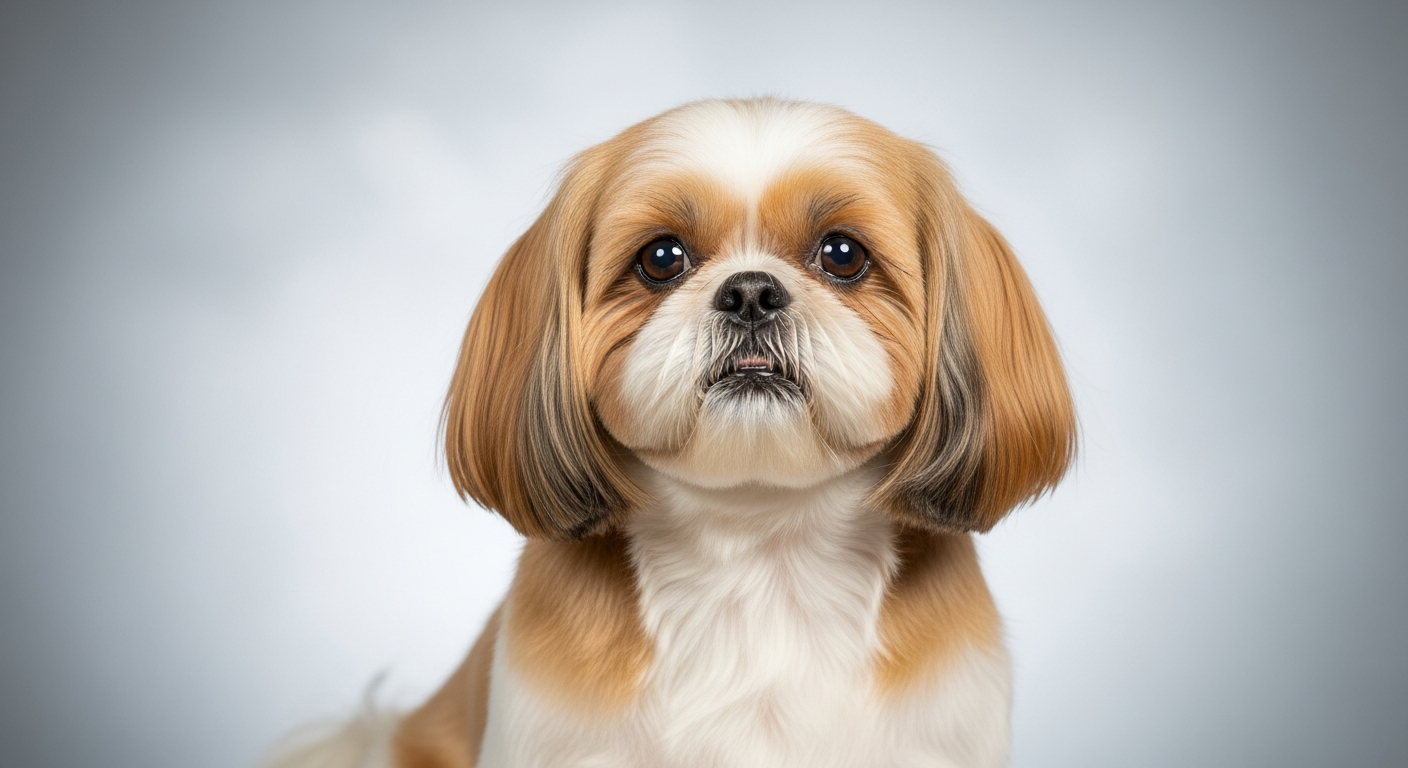
History & origins
The Shih Tzu was developed as a cherished companion within the palaces and households of imperial China and Tibet, bred to do one thing supremely well: keep human company. Unlike herding or hunting breeds, the Shih Tzu was never asked to work at a distance or take direction over long days; its entire purpose was warmth, devotion, and presence at its person's side.
This companion origin produces a sociable, affectionate, and people-oriented dog that genuinely wants to be involved in family life. It can also carry a self-assured, slightly independent streak inherited from its dignified palace past. Because the breed was bred for closeness rather than biddable obedience, force-free, reward-based training fits beautifully — short, gentle sessions with treats, praise, and play keep a Shih Tzu engaged, while harsh handling simply erodes the trust the breed was built to offer. Their flat faces also call for calm, cool sessions and careful heat management. Lean on the breed's love of attention: making yourself rewarding to be around is the most effective motivator you have.
Quick answers
Short, focused guides for the questions owners actually search for.
- Best Harness for a Shih Tzu With Collapsing Trachea: Why a Y-Front Protects the Windpipe
- How Long Can You Walk a Shih Tzu in Hot Weather? A Safe Heat Guide
- How to Prevent Matting on a Shih Tzu at Home (Force-Free Brushing Guide)
- How to Clean Shih Tzu Tear Stains and Protect Their Eyes
- Dog Heat Safety by Breed: What Actually Changes the Risk
Pro Principles
Congratulations on your Shih Tzu. You are raising a small, devoted, people-built companion bred for centuries to do exactly one job: be your friend. That makes this breed genuinely easy to motivate with kindness and food, and there is no place in this guide for choke, prong, or shock collars, alpha rolls, scolding, or any "dominance"/pack-leader framing. Flat-faced dogs shut down under pressure rather than learn from it, so reward-based, LIMA (Least Intrusive, Minimally Aversive) methods are both the humane choice and the effective one.
Two truths sit above everything else. First, your Shih Tzu is brachycephalic (flat-faced). That short airway cannot cool the body efficiently, so heat and over-exertion are real, fast-moving emergencies for this breed — keep every session short, cool, calm, and harness-only. Second — and this is the single most important rule in the whole guide — many things that look like "training problems" in a Shih Tzu are actually medical problems: airway disease, eye pain, dental pain from a crowded undershot mouth, ear or skin-fold infection. Before you treat any sudden behavior change, new reluctance, new irritability, or worsening breathing as a behavior issue, see your veterinarian first. A trainer is not a veterinarian.
0/10
The Shih Tzu has a mild independent streak, and you will hear it called "stubborn." Resist that label — it is almost never defiance. When your dog "won't," run through the real causes in order: Is the reward valuable enough? Is the environment too distracting? Is the session too long? Is the dog over-tired, over-aroused, hot, or in pain? Fix those before you ever assume willfulness. A confused, fatigued, overheating, or hurting dog looks exactly like a "stubborn" one.
LIMA›
Least Intrusive, Minimally Aversive — the welfare standard endorsed by major veterinary and training bodies. You always choose the gentlest effective option: reward what you want and manage the environment, never punish.
Brachycephalic›
"Short-headed" — the flat-faced conformation of the Shih Tzu. It compromises cooling (panting is less efficient), narrows the airway, and crowds the teeth and eye sockets, which is why heat safety, airway watchfulness, dental care, and eye protection run through this entire guide.
Marker›
A precise signal — a clicker or a crisp "Yes" — that marks the instant your dog does the right thing and promises a reward is coming. It pinpoints behavior far better than the treat alone.
The 3 Ds›
Duration, Distance, and Distraction — the three ways to make any behavior harder. Raise only one at a time, lower the others, and aim for about 80% success before you increase difficulty.
Before You Start
The non-negotiable gate above all training: a baseline veterinary exam that establishes what is normal for your dog. For a brachycephalic Shih Tzu, this visit also sets a breathing, eye, and dental baseline you will compare against for life. Do not skip this phase — it is what prevents you from accidentally "training through" a medical problem.
Establish your veterinary baseline›
Step by step
- Book a new-puppy/new-dog exam before any group socialization. Confirm the dog is healthy, has had at least its first core vaccine set plus a first deworming, and shows no signs of illness.
- Ask the vet to assess airway function. Flag any audible breathing at rest, snoring, sleeping sitting up or with the head propped, regurgitation/reflux, or tiring quickly — these are medical findings, not 'just how Shih Tzus sound.'
- Learn your dog's resting respiratory rate and effort while it sleeps (normal is under about 30 breaths per minute). This number is your early-warning baseline for both airway distress and heat stress.
- Have the eyes examined. The prominent, shallow-socketed Shih Tzu eye is highly prone to corneal ulcers and dry eye; establish what healthy, clear eyes look like so you can spot a problem early.
- Have the mouth and bite checked. The crowded, undershot jaw predisposes to dental disease and retained baby teeth; ask when to begin home tooth-brushing.
- Do a Body Condition Score (9-point scale; aim 4–5/9): you should easily feel ribs without pressing, see a waist from above, and see a belly tuck from the side. Lean condition is the #1 controllable factor for airway comfort and joint health.
- Program your nearest 24-hour emergency vet and the ASPCA Animal Poison Control number (888-426-4435) into your phone today.
You must socialize during the critical window and manage real infectious-disease risk — neither waiting too long nor exposing the puppy unsafely. The core puppy vaccine series is a series, not one shot: boosters every 2–4 weeks from roughly 6–8 weeks until 16+ weeks. A single early vaccine does not confer full protection.
0/5
Every bit of leash force must load the chest, never the throat. Neck pressure worsens an already compromised brachycephalic airway, so the flat collar is for ID tags only and a Y-front (Y-shaped chest) harness does all the work.
Measure and fit the harness›
Step by step
- Choose a Y-front harness. Never attach a leash to a neck collar, choke, slip, prong, head halter, or retractable on a Shih Tzu.
- Measure while the dog stands: chest/girth at the widest point just behind the front legs, and base-of-neck girth where the neck meets the shoulders.
- Fit so the front strap forms a clear 'Y' over the breastbone — NOT a horizontal bar across the throat — and the belly strap sits a couple of finger-widths BEHIND the armpits, never in them.
- Apply the two-finger rule: two flat fingers slide snugly under every strap. Confirm no gaping, twisting, sliding, or armpit rub, and full shoulder freedom when the dog walks and shakes off.
- Use a fixed 4–6 ft leash for walks (no retractable) and, later, a 15–30 ft long line clipped to the harness for recall work.
- Watch the long coat: check that straps are not pinching or matting the fur, and re-measure and re-fit during growth spurts and any weight change.
A Shih Tzu cannot cool itself well by panting, and heat plus humidity plus excitement can spiral fast. Make a quantified, humidity-aware decision before every outdoor session. The default answer is NO — skipping a walk costs nothing; a heat emergency can be fatal.
The 30-second go/no-go check›
Step by step
- Check temperature AND humidity together — humidity is the controlling variable for a dog that cools by evaporation. Treat any ONE of these as indoor-only: high heat index, high humidity/dew point, full-sun radiant load, or a dog already breathing noisily at rest.
- Do the 7-second pavement test: press the back of your hand flat on the sunlit surface. If you can't hold it comfortably for 7 seconds, it's too hot for paws and for a low dog's belly and airway. Treat this as a minimum bar, not a clearance.
- Time it right: exercise only in the cool parts of the day — early morning or well after sundown when surfaces have cooled. Midday is off-limits regardless of plans.
- Listen to resting breathing BEFORE activity. If the dog is already noisy or working to breathe at rest, cancel and switch to indoor enrichment.
- Pre-load: fresh water offered, Y-harness fitted, a shaded route with bail-out points, and a cool-down option (cool water, fan/AC) nearby.
- Set a hard time cap and commit to ending EARLY at the first change in breathing.
- On dangerous-heat days, pivot entirely to indoor training and sniffing games — that is a complete, satisfying day for this breed.
The Shih Tzu's large, prominent, shallow-socketed eyes are physically exposed and one of this breed's defining vulnerabilities. Long facial hair can rub the cornea, and the eyes are prone to ulcers, dry eye, and — in the worst case — being knocked out of the socket by minor trauma or over-restraint. Build eye awareness into daily life from day one.
0/4
Every threshold-based protocol in this guide — socialization, cooperative grooming, handling — depends on reading your dog. The Shih Tzu makes this harder than average: the flat, masked face mutes expressions, the prominent eyes can show white even at rest, and the long facial coat physically hides signals. So read the whole body as a cluster, in context, against your own dog's baseline — and lean on the channels that stay reliable: ears, posture, breathing, and direction-of-change.
0/5
New Puppy (8–12 wks)
The first weeks home fall in the most receptive part of the socialization window. Keep everything tiny, positive, cool, and puppy-chosen. Start by building a rock-solid marker so you can later pinpoint exact behaviors.
Load the marker›
Step by step
- Choose ONE marker: a clicker (more precise) OR a short, crisp 'Yes' (always available, frees your hands). Be consistent across the whole household.
- Load a pouch with 15–20 pea-sized, soft treats (count them against the daily food ration — this is a weight-prone breed).
- Sit with a calm puppy in a quiet, cool room. Mark FIRST, then feed: click/'Yes' → half-second pause → deliver one treat. The order matters.
- Repeat 15–30 reps. The puppy needn't do anything yet; you're only building click = food.
- Test it: when the puppy looks away, mark once. If the head snaps toward you, it's charged.
- Then begin marking tiny good behaviors (eye contact, a sit, four paws on the floor) and feeding.
- Keep it sacred: every single mark is always followed by a reward, even a mistaken one.
Teach the name as a happy check-in›
Step by step
- Pairing: say the name once happily, then mark and feed, regardless of what the puppy is doing. Repeat 8–10 times.
- Orienting: say the name once and WAIT. The instant the puppy looks at you, mark and feed generously. No response in about 2 seconds? Don't repeat — make a kissy noise, mark the look, make the next rep easier.
- Add distance/distraction: step a foot away, say the name, mark the look, treat. Gradually add mild distractions and new rooms.
- Proof gently: practice in the yard, then quiet outdoor spots, always rewarding heavily.
- Protect the cue: say the name only once per rep, and never pair it with anything unpleasant.
Over-tiredness causes most puppy biting and hyper-arousal. Protecting sleep is your first intervention before treating mouthing or wildness as a training problem.
Build naps into the day›
Step by step
- Aim for roughly 18–20 hours of sleep per day for an 8–12 week puppy. Treat sleep as a need you actively manage.
- After about every 1–2 hours of wake time, guide the puppy to a calm, cool, dim rest space (covered pen or open crate) for a nap, even if it protests briefly out of FOMO.
- Recognize 'overtired' signs — frantic zoomies, escalating mouthing, ignoring cues it knows, getting 'wired' — and read them as 'needs a nap,' not 'needs more exercise.'
- Before any response to biting or hyper behavior, ask first: is this puppy over-tired or over-heated? If so, nap and cool first.
- Schedule training right after a nap, when the puppy is fresh.
Develop a soft mouth›
Step by step
- FIRST rule out over-tiredness and over-heating: mouthing spikes when a brachycephalic puppy is tired or hot. Enforce a nap and cool the dog before treating biting as a behavior to address.
- Stop the hardest bites: if a bite hurts, become calm, still, and boring, or briefly disengage. The hard bite ends the fun. Then redirect to a chew.
- If a sharp 'Ouch!' ESCALATES your puppy (common — it can act like a squeaky-toy cue), drop the yelp entirely and use calm, silent disengagement instead.
- For a brief pause, prefer stepping back a few feet or using a tether/pen for 5–20 seconds rather than leaving the room — leaving can trigger isolation distress in this companion breed.
- Once hard bites stop, react to progressively softer bites so the puppy learns human skin is delicate. Goal: feather-light mouthing well before the adult teeth come in (~4.5 months).
- Teach 'Off': hold a treat in a closed fist; when the puppy stops mouthing for 1 second, mark and 'Take it.' Build duration.
- Keep approved chews ready and redirect oral needs to toys, food puzzles, and short play.
This is the most breed-critical skill in Phase 1. A Shih Tzu's long double coat needs handling every single day for life, and its folds, ears, eyes, and crowded mouth all need routine care. If you build consent-based, force-free handling now, grooming stays peaceful forever; if you skip it, you create a lifetime of struggling, restraint, and risk to those exposed eyes.
Condition handling and a consent button›
Step by step
- Pair brief, pleasant touch with treats: stroke shoulders and back, touch → mark → treat, keeping the puppy relaxed.
- Add body parts in short sessions: ears (and inside the flap), muzzle and lips (lift to view teeth), paws and individual toes/nails, tail and rear, belly, the FACIAL FOLDS, and the long coat and the hair around the eyes. Touch briefly, mark, treat; build duration slowly.
- Teach a consent / start-button behavior: a chin rest in your palm that means 'I'm ready.' If the puppy lifts its chin or leaves, you STOP immediately. This gives the puppy control and prevents struggling near the eyes.
- Introduce grooming tools positively at low intensity: show a brush/comb, a nail clipper or grinder, an eye-area wipe, and an ear wipe; touch the tool to the body with no procedure, mark and treat; let the puppy hear a running grinder at a distance.
- Counter-condition gentle restraint: a 1-second hold → treat → release, building to a few seconds — never a tight hold near the head.
- Do one calm brush-stroke or one nail 'touch' per day with jackpot rewards, progressing slowly to real grooming.
- Always end while the puppy is still happy; never finish a procedure over a struggling puppy.
Build positive associations at the puppy's pace›
Step by step
- Confirm safety first (Phase 0): first vaccine set + 7 days + deworming, a healthy puppy, controlled/clean surfaces, known vaccinated dogs; keep up the booster schedule.
- Pair each new thing with food or play at LOW intensity first: reward noticing it from a distance or at low volume, then decrease distance / raise volume only while the puppy stays relaxed.
- Let the puppy CHOOSE to approach. Reward investigation; never drag, lure into, or force contact with a worried puppy.
- Aim for several brief, positive exposures daily rather than one overwhelming outing.
- Practice startle-and-recover: stay calm, give space to investigate, reward the recovery, resume.
- Do happy vet and groomer visits: walk in, treats from staff, a quick weigh, leave.
- Carry a mat or your small puppy so it isn't placed on hot, cold, or contaminated ground; schedule outings for cool times with water on hand.
0/8
Manage, then reinforce — never correct›
Step by step
- Take the puppy out on leash to ONE spot on every trigger: on waking from every nap, within 10–15 minutes after meals, after play/training, after excitement, and on any sniffing or circling. Default to every 90 minutes–2 hours for an 8–12 week puppy — do not stretch this.
- Use the bladder formula (age-in-months + 1 = hours) only as a theoretical upper bound, never a target; default to the shorter interval for a small puppy.
- Stand still at the same spot; say a calm cue ('go potty') as elimination begins.
- The instant they finish, mark and treat WITHIN about 2 seconds, OUTSIDE, on the spot — never wait until back indoors.
- If they don't go, return to the pen/crate for 10–15 minutes and try again — no free roam on an empty attempt.
- Supervise 100% when loose (tether the puppy to you) or confine when you can't watch.
- Clean every accident with an enzymatic cleaner. Never punish or rub the nose in it — that teaches the dog to hide and eliminate out of sight.
The Shih Tzu is a velcro companion bred to be with people, so it is prone to separation distress. Build a loved rest space and seed calm alone-time now — prevention is far easier than treatment.
Make confinement and alone-time positive›
Step by step
- Decide the tool: a correctly sized crate (just stand/turn/lie) OR an ex-pen/gated dog-proofed room. Watch confinement tolerance from day one — some Shih Tzus do better never closed-crated.
- Make it a discovery zone: door tied open, soft bedding and a chew inside, and casually drop treats inside so good things keep appearing.
- Feed meals inside with the door open; mark the moment the puppy steps in. If it leaves, that's fine.
- Once it enters eagerly, close the door 1–2 inches, reopen, reward; build gradually to a full quiet close and immediate reopen, then to short durations with a stuffed Kong.
- Feed some meals or chews in an 'alone zone' a short distance from you, so being slightly apart predicts good things.
- Do tiny, frequent out-of-sight absences — step away for a few seconds and return BEFORE any distress — gradually building. Keep departures and arrivals boring.
- Reinforce the puppy settling independently while you're home (capture calm) so it doesn't need constant contact.
Foundations (12–16 wks)
With the marker and handling foundations in place, teach your Shih Tzu to love the harness — a conditioned positive, not just gear it tolerates.
Teach the puppy to put itself into the harness›
Step by step
- Confirm fit first (Phase 0): Y over the sternum, chest strap low and below the throat, two-finger rule, shoulders free.
- Day 1: lay the harness on the floor; mark and reward any sniff or investigation.
- Day 2: hold it up and feed THROUGH the neck opening so the puppy pushes its own head in voluntarily — far better than shoving it over a Shih Tzu's face and eyes.
- Day 3: pass it over the head briefly, reward, remove; build the puppy offering its head into the opening.
- Day 4: fasten the buckles, deliver continuous treats, remove after about 30 seconds; build duration gradually.
- Feed meals or play favorite games while it's on so wearing it predicts good things, building to 5–10 minutes of relaxed indoor wear before you ever attach a leash.
Sit›
Step by step
- With the puppy standing, hold a treat at its nose; slowly raise it up and back over the head.
- As the nose follows up, the rear lowers; the instant it touches, mark and reward at chest level so the puppy stays put.
- After 3–5 reps, do the identical motion with an EMPTY hand (palm-up sweep); reward from the other hand.
- Shrink the gesture to a small palm-up signal, then add 'Sit' just before the signal once the signal is reliable.
- Generalize to new rooms, then the yard, lowering criteria in each new place. Never push the rear down — it's aversive and risky for the spine.
Down›
Step by step
- From a sit or stand, hold a treat at the nose and lower it straight to the floor between the front paws, sliding slightly toward you if needed.
- Mark when the elbows touch; reward on the floor between the paws to reinforce staying down.
- Fade to an empty-hand downward point after 3–5 reps; add 'Down' before the signal once reliable.
- Practice on a soft mat or rug — hard floors discourage a small dog from lying down.
Stand (a vet & grooming skill)›
Step by step
- From a sit or down, draw a treat straight FORWARD and slightly up, away from the dog.
- As the dog steps forward to follow, all four feet plant; mark the stand and feed forward so it doesn't re-sit.
- Fade the lure to a flat hand drawn forward; add 'Stand' before the signal once reliable.
- Build a brief hold so the dog can be brushed, examined, or towel-dried on cue.
Make calmness a trained default and install an off-switch. A low-arousal Shih Tzu settles beautifully — and keeping arousal down also keeps breathing effort down.
Teach a relaxed settle›
Step by step
- Capture calm: whenever the puppy lies down quietly on its own, calmly drop a treat between its paws without exciting it.
- Introduce a mat: reward any interaction (look, step on, lie on), shaping toward lying down.
- Mark RELAXATION, not just position — a hip-roll to one side, head lowering, slower breathing, soft eyes, a sigh. Deliver treats calmly and low; skip the clicker here to avoid re-arousing.
- Build duration by increasing the time between treats; fade food to quiet praise.
- Add a cue ('settle'/'relax') once relaxation is reliable; generalize to new rooms and mildly busy contexts.
- Pair the mat with a stuffed chew or lick mat so it predicts calm.
Become the most rewarding thing in the room›
Step by step
- Capture offered attention: say nothing; the instant the puppy looks at you, mark and treat.
- Teach 'touch': present a flat palm; when the puppy's nose bumps it, mark and treat. Move the target around. This becomes your low-stress way to move, redirect, and recall a Shih Tzu without ever reaching toward its face.
- Play engagement games: toss a treat, then mark the look back to you; scatter 'find it' games; short rules-based play.
- Reward voluntary check-ins during walks and outings so focus generalizes.
- Keep sessions 2–5 minutes, ending on a win before fatigue or overheating.
- Train before meals when food motivation is highest, using meal kibble to protect this weight-prone breed.
Teach trading, not taking›
Step by step
- LEAVE IT, level 1: closed fist with a treat; let the puppy sniff and paw. The instant it backs off or looks away, mark and reward from the OTHER hand.
- LEAVE IT, level 2: treat on the floor under your hand; reward backing off. Add the cue 'Leave it' as the puppy reliably disengages; progress to uncovered food, then to dropped food while walking — always pay from your hand.
- DROP IT: play with a low-value toy; offer an equal-or-better item and say 'Drop it' as the mouth opens; reward, then OFTEN give the toy back so dropping doesn't end the fun.
- Build cue value: reward 'drop it' every time with something equal or better.
- Generalize 'leave it' to real life (food on sidewalks, dropped pills), proofing with higher-value temptations at a safe distance first.
Build a happy recall at a calm pace›
Step by step
- Indoors, charge the recall word: say 'Come!' once, take a few steps backward, mark when the puppy commits, and jackpot at your legs.
- Calm ping-pong: two people about 10–15 ft apart take turns calling, marking the commitment and paying at the legs. Keep it relaxed — this is not a sprint drill.
- Premack recall: call the puppy away from something mildly fun, reward, then RELEASE it back to the fun as a bonus.
- Harness-grab game: touch the harness, feed — so reaching for the dog is never the end of fun.
- Reserve a separate emergency word paired with about 10 rapid treats; use it rarely so it never loses value.
- Protect the cue: NEVER call the puppy for anything it dislikes, and never call when you can't reward.
Build slack-leash habits with zero neck pressure›
Step by step
- Gear: Y/front-clip harness (never a collar) and a fixed 4–6 ft leash. Treats on your walking side.
- Indoors, take ONE step; mark and feed at your side before the dog forges ahead. Repeat for many single steps (a very high rate of reinforcement).
- Build to 2, then 3 steps per mark; then randomize (1, 5, 2, 4) to keep engagement.
- If the leash tightens, STOP — forward progress is the reward pulling must never earn. Encourage the dog back to your side, then take 2–3 steps before feeding.
- Add a 'go sniff' release as a functional reward — sniffing keeps a Shih Tzu calmer and cooler than fast walking.
- Master the mechanics indoors before taking it outside, and keep outdoor walks short, shaded, and at a relaxed pace.
The Shih Tzu's long double coat is a daily reality, and 12–16 weeks is when you convert the handling foundations from Phase 1 into real, force-free grooming routines — before adolescence and a thicker coat make matting and resistance harder to manage. Cooperative grooming keeps this lifelong chore peaceful and protects those exposed eyes.
Build daily force-free grooming›
Step by step
- Start each session with the consent chin-rest from Phase 1; if the dog lifts its chin or leaves, stop immediately.
- Brush in tiny doses: a few gentle strokes on an easy area (shoulder, back), mark, treat; gradually add the legs, belly, behind the ears, and the tail — the spots that mat first.
- Use a lick mat smeared with something tasty so the dog licks calmly while you brush or comb a small section.
- Desensitize the eye area separately: brief, gentle wipes around (never on) the eyes, marking and treating, so face-cleaning stays calm and safe.
- Condition ear handling and ear wipes, and check inside the ears regularly — the coat traps moisture and predisposes to ear infection.
- Build to short clipper/grinder sessions: tool on at a distance, then brief contact with no cut, marking and treating; keep nails short with one or two nails per session.
- Always end while the dog is still relaxed; never finish over a struggling dog.
Because this is a low-energy, heat-sensitive breed that physiologically cannot do much sustained exercise, sniffing, foraging, and problem-solving are the workout. Mental enrichment is the primary daily workload, not a bonus.
Make food work for its living›
Step by step
- Replace some or all of the food bowl with foraging: scatter-feed kibble in grass or a snuffle mat, and stuff food puzzles and slow-feeders (counting it all against the daily ration).
- Add a short, slow, dog-led sniff walk in cool conditions — the goal is sniffing, not distance.
- Run one or two brief indoor 'find it' games (hide treats around a room).
- Offer a lick mat or an appropriate chew daily for calming, down-regulating enrichment.
- Rotate puzzles and games to keep novelty high.
- Always follow enrichment with protected rest so the puppy doesn't tip into over-arousal.
Adolescence (4–12+ months)
Welcome to the Shih Tzu teenager. Somewhere around 5–12+ months your sweet, biddable puppy will seem to "forget" cues it knew cold: recall gets flaky, settle falls apart, and house-training may wobble. This is normal neurological development, not spite, dominance, or a broken dog. Social maturity arrives later still (roughly 12–18 months), so plan to maintain and re-proof through this whole stretch rather than expecting finished obedience.
This is the breed's mild "independent streak" at its loudest — and the kindest, most accurate read of a Shih Tzu that "won't" is almost never defiance. Ask first: is the reward valuable enough, is the room too distracting, is the session too long, is the dog over-tired, over-aroused, too warm, or in pain? Fix those before you ever consider willfulness. Punishing a teenager just damages trust at the exact moment the dog needs your guidance most.
Maintenance Plan for the Teenage Stage›
Step by step
- Expect the dip and don't take it personally — write it down so you can see that it is a phase, not a permanent loss.
- When a cue falls apart, DROP CRITERIA instead of raising pressure: lower the 3 Ds (Duration, Distance, Distraction), move back to easier rooms, and raise reward value (this is a food-motivated breed — use it).
- Keep short maintenance reps on every important cue (recall, settle, leave-it, loose-leash) so they don't decay; aim for ~80% success before leveling back up.
- Re-run recall on a long line as if it were brand new; never trust off-leash reliability during adolescence.
- Manage the environment heavily — gates, pens, long lines, picked-up contraband — so the dog literally cannot rehearse unwanted behavior while its impulse control is offline.
- Protect rest and keep sessions to 3–5 cool, calm minutes; an over-tired or warm brachycephalic adolescent fatigues and overheats fast and cannot learn.
- Stay warm and patient. Ride out the non-linear setbacks — this stage passes.
During adolescence many dogs pass through a second window of heightened fear sensitivity, where things that were neutral last month suddenly look alarming. Timing is individual, so respond to your dog's behavior, not to a date on the calendar. The goal is to keep gently exposing your Shih Tzu to the world — just at a lower intensity — because under-socializing is its own real risk for a companion breed that needs to be comfortable everywhere it goes.
Managing a Wary Adolescent›
Step by step
- Watch for new wariness toward previously-neutral people, objects, or sounds, and first rule out pain or a medical cause for any sudden change.
- When the dog shows fear, ease off forced exposure, increase distance, and rebuild startle-and-recover at an easier level.
- Keep exposing — just gentler. Manage intensity rather than withdrawing from the world entirely.
- Never flood: do not push a frightened dog into a scary situation "to get over it." A genuinely traumatic event during this sensitive stage can occasionally leave a lasting fear.
- Use known, easy, rewarding behaviors (a hand target "touch," a find-it scatter) to rebuild confidence in the moment.
- Let the dog choose to approach novelty and reward investigation; choice builds confidence faster than pressure.
For a Shih Tzu, grooming is not occasional — it is daily life. The long, flowing double coat mats quickly; the prominent eyes need gentle wiping; the drop ears and facial folds trap moisture and infection; and the undershot mouth needs dental care. If you don't make handling pleasant, you will fight your dog for the next 12–15 years and create a "face-shy" dog whose quiet warnings get missed. Build cooperative, consent-based husbandry now, in adolescence, so grooming stays force-free for life.
The heart of cooperative care is a start-button behavior — most easily a chin rest in your palm — that means "I'm ready." If the dog lifts its chin or moves away, you stop immediately. Giving the dog control dramatically reduces struggling and means you never have to override a warning.
Desensitizing the Grooming Routine, One Tiny Step at a Time›
Step by step
- Teach the start-button: reward your dog for resting its chin in your open palm; build a few seconds of relaxed hold. Throughout every step below, if the dog lifts its chin or leaves, you stop and back up a step.
- BRUSHING: first reward the sight of the brush, then a touch of the brush to the shoulder, then one gentle stroke, marking and feeding each tiny step. Work little-and-often daily; tackle mats with a detangler and patience, never by yanking.
- EYE AREA: condition a damp cotton pad approaching, then a soft wipe below the eye to clear normal tear staining — go slowly and pay generously, keeping fingers and the pad away from the eyeball itself.
- EARS: show the cleaning solution, touch the bottle to the ear, then a wipe of the visible ear; keep the long ear leather and canal clean and DRY to prevent infection.
- NAILS: do one nail tip per day with a jackpot reward; introduce a grinder's sound and vibration gradually before ever touching a nail.
- SANITARY & FACE TRIMS / BATHING: desensitize the tub, low-volume water, being wet, clippers/scissors near the body, and thorough towel-drying of folds and coat — trapped moisture causes the very skin infections that create handling fear.
- Always end while the dog is still relaxed; never finish a grooming task over a struggling dog, and book happy, treat-only visits to your professional groomer so the salon predicts good things.
0/8
A muzzle is not a punishment or a sign of a "bad dog" — it is safety equipment for a high-vet-need brachycephalic breed. A muzzle-comfortable Shih Tzu gets calmer airway and dental exams, can be safely handled in a painful emergency, and stays in treatment for any bite-risk behavior case. Condition it now, before you ever need it, so it predicts treats rather than trouble.
Building a Happy Muzzle Association›
Step by step
- Present the muzzle and mark/reward any look or sniff toward it.
- Smear something tasty (e.g., a little wet food) inside the basket; let the dog put its nose in to lick, then withdraw. Reward voluntary nose-in.
- Build duration of nose-in by feeding continuously through the front of the basket.
- Briefly fasten the strap, feed continuously, and unfasten BEFORE any worry; build duration slowly over many short sessions.
- Add a few steps of movement and short walks while wearing it, paying generously.
- Use the chin-rest start-button so the dog opts in; if it pulls away, you stop. Keep it 100% voluntary.
- Only ever pair the muzzle with good things — never strap it on fast at a stressful moment.
Adolescence is when recall must be rebuilt and impulse control deepened — but for a Shih Tzu, how you do it matters as much as what you do. Arousal alone raises breathing effort in a brachycephalic dog, so skip the high-drive, restrained, sprint-style recall games you'll see for athletic breeds. Keep every rep calm, short, and in cool conditions, and lean on this breed's strong food motivation to make checking in with you worthwhile.
Long-Line Recall (Outdoor Generalization)›
Step by step
- Clip a 15–30 ft biothane long line to the Y-front HARNESS, never a collar; keep a "J" of slack and step on the line to stop a bolt rather than yanking.
- Start in quiet areas. Use calm "ping-pong" (two people taking turns calling) and Premack recalls (call away from something mildly fun, reward, then release back to it).
- Reward heavily at your legs, and reward the dog for disengaging from a distraction and reorienting to you.
- Progress criterion: 5 perfect, calm, sub-2-second recalls at one level before adding distraction or distance.
- Keep arousal LOW and bail out at the first change in breathing; never call when you can't reward or gently follow through.
- Protect a separate emergency-recall word, paired with ~10 rapid treats and used rarely so it never loses value.
- Re-proof frequently — assume reliability will wobble all through adolescence.
It's Your Choice (IYC) — Impulse Control Without Pressure›
Step by step
- Closed fist: hold treats in a closed fist at the dog's nose height, say nothing, and let it sniff, lick, or paw. The instant it pulls its nose back even slightly, mark and OPEN your hand to feed one treat from it. If it dives, simply re-close — be a vending machine, not a referee.
- Open hand: present treats on a flat open palm; close it if the dog moves in, open when it backs off. Reward the choice to leave it from your OTHER hand.
- Food on the floor: drop a treat and cover it with your foot if the dog dives, uncover when it backs off; mark the choice to leave it and pay from your hand.
- Add a release cue ("get it") so the dog learns the difference between wait (default) and released.
- Generalize: walk past dropped food, place food on a chair. Choice to disengage makes the reward appear; a grab attempt closes access.
- For an excitable dog, use LOWER-value food so it can succeed, and stay completely silent during the choice phase — naming it turns self-control into imposed control.
Shih Tzu are small, portable, and frequently carried in the car — which makes calm, safe travel a core adolescent skill and a serious heat-safety issue. Condition the car as a place good things happen well before you ever need a stressful trip such as the vet.
Conditioning Calm, Crash-Safe Travel›
Step by step
- Use a crash-tested restraint: a crash-tested travel crate secured in the vehicle, or a crash-tested harness-and-seatbelt system (an ordinary walking harness is not crash-rated).
- Desensitize in tiny steps: rewards near the parked car, then in the stationary car, then engine on, then very short drives, building duration only as the dog stays relaxed.
- For motion sickness, keep early trips very short, drive smoothly, and ask your vet about anti-nausea options; pair the car with calm enrichment such as a lick mat where safe.
- Plan trips around the cool parts of the day and carry water and a cool-down option.
- Build a positive vet-visit routine (happy visits, treats, leave) so the car doesn't only ever predict the clinic.
Adult & Advanced (12+ months)
The Shih Tzu is a low-energy companion bred to be with its people, which is a gift and a trap: a dog this attached needs a trained ability to be calm on its own terms, not just glued to you. A portable "off-switch" — genuine relaxation on a mat through normal household activity — is one of the most useful things you can teach an adult companion dog, and it underpins later separation and reactivity work.
Karen Overall's Relaxation Protocol (Settle Under Distraction)›
Step by step
- Set up a dedicated mat as the relaxation anchor and have tiny, low-value treats ready.
- Get the dog onto the mat (lure a down if needed) and reinforce STAYING regardless of exact position; jackpot a relaxed down.
- Work escalating tasks while the dog holds position — count to ten, step back, two steps back, sit beside the dog, clap softly, walk to the door, touch the doorknob, step briefly out of sight — feeding intermittently for staying relaxed.
- Deliberately alternate hard and easy tasks so the dog keeps succeeding; split any too-hard task into smaller pieces.
- Advance a level only when the dog stays relaxed through the current one; over days, distractions build to doorbells and brief out-of-sight absences.
- Reinforce the EMOTIONAL state — soft eyes, a hip-roll to one side, slow breathing — not just the stay; use a calm voice and skip the clicker so you don't re-arouse the dog.
- Once solid at home, repeat easier versions in new, mildly distracting places, then gradually fade the mat.
Because a Shih Tzu physiologically cannot do much sustained physical exercise, mental enrichment is its primary workload — and nosework is the single best option. Sniffing is calming, mentally tiring, confidence-building, and almost entirely low-impact and low-arousal, which suits a heat- and airway-sensitive breed perfectly. A dog that can't be "wrong" at a search also builds optimism, making this ideal for a softer or shyer individual. You can keep it casual at home or pursue formal titles.
Introducing Box Searches›
Step by step
- Priming: with the dog watching, drop favorite treats into one open box; release the dog to find and self-reward. Keep it easy and let the dog WIN.
- Build a little drive: briefly hold the dog so it strains slightly toward the baited box, then release — light frustration builds search enthusiasm.
- Add boxes: set out several with only one or two baited, and reward AT the source so the find pays off at the exact spot.
- Expand the search from a box lineup to a whole room, then varied locations, raising difficulty gradually.
- Source focus: reward heavily and repeatedly at the precise source so the dog learns to drive to source rather than freelancing.
- Use a consistent search cue and a clear start/finish ritual, and let the dog work independently — resist pointing or "helping."
- Keep sessions short and in cool conditions; sniffing is tiring, and even calm work can overheat a brachycephalic dog if it runs long.
Tricks are wonderful enrichment and relationship-building for a clever little companion — but choose movements that respect a small, long-bodied dog's spine and joints. Favor flat-plane, breath-friendly behaviors and skip anything that repeatedly loads the lower back or spikes the breathing.
A Joint-Friendly Trick & Conditioning Repertoire›
Step by step
- Choose flat-plane, low-arousal tricks: spin on level ground, shake/high-five, nose-target "touch," chin rest, find-it, a gentle bow, back-up on flat ground, peekaboo, and hold-an-object.
- Explicitly cap or exclude sustained upright "beg/sit-pretty" positions and repetitive vertical loading (paws-up done over and over), which stress the lower spine.
- Add gentle body-awareness work on NON-SLIP footing: low ground poles at walking height, slow controlled weight shifts, and rear-end awareness to build coordination and core support without impact.
- Teach by lure or shaping, fade the lure to a hand signal, then add the verbal cue.
- Avoid sustained jumping, fast roll-overs, repeated stairs, and anything that causes heavy panting; use ramps for furniture and the car.
- Keep all movement work on mats or runners — slick tile and hardwood are an orthopedic hazard for a small, long-backed dog.
- Keep the dog lean; excess weight worsens both joint load and airway/heat risk.
The Shih Tzu was bred for one job — companionship — so it is naturally prone to struggling when left alone. There is a real difference between ordinary settling-fussing in a confident dog and genuine panic (relentless crying, pacing, drooling, scratching at exits, soiling from stress, or self-injury). True separation or confinement distress is a phobia, and it is treated like exposure therapy: graduated, sub-threshold absences — never by "crying it out."
Graduated Departure Desensitization›
Step by step
- MEDICAL FIRST: have your vet rule out pain or illness before treating clinginess or distress as purely behavioral.
- Suspend real over-threshold absences during treatment (use sitters, family, daycare, or bring the dog along) so panic episodes don't undo progress.
- Baseline with a camera to find the exact duration the dog stays genuinely relaxed — no pacing, panting, whining, scratching, or drooling.
- Run departures sub-threshold: pick up keys and sit back down; walk to the door and return; step out for 1–3 seconds and return — always coming back BEFORE any stress sign.
- Vary your pre-departure cues (keys, shoes, coat) during calm moments so they stop predicting absence.
- Progress in small, often non-linear increments based on the camera, mixing easy reps with harder ones and backing off at any stress.
- Keep arrivals and departures low-key, never punish anxious behavior, and use enrichment to support — not replace — the desensitization.
- Escalate moderate or severe cases to a CSAT or a board-certified veterinary behaviorist (DACVB), who can add anti-anxiety medication to lower the panic baseline so the dog can actually learn.
Guarding food, chews, a stolen item, the couch, a lap, or a resting spot is normal, fear-driven behavior — the dog is afraid of losing something valuable, not staging a power grab. The fix is to change the underlying emotion so a person approaching predicts good things, which removes the need to guard. It is never solved by confrontation, and in a small dog these moments around the lap, bed, and food carry real bite risk to children especially.
Trade-Up Counterconditioning›
Step by step
- SAFETY/MEDICAL FIRST: rule out pain, manage access to prevent rehearsal, and never start during or right after an incident.
- Recognize the full picture — guarding can involve food, objects, contraband, people, the lap, and resting spots, and can occur between household dogs. Manage these: don't disturb a guarding, resting, or eating dog.
- Start with a LOW-value item in a calm setting.
- Bowl exercise: while the dog eats a low-value meal, approach to a distance where it stays loose, toss a higher-value treat toward the bowl, and walk away. Decrease distance only as the dog stays relaxed and happy to see you coming.
- Object trade: offer a higher-value treat; as the dog drops the item, mark and feed, then OFTEN return the item so giving up isn't a loss. Add a "drop/give" cue once it's automatic.
- Raise difficulty gradually up the value hierarchy, and across people and locations, only after lower-value items are reliably non-confrontational.
- Child and multi-dog safety: actively supervise, teach children never to approach a dog with food, a toy, or in its bed, set no-go zones, and feed dogs separately.
A Shih Tzu barking and pulling at other dogs or people on leash is almost always fear or over-arousal — not bravado — and it can also be pain-driven. The plan is to keep the dog far enough from triggers that it can stay calm and eat, then teach that triggers predict food and calm reorientation. This is months of work, not days, and it is never solved by correcting the bark.
Threshold Work + Counterconditioning + Engage-Disengage›
Step by step
- MEDICAL/PAIN FIRST: rule out pain (eyes, mouth, ears, back, airway discomfort) that can drive irritability and reactivity.
- Equipment: a Y-front or front-clip harness only — never neck pressure or any aversive tool on this airway.
- Manage and prevent: plan low-traffic routes, scan ahead, create space by crossing the street or changing direction, and use visual barriers to break line of sight.
- Find threshold distance: how far from a trigger the dog can notice it but still take food and stay loose.
- Open-bar/closed-bar: the instant the dog sees the trigger, feed high-value treats continuously; when the trigger leaves, the food stops. Trigger = food rains; gone = food stops.
- Engage-disengage / Look At That: mark the calm look at the trigger, then feed as the dog turns back to you, building a look-then-check-in pattern.
- Progress (closer or higher-intensity) only when the dog is loose, eating, and offering check-ins. If it won't eat, fixates, or lunges, you're too close — calmly add distance and reset.
- Never tighten or jerk the leash or correct the reaction; change the underlying emotion instead of punishing the bark or growl.
Shih Tzu can be chatty, and a smart companion dog quickly learns that barking makes people do things. Demand barking persists because it works — so the fix is to make the calm alternative pay and to stop the barking from producing what the dog wants. (This protocol is for ordinary demand barking only — do not apply it to a dog with separation or confinement distress.)
Reinforce the Calm Alternative, Remove the Payoff›
Step by step
- Confirm this is ordinary demand barking (for attention, food, play, or a door opening), not distress.
- Identify the exact reinforcer maintaining the barking so you can control it.
- Pick an incompatible alternative the dog can offer — go-to-mat/settle, or a quiet four-on-the-floor — and pre-train it to fluency away from the demand context.
- In the moment: when the dog offers calm/quiet or goes to its mat, immediately mark and reinforce; give a few seconds for it to choose before a single prompt.
- Withhold the maintaining reinforcer for barking — barking no longer earns attention or access; only the calm alternative does.
- Proactively reward quiet BEFORE barking starts, so quiet becomes the strategy that pays.
- Expect an extinction burst (louder or longer before it improves) and stay consistent across the whole household.
- Meet underlying needs — enrichment within heat limits and a predictable schedule — so the dog isn't barking from boredom.
Trained behaviors decay without reinforcement, so plan a lifelong light touch rather than a "finished" dog. A few minutes of weekly tune-up prevents most relapses and keeps your Shih Tzu's skills — and your relationship — strong into the senior years.
Keeping Skills Strong for Life›
Step by step
- Schedule periodic re-proofing of key behaviors: recall, settle, leave-it, loose-leash, and cooperative-care handling.
- Keep a simple session log (what you cued, success rate, arousal/breathing notes, treats counted against the daily ration) to spot decay early.
- Maintain the daily enrichment habit and the off-switch (capturing calm and the Relaxation Protocol) lifelong.
- Re-run the medical-rule-out rule for any new or worsening behavior — pain and disease are common, treatable drivers.
- Keep the dog lean and well-rested; both directly improve trainability and welfare.
- Use the escalation ladder: a CPDT-KA/KPA-CTP trainer for general training, an IAABC/CTC/CSAT consultant for complex behavior, and a board-certified veterinary behaviorist (DACVB) for separation anxiety, aggression, or any bite that breaks skin.
Body Language
Your Shih Tzu is communicating constantly, but this breed is genuinely hard to read. The flat, short-muzzled face mutes the brow, lip, and muzzle movements other dogs use to signal; the prominent, shallow-socketed eyes show visible white even at rest, so eye-white alone does not mean stress; and the high, curled-over-the-back tail removes most tail-height information. On top of all that, the long facial coat physically hides the eyes, ears, and brow you most need to see. Read your dog the modern way: as a whole-body cluster of signals, always in context, and always against your own dog's baseline — never one twitch in isolation.
Use a simple traffic-light frame. Green is your relaxed baseline; yellow is early stress asking you to lower the pressure; red is an overt warning to stop and back off. The goal is to act in yellow so you rarely reach red.
0/6
Stress escalates up a predictable ladder: subtle appeasement (blink, lip-lick, yawn) → head turn → body turn or paw lift → walking away → creeping low with ears back → crouch with tail clamped → freeze or hard stare (the critical pivot) → growl → snarl, muzzle-punch, tooth-snap → snap → bite. Catching the low rungs is the whole game.
What to do the moment you see a yellow signal›
Step by step
- Stop what you are doing — do not advance, reach over, lean in, or take anything from the dog.
- Soften your own body: turn slightly sideways, drop your gaze, lean back, and breathe out.
- Create distance from the trigger, or calmly let the dog move away. Give it an exit; never corner or follow.
- Let the dog self-soothe — sniffing, a shake-off, or walking away are healthy resets. Allow them.
- Note the trigger so you can plan to work it later at lower intensity, with more distance and food.
- Only re-engage with easy, known cues once the dog is loose and able to take food again.
What looks like a Shih Tzu being "stubborn," "grumpy," or "defiant" is almost always confusion, fatigue, overheating, fear, or pain — not a status grab or spite. Modern behavior science rejects dominance/alpha framing entirely; confrontational methods (alpha rolls, scruffing, staring down) increase fear and aggression with no benefit over reward-based training.
Eyes: large, round, and prominent — they show white at rest, so eye-white alone is not whale eye in this breed. Confirm true whale eye only by the pattern: head turned away while the eyes stay locked on the trigger, plus body tension, judged against your dog's relaxed baseline.
Ears: the drop ears are often buried under coat, so ear changes are hard to see — clip or part the hair and watch the ear base. Tail: the tail curls up over the back, so you lose most height-and-wag information; read the tail base, rump, and whole-rear looseness instead. A whole-body wiggle on a loose body is the happy signal; a stiff little vibrating wag on a tense body is not friendly. Breathing: learn your dog's resting breath sound and effort, because a flat-faced dog's noisy breathing is constantly confused with stress panting.
Health & Husbandry
The Shih Tzu's long, dense double coat is a daily commitment, not an occasional chore. Left alone it mats fast — and mats are not just cosmetic: they pull tight against the skin, trap moisture and dirt, hide wounds and parasites, and become genuinely painful. A full coat needs thorough brushing and combing most days plus professional grooming roughly every 4–6 weeks. Many owners, especially in Arizona's heat, choose a short "puppy cut" — a legitimate welfare and comfort decision, not a failure.
Build force-free grooming with cooperative care›
Step by step
- Pair the brush with good things first: let the dog lick a smear of soft food or a lick mat while a brush simply sits nearby. Several short sessions over days.
- Touch the brush to the body for one second, reward, and stop — keep it under the dog's comfort threshold.
- Progress to a single gentle stroke on an easy spot (shoulder/back), reward, release. Build duration and coverage slowly.
- Teach a chin-rest or a settle on a mat as a consent/start cue, and an obvious way for the dog to opt out (lifting the head = pause).
- Work in short, cool, low-arousal sessions; brush sensitive areas (face, ears, armpits, sanitary region, feet) last and most gently.
- End every session before the dog gets uncomfortable, always on a calm win.
0/6
The Shih Tzu's prominent, shallow-socketed eyes are one of its most vulnerable features. Long facial hair can drape into the eyes and abrade the cornea; the breed is prone to tear staining, dry eye (KCS), and corneal ulcers, and the eyes under-show pain. Daily, gentle eye-and-fold care prevents most everyday problems and helps you catch the serious ones early.
Daily eye and fold routine›
Step by step
- Look at both eyes in good light: are they equal, clear, bright, and fully open? Any squint, redness, cloudiness, or new discharge is a flag.
- Wipe away discharge and tear staining with a clean, damp cloth or vet-approved eye wipe, working from the inner corner outward — a fresh section per eye.
- Keep the hair around the eyes trimmed short or tied up so no hairs touch the surface of the eye.
- Gently clean and then thoroughly DRY any facial folds; trapped moisture causes fold dermatitis.
- Reward calm cooperation throughout, and stop if the dog shows stress — never restrain hard near the eyes.
Like other small brachycephalic breeds, the Shih Tzu packs a full set of teeth into a shortened jaw with an undershot (Class III) bite. The teeth crowd and rotate, trapping food and plaque where brushing struggles to reach, so gum disease starts young and advances fast. Retained baby teeth are common — check the puppy's mouth during teething and ask your vet about extracting any that persist past about six months.
Build daily toothbrushing the LIMA way›
Step by step
- Days 1–3: let the dog lick a dog-specific enzymatic toothpaste off your finger — pure positive association, no brushing yet.
- Days 4–6: briefly lift a lip and touch a few teeth and gums with a pasted finger, reward, release.
- Days 7–9: introduce a soft finger brush or child-size soft brush on a few teeth for a couple of seconds, reward.
- Gradually extend to the outer (cheek-side) surfaces, angling bristles toward the gumline; the tongue keeps the inner surfaces cleaner.
- Keep sessions short with breathing breaks — brushing partly blocks the mouth a flat-faced dog uses to breathe — and stop at any sign of distress.
- Aim for daily; 3–4 times a week is the realistic minimum to get benefit.
0/6
Drop ears plus hair growing in the canal trap warmth and moisture, which sets up ear infections (otitis) — a common Shih Tzu problem made worse in a hot climate and after any bath or swim. Routine checks and keeping ears clean and dry prevent most of it.
0/5
The Shih Tzu is small, low-energy, and very food-motivated — a combination that makes it easy to overfeed. Keeping the dog lean is one of the highest-impact things you can do, because excess weight directly worsens brachycephalic breathing and heat intolerance. Feed to a body condition score of 4–5/9 (ribs easily felt, a visible waist from above, a belly tuck from the side), not to the bag's chart, which overfeeds most small dogs.
0/6
Keep core vaccines and year-round parasite prevention on schedule with your vet. Core vaccines are distemper + adenovirus-2 + parvovirus (DAP) and rabies; leptospirosis is now recommended as core for dogs that go outdoors. Arizona has no parasite "off-season": mosquitoes (heartworm) and the brown dog tick are active year-round.
0/6
Troubleshooting
Before treating any of the scenarios below as behavior, remember the breed's first reflex: in a Shih Tzu, a large share of sudden "misbehavior" is actually a medical problem wearing a behavior costume. Rule out pain and disease with your vet before you train.
Problem: My Shih Tzu suddenly stopped responding to cues, regressed in house-training, or seems irritable or reluctant to move.
Likely cause: A possible medical or pain issue (eye pain, dental pain from the crowded undershot mouth, ear or skin-fold infection, neck/back pain, airway discomfort, or a UTI) — or ordinary adolescent regression. Not "spite."
Solution: Rule out medical causes with your vet FIRST. If cleared, treat it as regression: lower criteria, raise reward value, re-proof on a long line, and manage the environment. Never punish a regression.
Problem: My dog has become face-shy, is squinting, holding an eye shut, pawing or rubbing at the eye, tearing more, or its eye looks cloudy.
Likely cause: Eye PAIN, very often a corneal ulcer — a real risk in this breed's prominent, shallow-socketed eyes. Flat-faced dogs under-show eye pain, so even mild persistent signs are urgent.
Solution: This is a same-day vet visit, not a handling problem. Do NOT use leftover or steroid eye drops (steroids worsen ulcers). A new, persistent, or one-sided squint is pain, never a calming signal — treat the eye before resuming grooming or training.
Problem: My dog is breathing loudly or raspily, gags, tires very fast, or seems to overheat easily.
Likely cause: Possible brachycephalic airway disease (BOAS) or heat stress — a medical issue, not a fitness or willingness problem.
Solution: Stop activity, move somewhere cool and calm, and see your vet for an airway assessment. Do not "train through" worsening airway noise, exercise intolerance, regurgitation, or sleep-disordered breathing — these are medical, not training, problems.
Problem: My dog pulls on the leash.
Likely cause: Pulling has been rewarded — even occasionally — by forward progress.
Solution: Re-master mechanics indoors with a high rate of reinforcement at your side; stop dead the moment the leash tightens; reward in position; and use a front-clip Y-front harness. Add a "go sniff" release as a functional reward. Never let pulling earn forward movement, and never use neck pressure on this airway.
Problem: My Shih Tzu won't potty outside but goes the moment we come back in — especially in cold, wet, or hot weather.
Likely cause: Genuine weather/surface aversion (real, not defiance) and/or reward timing and value. Small brachycephalic dogs are also slower to fully house-train.
Solution: Reserve a special high-value treat ONLY for outdoor potty and deliver it within ~2 seconds, outside, at the spot. Provide a sheltered potty area, a sweater in cold, and shade in heat; keep trips short. Default to frequent intervals and supervise or tether indoors to prevent rehearsal. Expect months, not weeks, to full reliability.
Problem: My dog only works when it can see a treat in my hand.
Likely cause: The lure was never faded, so visible food became a bribe instead of a cue.
Solution: Fade the lure — do the same motion with an empty hand, reward from a pouch or your other hand, shrink the gesture to a small hand signal, then add the verbal cue. Reinforce DOING the behavior, not seeing the food.
Problem: My dog refuses to walk or "plants" outside.
Likely cause: Heat or hot-pavement discomfort, fear, fatigue, pain, or being over-faced by the environment.
Solution: Check the surface temperature and time of day, and rule out pain. Lower difficulty, add distance from anything scary, and use a hand-target "touch" to re-engage. Keep walks short, cool, and sniff-led. Never drag the dog — on a harness, and certainly never on a collar.
Problem: My dog seems hyper, wired, nippy, and can't settle.
Likely cause: Usually over-tiredness or over-stimulation plus an untrained off-switch — not a need for more exercise.
Solution: Protect sleep with enforced rest, replace forced physical exercise with sniffing, foraging, and puzzles, and actively train settle, capturing calm, and the Relaxation Protocol. A lick mat or appropriate chew helps the dog down-regulate.
Problem: My dog barks at me to demand attention, food, or play.
Likely cause: Demand barking maintained by a reinforcer — it works.
Solution: Identify and withhold the reinforcer for barking, reinforce an incompatible behavior (go-to-mat), and proactively reward quiet before barking starts. Expect an extinction burst and stay consistent across the household. Don't yell — it reads as attention. (Do not apply this to a distressed dog.)
Problem: My dog cries, panics, drools, or soils when left alone or confined.
Likely cause: Possible separation anxiety or confinement distress — distinct from ordinary settling-fussing. This companion breed is especially prone to it.
Solution: Do NOT "wait it out" or use extinction. Stop closed-crating and switch to an open pen or dog-proofed room. Rule out medical causes, then run sub-threshold graduated-departure desensitization with a camera while suspending real absences. Escalate moderate or severe cases to a CSAT or DACVB (medication may help).
Problem: My dog barks and lunges at other dogs or people on walks.
Likely cause: Leash reactivity, usually fear or over-arousal, and sometimes pain-driven.
Solution: Rule out pain; use a Y-front/front-clip harness; manage routes and distance; and work under threshold with open-bar/closed-bar counterconditioning and engage-disengage. Food refusal means you're too close — back up. Never correct the reaction; change the emotion.
Problem: My dog stiffens, growls, or snaps when I approach its food, a toy, its bed, or my lap.
Likely cause: Resource guarding, which can involve objects, food, people, and locations — normal, fear-driven behavior.
Solution: Never punish the growl — it's a warning. Manage access to prevent rehearsal, never start mid-incident, and run trade-up / approach-equals-good-things counterconditioning starting with low-value items. Add strict child and multi-dog supervision. Guarding that escalates or generalizes goes to a DACVB.
Problem: My Shih Tzu fights me over brushing, combing out mats, or having its face, eyes, ears, or feet handled.
Likely cause: Grooming was never made pleasant, mats are pulling painfully, and/or there is an underlying medical pain (eye, ear, dental, skin fold). For a long-coated breed this is a daily, lifelong need, so handling fear compounds fast.
Solution: First rule out pain if resistance is new (especially eye pain — see the medical scenarios). Then rebuild with consent-based husbandry: a chin-rest start-button, tiny desensitization steps, and high-value treats, always stopping while the dog is still relaxed. Brush little-and-often with a detangler rather than yanking mats, dry folds completely after baths, and use happy, treat-only visits to build trust with your professional groomer. Never finish a grooming task by forcing a struggling dog.
Health & Heat Safety
The Shih Tzu is a flat-faced (brachycephalic) breed, and that anatomy makes panting — a dog's main cooling system — far less effective. As a result it overheats at lower temperatures and lower activity levels than a long-nosed dog, and heat, humidity, and excitement can spiral together within minutes. A heavy coat and any extra weight make it worse. In Arizona's climate, heat safety is a first-order, every-single-outing concern.
Before every walk or outing, run a quick go/no-go check. The default answer in hot weather is NO — bring exercise and enrichment indoors instead. Schedule any real outdoor activity for the cool parts of the day, before about 7–8 AM or well after sundown; midday is off-limits.
Run the check (about 30 seconds)›
Step by step
- Add the air temperature (°F) and the relative humidity (%). If the total approaches or exceeds ~150, skip sustained outdoor activity.
- Do the 7-second pavement test: press the back of your hand to the surface. If you cannot hold it there for 7 seconds, it is too hot for paws, belly, and airway.
- Check for radiant load and shade — full sun raises the real heat well above the thermometer.
- Listen to your dog at rest: if it is already noisy or working to breathe, stay in.
- If ANY one of these fails, make it an indoor day — cool, low-arousal play, sniffing games, and short training instead.
0/5
Catch trouble before collapse. The early pattern is anxiety plus escalating, louder, harder breathing plus seeking cool surfaces — that is your cue to STOP, cool, and reassess, not to push on. Learn your dog's normal resting breathing (under about 30 breaths per minute, asleep) so you can recognize a real change.
0/6
Modern veterinary evidence overturns the old "cool slowly, never use cold water" advice. Aggressive early cooling saves lives — pre-arrival cooling roughly raises survival from about 50% to 80%. Start cooling where you are, then transport while continuing to cool.
If you suspect heatstroke›
Step by step
- Move the dog out of the heat to shade or air conditioning immediately and stop all activity.
- Start cooling now: for a conscious, otherwise-healthy dog, douse or immerse in cool/cold tap water (~15–16°C cools as well as ice water) plus strong air movement from a fan.
- For an older or unwell/heart-condition dog, use evaporative cooling — cool water plus a strong fan — rather than immersion.
- Do NOT pour water into the mouth of a distressed, collapsing, or unresponsive dog (aspiration risk); offer water only if fully alert and willing.
- Stop active cooling around 39.4°C / 103°F to avoid overshooting into hypothermia.
- Get to the vet/ER even if the dog seems to recover — organ and clotting complications can appear hours to days later.
The Shih Tzu's prominent, shallow-socketed eyes are physically vulnerable. Two situations are true emergencies: a proptosed (prolapsed) eyeball, which can follow even minor head trauma or over-restraint, and a painful corneal ulcer. Keep faces, hands, and hugs away from the eyes, and actively supervise children — leaning over, hugging, and rough handling are the highest-risk moments for both bites and eye injuries.
Gear
Paid affiliate links. The product links below are Amazon affiliate links — if you buy through them we may earn a commission, at no extra cost to you. As an Amazon Associate we earn from qualifying purchases. We only suggest gear that fits this breed's documented needs.
Well-fitted Y-front no-pull harness (toy/small)
Safety & Walking
The Shih Tzu is a tiny brachycephalic dog with a delicate windpipe — collar pressure on a flat-faced toy breed can worsen breathing and is linked to tracheal irritation. A true Y-front harness keeps every ounce of leash force off the throat so your dog can pant and breathe freely, which is non-negotiable for an airway-compromised companion in a warm climate.
Balance Harness (Buckle-Neck) — Blue-9
Six independent adjustment points let you dial in a precise fit on a small, fine-boned Shih Tzu chest, and the genuine Y-front shape plus optional front clip route all pulling pressure across the chest instead of the trachea.
The buckle-neck version goes on without dragging fabric over a sensitive face and eyes — important for a flat-faced dog that dislikes things pulled over its head.
Balance Harness (Buckle-Neck) — Blue-9Browse options on AmazonComfort Flex Sport Mesh Step-In Harness — Voyager (Best Pet Supplies)
A soft, breathable mesh step-in design avoids any over-the-head motion near the eyes and distributes pressure across a broad chest panel, keeping it off a toy dog's narrow neck.
The lightweight build suits a 9-16 lb Shih Tzu that can be overwhelmed by bulky padded harnesses, and step-in entry is gentle for a dog still learning to be handled.
Comfort Flex Sport Mesh Step-In Harness — Voyager (Best Pet Supplies)Browse options on AmazonNo-Pull Dog Harness (Classic, 2 leash clips) — rabbitgoo
An affordable, widely available everyday harness with four adjustment points and a padded Y-front chest plate that keeps pressure off the neck; the XS/S size range fits a small Shih Tzu's compact frame.
The front clip gives you a no-choke way to gently redirect a pulling dog across the chest rather than the throat.
No-Pull Dog Harness (Classic, 2 leash clips) — rabbitgooBrowse options on AmazonFlat collar with ID tags (ID-only)
Safety & Walking
For a Shih Tzu the flat collar carries identification only — never leash force. A toy brachycephalic breed with a small trachea should never take pulling pressure on the neck, so the collar holds tags while the harness does all the walking work. Keep it light and low-bulk so it doesn't mat the neck coat.
Personalized Embroidered Dog Collar (name + phone) — GoTags
The name and phone number are stitched into the lightweight webbing, giving permanent ID with no jingling tags to tangle in a Shih Tzu's long neck coat.
The X-Small/Small adjustable sizing fits a small neck without bulk, so it stays comfortable for tag-only wear.
Personalized Dog Collar (Custom Embroidered with Name and Phone Number) — GoTagsView this productSoft & Safe 3M Reflective Neoprene Padded Collar — Blueberry Pet
Neoprene padding makes this one of the gentlest flat collars against a sensitive small neck and long coat, reducing rubbing and matting.
The smallest size keeps it light for ID-only use on a 9-16 lb dog, and reflective stitching adds low-light visibility.
Soft & Safe 3M Reflective Neoprene Padded Collar — Blueberry PetBrowse options on AmazonEssentials Classic Nylon Dog Collar — Blueberry Pet
A thin, lightweight classic nylon collar in genuine toy/small sizing that simply holds tags without adding throat bulk on a brachycephalic dog.
Its minimal profile sits cleanly under a long coat so it is less likely to mat the neck feathering.
Essentials Classic Nylon Dog Collar — Blueberry PetBrowse options on AmazonFixed 4-6 ft leash
Safety & Walking
A fixed 4-6 ft leash gives a small dog steady, predictable contact and keeps a Shih Tzu close in busy or hot environments. Retractable leashes are avoided: the constant light tension teaches pulling and a sudden lock can jolt a toy dog's neck and delicate airway.
5 FT Dog Leash with Padded Handle (rope, small dogs) — BAAPET
The thin 1/3-inch climbing-rope build is light enough not to weigh down a 9-16 lb Shih Tzu, while the padded handle and reflective weave keep walks comfortable and visible.
A sturdy swivel clip attaches cleanly to a Y-front harness so all tension stays off the neck.
5 FT Dog Leash with Padded Handle (rope, small dogs) — BAAPETBrowse options on AmazonSmall Dog Reflective Nylon Leash (6 ft x 5/8") — Max and Neo
The slim 5/8-inch webbing is sized for small dogs, so it stays lightweight on a toy breed while full-length reflective stitching improves safety on early-morning or after-dark walks (the only safe walk windows in heat).
The neoprene-padded handle is easy to hold during gentle close-in handling of a small dog.
Small Dog Reflective Nylon Leash, 6 ft x 5/8" — Max and NeoView this productVoyager Reflective Leash with Neoprene Handle, 5 FT — Best Pet Supplies (Voyager)
A light 5-foot nylon leash with a cushioned handle that pairs naturally with the brand's step-in Y-front harness, keeping leash force off a Shih Tzu's throat.
The compact, low-weight design suits a toy dog and includes a clip-on bag holder for short potty walks.
Voyager Reflective Leash with Neoprene Handle, 5 FT — Best Pet Supplies (Voyager)View this product15-30 ft long line (recall training)
Safety & Walking
A lightweight long line lets a Shih Tzu practice recall with freedom while you keep a safety connection — useful because a small flat-faced dog can't safely sprint or be chased in heat. Always clip it to the Y-front harness, never the collar, and keep a loose 'J' of slack.
Waterproof Recall Training Long Line (3/8" x 15ft) — NIMBLE
The narrow, light PVC-coated line is sized so it won't drag or overpower a 9-16 lb Shih Tzu, and it rinses clean and dries fast after grassy training sessions.
It clips to a harness for low-pressure recall work, keeping every bit of tension off a toy dog's airway.
Waterproof Recall Training Long Line (3/8" x 15ft) — NIMBLEBrowse options on AmazonBiothane Long Line / Check Cord (3/8" x 15ft) — Mendota Pets
Soft, snag-resistant biothane in a narrow 3/8-inch width is ideal for a small dog — durable yet light, and it wipes clean rather than soaking up water and dirt into a long coat.
The solid snap attaches to a Y-front harness so recall practice never loads the neck.
Biothane Long Line / Check Cord (3/8" x 15ft) — Mendota PetsBrowse options on AmazonBiothane Working Tracking Long Line (3/8" x 20ft) — Viper (Dogline)
Genuine waterproof biothane that wipes clean and won't hold odor; choose the lightweight 3/8-inch width so a toy Shih Tzu isn't dragged down by the line.
A brass snap clips to the harness for safe distance-and-recall work in a secure, low-arousal setting.
Biothane Working Tracking Long Line (3/8" x 20ft) — Viper (Dogline)Browse options on AmazonBasket muzzle (cooperative-care / vet handling)
Safety & Walking
For a Shih Tzu a muzzle is purely cooperative-care and management gear — never punishment. Calmly conditioned in advance, a well-fitted basket muzzle keeps grooming, eye treatments, dental checks, and vet visits low-stress and safe for everyone. A growl is information; a muzzle manages a moment, it never silences a warning. The basket must be wide and short enough to leave a flat face full room to pant and take treats.
Short Snout Basket Muzzle (brachycephalic, small) — OOPSDOGGY
Contoured for flat-faced breeds, this breathable basket leaves nostril clearance so a brachycephalic Shih Tzu can pant, drink, and take treats during cooperative-care conditioning.
The small/short-snout sizing suits a toy face that standard long-snout muzzles cannot fit.
Short Snout Basket Muzzle (brachycephalic, small) — OOPSDOGGYBrowse options on AmazonBaskerville Ultra Muzzle (Size 1, heat-moldable) — Baskerville (Company of Animals)
The most widely vet-recommended basket muzzle; its front panel softens in warm water so you can reshape it wider and shallower to clear a flat Shih Tzu face and allow free panting and treat-feeding.
The size 1 fits many toy and small dogs, and the open basket is built for cooperative-care use, not restraint as punishment.
Baskerville Ultra Muzzle (Size 1) — Baskerville (Company of Animals)View this productClicker or chosen verbal marker
Training Essentials
A clear, consistent marker tells a clever-but-stubborn Shih Tzu the exact instant it earned a reward, which speeds up learning in the short 3-5 minute sessions a brachycephalic dog can handle before tiring or overheating. A soft-click or marker word also avoids startling a sensitive small dog.
Clik-R Training Tool — PetSafe
A compact, softer-toned clicker on an elastic finger band lets you mark and treat one-handed without fumbling during close-up work with a small dog.
The gentler click is less likely to startle a sensitive Shih Tzu than a loud box clicker.
Clik-R Training Tool — PetSafeView this productPro-Training Clicker (Deluxe) — StarMark
An ergonomic, easy-press clicker with a crisp, consistent sound your dog hears clearly indoors during cool, low-arousal sessions.
The large button is simple to use one-handed while you deliver a tiny treat to a flat-faced dog.
Pro-Training Clicker (Deluxe) — StarMarkView this productTraining Clicker with Wrist Strap (4-Pack) — EcoCity
A best-value multipack so you always have a clicker within reach at the door, the mat, and on walks, keeping your timing consistent.
Wrist straps mean you never drop one mid-session with a small, quick dog.
Training Clicker with Wrist Strap (4-Pack) — EcoCityView this productTreat pouch + tiny soft high-value treats
Training Essentials
A flat-faced Shih Tzu does best with tiny, soft, quick-to-swallow morsels — hard or large treats are harder to chew safely on a short undershot jaw and add up fast on a small, weight-prone dog. A hands-free pouch keeps pea-sized rewards ready for the high-rep, fast-paced marking that short sessions demand. Keep training treats under ~10% of daily calories.
Treat Pouch Sport (spring-hinge) — PetSafe
A spring-hinged mouth snaps open for instant one-handed access and closes to prevent spills, so you can reward a small dog within the critical half-second after the marker.
The belt clip and waist string keep your hands free for handling and leash work with a low-to-the-ground Shih Tzu.
Treat Pouch Sport (spring-hinge, belt clip + carabiner) — PetSafeView this productMini Naturals Training Treats (Chicken) — Zuke's
Tiny, soft, low-calorie morsels are easy to chew and swallow for a short-muzzled Shih Tzu and can be broken even smaller for high-repetition reinforcement.
Keeping pieces tiny helps a weight-prone toy breed stay lean, which matters for both joints and airway.
Mini Naturals Training Treats (Chicken) — Zuke'sBrowse options on AmazonSoft Puppy Bites Lamb & Salmon Training Treats — Wellness
Very soft and moist, easily torn into pea-sized pieces, ideal for a brachycephalic dog that struggles with hard or large treats.
High palatability makes them genuinely high-value for keeping a sometimes-aloof Shih Tzu engaged in short sessions.
Soft Puppy Bites Lamb & Salmon Training Treats — WellnessBrowse options on AmazonRelaxation mat / settle bed
Training Essentials
A defined, flat, breathable mat gives a Shih Tzu a portable 'place' to settle on cue and a cool surface to rest on without trapping heat against a heavy double coat. A low, open shape lets a flat-faced dog sprawl and pant freely during calm settle training.
Water-Resistant Orthopedic Dog Bed Mattress (Small) — Furhaven
A low-profile egg-crate foam mat with a non-skid backing and washable cover; its flat, no-bolster shape lets a Shih Tzu stretch out and pant freely while gently cushioning small joints.
The water-resistant base makes cleanup easy for a long-coated breed that tracks in moisture and debris.
Water-Resistant Orthopedic Dog Bed Mattress (Small) — FurhavenBrowse options on AmazonLoft Wander Travel Dog Bed (Roll, Small) — Kurgo
Rolls into a carry bundle with a washable, water-resistant top and non-slip bottom, perfect for taking a familiar settle surface to the vet, groomer, or a hotel.
The flat, open design avoids trapping heat against a dense coat, keeping a brachycephalic dog comfortable.
Loft Wander Travel Dog Bed (Roll, Small) — KurgoBrowse options on AmazonCorrectly sized crate (with divider) and/or ex-pen
Crate & Enrichment
A toy Shih Tzu needs a small, airy crate sized just to stand, turn, and lie down — oversized crates undermine house-training. Open wire sides keep airflow generous for a heat-sensitive flat-faced dog, and a divider lets the space grow with a puppy.
iCrate 24-Inch Single Door Folding Crate with Divider — MidWest Homes for Pets
The 24-inch size suits a small breed up to roughly 25 lb, and the included divider grows the living space with a young Shih Tzu so house-training stays on track.
Open wire sides keep airflow ample for a brachycephalic dog that must pant to cool.
iCrate 24-Inch Single Door Folding Crate with Divider — MidWest Homes for PetsView this productNew World 24-Inch Folding Metal Crate with Divider — New World Pet Products
A popular small-breed wire crate with a leak-proof pan and divider to right-size the space for a toy dog.
Airy mesh sides support free panting and keep a heat-sensitive Shih Tzu comfortable indoors.
New World 24-Inch Folding Metal Crate with Divider — New World Pet ProductsBrowse options on AmazonFoldable Metal Exercise Pen, 24-Inch, 8 Panels — MidWest Homes for Pets
An 8-panel pen creates a safe, fully ventilated indoor play and confinement area, and the lower 24-inch height comfortably contains a short-legged Shih Tzu.
It gives a young dog room to potter without free-roam access during house-training.
Foldable Metal Exercise Pen / Playpen, 24-Inch, 8 Panels — MidWest Homes for PetsView this productSnuffle mat, food puzzles, slow feeder & lick mat
Crate & Enrichment
Sniffing and licking are low-arousal, low-impact enrichment that tire a clever Shih Tzu mentally without the heat-generating exertion a brachycephalic dog can't safely sustain. Choose flat, shallow designs a short muzzle can actually reach — deep-groove bowls and tall puzzles frustrate a flat face.
LickiMat Classic Buddy Slow Feeder — LickiMat
A flat, fully accessible licking surface suits a flat-faced Shih Tzu far better than a deep slow-bowl, delivering calming enrichment with wet food or a thin smear of plain spread.
Licking is naturally soothing and low-arousal, ideal before settle time or a vet visit.
Classic Buddy Slow Feeder Lick Mat — LickiMatView this productSnuffle Mat 28"x28" Interactive Feeding Mat — AWOOF
Hides kibble in soft fabric strips for gentle nose work that lets a Shih Tzu forage at its own pace while panting freely — mental tiredness without overheating.
A flat foraging surface is easy for a short muzzle to work, unlike deep crevice puzzles.
Snuffle Mat 28"x28" Interactive Feeding Mat — AWOOFView this productNina Ottosson Dog Smart Treat Puzzle (Level 1) — Outward Hound / Nina Ottosson
Nine shallow, easy-to-reach compartments are accessible to a short-snouted Shih Tzu and provide beginner-level problem-solving without frustration.
Low-impact and indoor, it burns mental energy on hot days when outdoor activity is off-limits.
Dog Smart Treat Puzzle (Level 1 Beginner) — Outward Hound (Nina Ottosson)View this productFrozen stuffable rubber toys
Crate & Enrichment
A small, frozen, food-stuffed toy gives a Shih Tzu a long, calming, low-arousal activity for crate time and independence training, while the cold filling is gentle, soothing relief on warm days. Choose a small size suited to a toy jaw with a wide opening a flat face can lick out.
KONG Classic Dog Toy (Small) — KONG
The original freezer-safe stuffable in pliable rubber that's gentle on a small dog's teeth yet holds frozen food for long, calm enrichment.
The small size fits a Shih Tzu's toy jaw without being oversized or heavy.
KONG Classic Dog Toy (Small) — KONGView this productZogoflex Toppl Treat Toy (Small) — West Paw
A freezable, dishwasher-safe rubber toy with a wide tapered opening that lets a flat-faced Shih Tzu lick out frozen food easily without straining its short muzzle.
The small size matches a toy breed, and the soft material is kind to small teeth.
Zogoflex Toppl Treat Toy, Small — West PawView this productKONG Puppy Dog Toy (Small) — KONG
A softer formula made for developing teeth and gums, ideal for a young Shih Tzu, and freezer-safe to soothe teething discomfort.
Small sizing keeps it appropriately light for a toy puppy's mouth.
KONG Puppy Dog Toy (Small) — KONGBrowse options on AmazonEnzymatic cleaner
Grooming & Cleanup
House-training a small dog takes patience, and a true enzymatic cleaner fully breaks down the urine scent cues that lure a Shih Tzu back to the same spot. It also tackles the everyday cleanup a long-coated small breed creates.
Stain & Odor Eliminator Enzyme Cleaner — Rocco & Roxie Supply Co.
A widely trusted enzymatic cleaner whose enzymes consume the ammonia residue that triggers re-marking, helping a small dog's house-training stick.
Safe on carpets and sealed floors for the frequent cleanups a toy puppy creates.
Stain & Odor Eliminator Enzyme Cleaner — Rocco & Roxie Supply Co.Browse options on AmazonAdvanced Stain and Odor Eliminator (32 oz) — Nature's Miracle
A long-standing enzymatic formula that keeps activating until urine and odor are fully gone, removing the residual smell that undermines potty-training.
Easy spray application for quick response to small-dog accidents.
Advanced Stain and Odor Eliminator Dog Spray (Severe Mess Enzymatic Formula, 32 oz) — Nature's MiracleView this productPet Odor Eliminator & Enzyme Stain Remover (Citrus) — Angry Orange
An enzyme-based formula that breaks down urine at the source and leaves a clean citrus finish, neutralizing scent markers that draw a dog back to old spots.
Useful for the routine freshening a long-coated indoor companion needs.
Pet Odor Eliminator & Enzyme Stain Remover (Citrus) — Angry OrangeView this productLong-coat & eye-area grooming kit (face wipes, comb, detangler)
Grooming & Cleanup
The Shih Tzu's long, fine double coat mats quickly and its prominent, shallow-set eyes are vulnerable to tear staining, irritation, and ulcers — so gentle daily face and coat care is core gear, not optional. Comb to the skin daily, keep the face and eye area clean and dry, and never apply pressure near the eyes. A new or persistent eye squint means a same-day vet visit, not more grooming.
Tear Stain & Eye Area Wipes for Dogs — Arava (or Petpost)
Soft, pre-moistened wipes gently clean discharge and tear staining from the delicate folds around a Shih Tzu's prominent eyes, helping prevent the moisture-driven irritation flat-faced breeds are prone to.
Use light, careful strokes around (never on) the eye; any redness, squinting, or cloudiness warrants a vet, not just a wipe.
Tear Stain & Eye Area Wipes for Dogs — Arava (or Petpost)Browse options on AmazonStainless Steel Greyhound Dog Comb (coarse/fine) — Andis (or Hertzko)
A dual-spaced metal comb reaches to the skin to find and clear the mats that form daily in a Shih Tzu's fine double coat, especially behind the ears, in the armpits, and around the face.
Combing to the skin (not just over the top) is the single most important habit for preventing painful matting in this breed.
Stainless Steel Greyhound Dog Comb (coarse/fine) — Andis (or Hertzko)Browse options on AmazonDetangling Spray / Leave-In Conditioner for Dogs — TropiClean (or Chris Christensen Ice on Ice)
A leave-in detangler lubricates fine hair so the comb glides through forming mats without painful pulling on a small, sensitive dog.
Light misting before combing makes daily coat care fast and comfortable, keeping grooming a positive, cooperative experience.
Detangling Spray / Leave-In Conditioner for Dogs — TropiClean (or Chris Christensen Ice on Ice)Browse options on AmazonNail and ear care (grinder, ear cleanser)
Grooming & Cleanup
A small, paw-sensitive Shih Tzu benefits from quiet, low-stress nail and ear maintenance. Hairy ear canals and a long coat trap moisture, so routine drying ear care helps prevent irritation, and a whisper-quiet grinder keeps nail trims calm and cooperative.
6-Speed Whisper-Quiet Dog Nail Grinder — Casfuy
A low-vibration, whisper-quiet grinder won't spook a nervous, paw-sensitive small dog, letting you shape nails gradually rather than risk a stressful clip.
The smaller port size suits a Shih Tzu's fine nails for safe, controlled maintenance.
6-Speed Whisper-Quiet Nail Grinder — CasfuyView this productEpi-Otic Advanced Ear Cleanser (8 oz) — Virbac
A pH-neutral, non-stinging cleanser that removes wax and helps dry the canal — valuable for a Shih Tzu whose hairy ears and warm climate raise moisture-driven irritation risk.
Routine gentle cleaning supports cooperative-care handling; any pain, odor, or head-shaking means a vet rule-out first.
Epi-Otic Advanced Ear Cleanser (8 oz) — VirbacView this productRamps and non-slip mats/runners
Spine & Mobility
A toy Shih Tzu shouldn't be leaping on and off furniture: repeated jump impacts stress small joints and the kneecaps (patellar luxation is common in the breed), and slick floors offer no traction for tiny feet. Ramps and non-slip runners let a small dog move safely and protect developing joints until growth plates close.
CozyUp Bed Ramp (Wood, High-Traction) — PetSafe
A sturdy, gentle-slope ramp with a grippy carpet surface lets a small Shih Tzu walk up to a bed or couch instead of making joint-jarring jumps.
Eliminating repeated landings protects a toy breed's knees and joints over a lifetime.
CozyUp Bed Ramp (Wood, High-Traction) — PetSafeBrowse options on AmazonFoldable Dog Stairs / Ramp for Small Dogs — Pet Gear (or Alpha Paw)
A low, foldable ramp with non-slip tread suits a short-legged Shih Tzu reaching a sofa or low bed, giving a stable incline instead of a vertical jump.
Foldable storage makes it practical in a small home where the dog uses it daily.
Foldable Dog Stairs / Ramp for Small Dogs — Pet Gear (or Alpha Paw)Browse options on AmazonNon-Slip Rubberback Runner Rug (20" x 59") — Ottomanson
A washable low-pile runner with full rubber backing grips hardwood and tile so a small dog isn't slipping and torquing its knees on smooth floors.
Reliable traction along main paths reduces the daily orthopedic strain that contributes to patellar problems.
Non-Slip Rubberback Runner Rug (20" x 59") — OttomansonBrowse options on AmazonCooling kit: cooling mat/vest, portable water, shade
Heat & Health Safety
Heat is a first-order emergency for a brachycephalic Shih Tzu: flat-faced dogs cool inefficiently, overheat at lower temperatures and lower activity, and a heavy double coat compounds the load. Active cooling gear, constant water, and shade are safety equipment. Default to indoors in heat or humidity, walk only in the cool of early morning or after sundown, and never leave the dog in a parked car.
Cool Pet Pad (Self-Cooling Gel Mat, Small) — The Green Pet Shop
A pressure-activated gel mat that recharges itself with no water or power and cools on contact, giving a heat-sensitive Shih Tzu a safe surface to lie on without restricting panting.
The small size fits a toy dog's bed or crate for passive cooling on hot days.
Cool Pet Pad (Self-Cooling Pressure-Activated Gel Mat, Small) — The Green Pet ShopView this productEvaporative Cooling Vest / Coat (Small) — Canada Pooch (or Ruffwear Swamp Cooler)
An evaporative vest wets, wrings, and cools the body to ease heavy panting, fitted around the chest and back so it cools without any pressure on a brachycephalic dog's neck or airway.
Choose a small size and watch that the heavy coat underneath stays manageable; remove if the dog seems chilled or distressed.
Evaporative Cooling Vest / Coat (Small) — Canada Pooch (or Ruffwear Swamp Cooler)Browse options on AmazonPortable Dog Water Bottle Dispenser with Bowl — MalsiPree
A leak-proof one-handed dispenser keeps a heat-prone Shih Tzu hydrated on every outing, and you can flow unused water back to avoid waste.
Never restrict water from a warm, panting, or active small dog — easy access is part of heat safety.
Portable Water Bottle Dispenser for Dogs (12 oz, leak-proof)View this productPet thermometer + posted emergency card
Heat & Health Safety
For a brachycephalic Shih Tzu, knowing the dog's true core temperature can be lifesaving — heatstroke is a genuine emergency and pre-arrival cooling dramatically improves survival. Keep a fast pet thermometer on hand and a posted card with normal vitals (temp ~100.5-102.5°F), the cool-first-then-transport rule, and your ER vet and poison-control numbers.
DTK-117Y Dog & Cat Thermometer (flexible-tip, 20-sec) — iProven
A pet-calibrated digital thermometer with a soft flexible tip and fast read, so you can quickly confirm a Shih Tzu's core temperature during a suspected heat emergency.
Fast readings reduce restraint stress on a small flat-faced dog that needs to keep panting.
DTK-117Y Dog & Cat Thermometer (flexible-tip, waterproof, 20-sec) — iProvenView this productNon-Invasive Underarm Smart Pet Thermometer — Mella Pet Care
An under-the-arm reading is non-invasive, so a heat-stressed brachycephalic dog can keep panting freely without the restraint a rectal probe requires.
The app log makes it easy to share a temperature trend with your vet during an emergency.
Non-Invasive Underarm Smart Pet Thermometer — Mella Pet CareView this productCrash-tested travel restraint
Travel & Monitoring
An unrestrained toy dog is at serious risk in a sudden stop. A crash-tested restraint sized for small dogs spreads force across the chest rather than the throat, keeping a brachycephalic Shih Tzu's airway clear, and a properly small fit is essential since adult harnesses don't secure a 9-16 lb dog.
Clickit Sport Crash-Tested Car Harness (Small) — Sleepypod
A crash-tested harness with a broad padded vest that spreads collision forces across the chest and shoulders rather than the throat, so a flat-faced Shih Tzu can still breathe freely.
The small size is sized for toy and small dogs that larger restraints leave loose.
Clickit Sport Crash-Tested Car Harness (Small) — SleepypodView this productRocketeer Pack Crash-Tested Travel Harness (Small) — ZuGoPet
Purpose-built and crash-tested for small dogs 25 lb and under, giving a 9-16 lb Shih Tzu a genuinely snug fit and doubling as a carrier.
The small-dog-specific design solves the loose-fit problem common with restraints scaled for bigger breeds.
Rocketeer Pack Crash-Tested Travel Harness — ZuGoPetView this productCrash-Tested Travel Crate / Carrier (Small) — Sleepypod (Mobile Pet Bed) or Gunner
A crash-tested carrier secures a toy dog in a familiar, enclosed space — often less stressful than a harness for a small dog and a safe, ventilated option for warm-weather travel.
Pair with good airflow and never leave a brachycephalic dog in a parked vehicle.
Crash-Tested Travel Crate / Carrier (Small) — Sleepypod (Mobile Pet Bed) or GunnerBrowse options on AmazonHome camera (motion alerts)
Travel & Monitoring
A camera lets you baseline how a sometimes companion-oriented Shih Tzu copes when left alone, catching early pacing, vocalizing, or distress so you can address separation issues with graduated absences rather than guesswork. Two-way audio also lets you check in and reassure.
Tapo C220 2K Pan/Tilt Pet Camera — TP-Link
A sharp 2K pan/tilt camera with motion and sound alerts, night vision, and two-way audio — a high-value way to watch when and how a Shih Tzu reacts to being alone.
Pan/tilt follows a small dog around the room so you don't lose sight of it.
Tapo C220 2K Pan/Tilt Pet Camera — TP-LinkView this productCam Pan v3 (360° Pan/Tilt, Motion Tracking) — Wyze
A budget 360° pan/tilt camera that auto-tracks movement with color night vision and two-way audio, so it follows a restless Shih Tzu and lets you check in via the app.
Affordable enough to place in the main room where the dog settles when alone.
Cam Pan v3 (360 Pan/Tilt) — WyzeView this productFurbo 360° Dog Camera (Treat-Tossing, Barking Alerts) — Furbo
A pet-specific camera with rotating view, barking/motion alerts, and clear two-way audio to reassure an anxious Shih Tzu and baseline separation behaviors while you're away.
Use treat-tossing sparingly and with tiny, low-calorie pieces given a toy breed's small daily ration.
360 Dog Camera with Treat-Tossing and 2-Way Audio — FurboView this productGlossary
LIMA›
"Least Intrusive, Minimally Aversive." The ethical standard behind this guide: solve behavior with the kindest, most effective method available — reward-based training and environmental management — and never with choke/prong/shock collars, alpha rolls, or punishment. Flat-faced dogs shut down rather than learn under aversives.
Brachycephalic›
A "short-headed," flat-faced conformation (the Shih Tzu's signature look). The shortened airway makes panting less effective, so these dogs overheat easily and are prone to noisy or labored breathing — the reason heat safety runs through this entire guide.
BOAS›
Brachycephalic Obstructive Airway Syndrome — the cluster of airway problems (e.g., narrow nostrils, elongated soft palate) common in flat-faced breeds. Snoring, snorting, open-mouth breathing, and exercise intolerance can be signs; they are medical findings, not just "breed noise," and stress and heat make them worse.
Proptosis›
An eyeball that has bulged or prolapsed out of its socket, a real risk in breeds with shallow eye sockets like the Shih Tzu. It is an emergency: keep the eye moist, never push it back in, and go to the ER immediately.
Corneal ulcer›
A painful sore on the surface of the eye, which Shih Tzus are prone to because of their prominent eyes and facial hair. Signs include squinting, a held-shut eye, pawing, tearing, or cloudiness — a same-day vet visit. Never use steroid drops, which worsen ulcers.
KCS (dry eye)›
Keratoconjunctivitis sicca — inadequate tear production that leaves the eye dry, irritated, and prone to ulcers. Common in the breed; managed with veterinary medication, so persistent thick discharge or irritation deserves a vet check.
Cooperative care›
Teaching a dog to be an active, consenting participant in grooming and handling — with a clear "start" cue (like a chin rest) and a way to opt out. Essential for a Shih Tzu, whose coat, eyes, ears, and teeth all need frequent handling for life.
Desensitization & counterconditioning (DS/CC)›
The core force-free method for fears and grooming: expose the dog to a trigger at a low, comfortable intensity (desensitization) while pairing it with something great like food (counterconditioning), so the underlying emotion changes from worried to happy.
Threshold›
The point past which a dog is too stressed or aroused to cope and learn. Refusing food it normally loves is the clearest "over threshold" sign — stop and add distance. Good training keeps the dog under threshold.
Whale eye›
A stress signal: the dog turns its head away while its eyes stay locked on something, showing white, with a tense body. In a Shih Tzu, visible eye-white alone is NOT whale eye — the prominent eyes show white at rest — so confirm by the head-turned-away-but-eyes-fixed pattern plus body tension.
The 3 Ds›
Duration, Distance, and Distraction — the three ways to make a trained behavior harder. Raise only ONE at a time, keep the others easy, and aim for about 80% success before leveling up. Going too fast looks like "stubbornness" but is really overwhelm.
Y-front harness›
A harness shaped like a Y across the chest that keeps all leash pressure off the throat. The only appropriate way to attach a leash to a brachycephalic dog; the flat collar is for ID tags only, because neck pressure worsens the airway.
Go/no-go check›
A ~30-second safety check before any outing (temperature plus humidity, the 7-second pavement test, shade, and the dog's resting breathing). In hot weather the default answer is NO — exercise indoors instead.
Matting›
Tangled, knotted coat that tightens against the skin. In a Shih Tzu's long double coat, mats form fast in the armpits, groin, behind the ears, and around the face, and become painful — they trap moisture, hide wounds, and cause skin infection. Prevent with daily combing; have a groomer safely shave out tight mats rather than tugging them.
COHAT›
Comprehensive Oral Health Assessment and Treatment — a full dental procedure under anesthesia with x-rays, scaling below the gumline, and any needed extractions. Recommended at least yearly for a crowded, undershot brachycephalic mouth, using airway-aware protocols. "Anesthesia-free cleaning" only polishes visible tartar and is not a substitute.
Guides & Answers
Focused, force-free answers to common Shih Tzu questions — each tied to this breed's documented needs.
Similar breeds
Comparing breeds, or planning the next dog? Each guide below is composed the same force-free way, from that breed's own traits.
Socialization Checklist
Early, gentle, positive socialization shapes a confident adult Shih Tzu. The primary socialization period runs roughly 3–16 weeks, and receptivity is highest early and tapers toward 16 weeks — so the window you get from about 8 weeks on is the most receptive part you can still influence. Much of the most sensitive period (3–8 weeks) happens at the breeder, so early handling and a good early environment matter, and a poorly-raised puppy may start from a lower baseline. Front-load your most important exposures into weeks 8–12 and keep going (more gently) through adolescence. Begin once your vet confirms the pup is healthy with its first vaccine set, first deworming, and about 7 days passed — but keep up the full booster schedule and use clean, controlled surfaces and known-healthy dogs until the series finishes around 16+ weeks.
0/8
0/6
0/10
A Shih Tzu will be brushed, wiped, trimmed, and combed for its entire life, so building a love of handling now is one of the most valuable things you can do. Go slowly, pair every touch with food, and let the pup opt out. The goal is a dog that leans in for grooming, not one that has to be held still.
0/9